
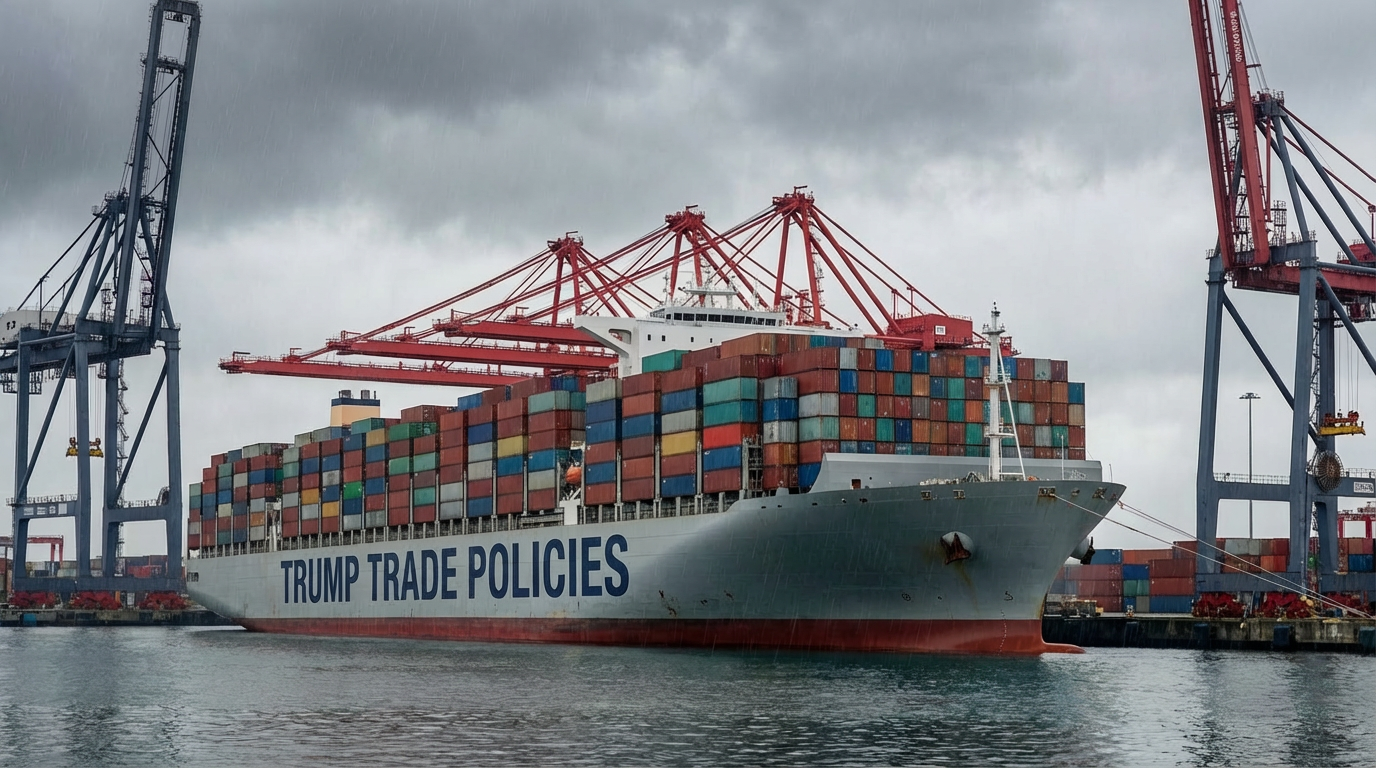
In an already strained global trade environment, Iran’s external commerce faces a fresh layer of complexity as Washington moves to extend its “maximum pressure” strategy beyond sanctions to include punitive tariffs on third-party trading partners.
US President Donald Trump announced a 25 percent tariff on any country “doing business with Iran,” a broad threat that could reshape trading dynamics and accelerate the isolation of Tehran’s economy.
The tariff threat, described by Trump as “final and conclusive,” is aimed at dissuading nations from maintaining or expanding commercial ties with Iran.
While the specifics of implementation remain unclear, major economies with significant trade links to Tehran—notably China, India, Turkey and the United Arab Emirates—are considered most exposed.
China, Iran’s largest trading partner, accounted for roughly 80 percent of oil exports shipped abroad in 2025, making it especially vulnerable to the policy’s secondary effects.
For Iran, this move adds to an already challenging backdrop of sanctions, financial restrictions and exchange-rate volatility that have hindered foreign trade and deepened economic uncertainty.
In an interview with Donya-e-Eqtesad, Iranian private sector representative Morteza Haji-Aghamiri highlighted how these external pressures could compound internal constraints, potentially reducing direct trade with partners that must now weigh their commercial ties to the US against their dealings with Tehran.
Iranian exporters may increasingly turn to indirect channels that are costly and opaque, pushing up transaction costs and eroding competitiveness.
Domestic policy missteps, from foreign exchange management to export regulations, could further amplify these external constraints.
Economists argue that trade-distorting practices such as inflexible exchange-rate policies and restrictive foreign exchange commitments have already increased the cost burden for Iranian traders.
Haji-Aghamiri observed that such policies have reduced the economic viability of exporting, as increased bureaucratic hurdles and risk premiums make Iranian goods less competitive in global markets.
Dual Pressures
This interplay of domestic and external pressures risks shrinking Iran’s share in global trade unless prohibited practices are addressed.
The US tariff initiative also has geopolitical implications that reverberate beyond bilateral trade figures. Many of Iran’s key trade partners are major players in global supply chains and have deep economic relationships with the US. A tariff regime targeting their engagement with Tehran could force difficult decisions, potentially leading to reduced trade volumes with Iran or a shift toward costlier, non-transparent trading arrangements.
For instance, while China, India and the UAE have considerable incentives to preserve energy imports from Iran, the threat of higher tariffs on their broader US trade could erode those incentives over time.
Market analysts caution that this tariff threat may not merely be about trade economics but part of a broader attempt to leverage economic interdependence for geopolitical aims.
The expansion of tariff tools as a complement to sanctions reflects a shift in US strategy, using commercial levers to pressure not just Iran but its entire network of economic partners.
This reorientation could drive fragmented global trade patterns as nations reassess risks and benefits in a more polarized economic landscape.
For Iranian exporters and policymakers, the policy underscores the urgency of diversifying markets and strengthening regional value chains.
Enhancing non-US dollar payment systems, deepening ties with non-aligned economies and streamlining internal trade policies could mitigate some of the adverse effects.
Yet the uncertainty surrounding how severely the tariffs will be implemented, and how trading partners will respond, leaves Tehran’s commercial future highly contingent on both diplomatic developments and internal economic reforms.
The US tariff threat adds a strategic twist to Iran’s ongoing battle for trade resilience. As external pressures mount and domestic constraints persist, Iran’s ability to adapt will be tested, shaping the trajectory of its foreign commerce in an increasingly fractious global economy.