
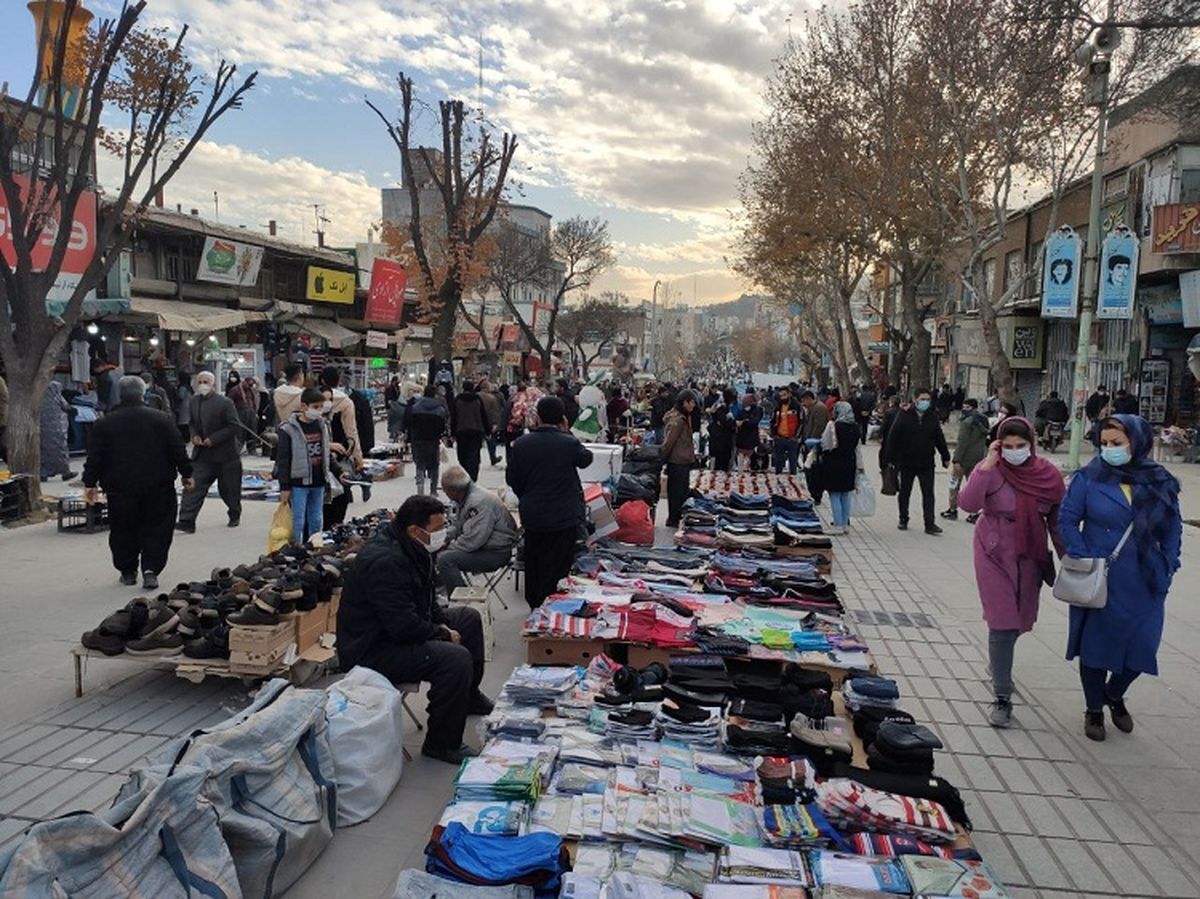
Iran’s labor market is undergoing a quiet but consequential transformation. According to a recent report by the Majlis Research Center, rising job instability has become a defining feature of employment in Iran, with the expansion of informal work identified as one of its core drivers.
The study, part of the series “The Fragile Livelihood of Labor in Iran,” argues that without structural and institutional reforms, the country risks entrenching an employment model that undermines productivity, social security and long-term growth.
The report links job instability to a combination of inadequate wages, weak social protection and declining job security. When workers lack confidence in the continuity of their employment and their incomes fail to keep pace with living costs, labor conditions shift from stability to precarity.
This trend, the study argues, is not merely cyclical but rooted in deeper changes in the structure of Iran’s economy and the institutional framework governing labor relations.
Long-Term Trends
On the structural side, Iran’s labor market has been reshaped by several long-term trends. These include a declining labor force participation rate, the dominance of informal employment over formal jobs, a shrinking share of public-sector employment and the growing weight of micro-enterprises and self-employment relative to wage and salaried work. Together, these shifts have altered the composition of employment toward smaller, less regulated and less secure forms of work.
Low participation, particularly among women, stands out as a critical weakness. In spring 2024, female labor force participation stood at just 14.3%, meaning more than 85% of working-age women were outside the labor market.
By contrast, male participation exceeded 60%. At 43%, Iran’s overall participation rate also lags well behind regional and global benchmarks, underscoring not only a shortage of quality jobs but also structural barriers to absorbing and retaining labor.
The prevalence of informal employment further amplifies instability. In 2020, nearly 57% of employed women worked in informal jobs lacking insurance and legal protections.
At the same time, the retreat of the public sector from employment creation and the expansion of private and self-employed activities have shifted risk from institutions to individuals. The share of self-employed workers rose from around 30% in 2005 to about 37% in 2022, a category particularly exposed to income volatility and weak social coverage.
Institutional Drivers
Institutional factors reinforce these structural pressures. The widespread use of short-term contracts—ranging from one-month and three-month agreements to hourly and even blank-signed contracts—has normalized temporary employment.
Much of this practice stems from interpretations of the Labor Law adopted since its enactment in 1990, which have gradually sidelined job security considerations.
Another institutional driver is workforce downsizing in the public sector and the rise of so-called “triangular employment,” where workers are hired through contracting companies. In this arrangement, responsibility for wages, insurance and welfare is transferred to intermediaries, while the main employer focuses on cost reduction.
Evidence suggests that this model has often reduced workers’ pay and benefits without delivering commensurate efficiency gains for employers.
The mismatch between wage growth and inflation has extended job insecurity beyond private-sector workers to public employees and other salaried groups.
Over the past decade, wages have consistently lagged behind inflation, meaning that employment no longer guarantees an exit from poverty. This dynamic has weakened consumption, discouraged skill investment and reduced incentives for firms to pursue innovation and long-term productivity gains.
Policy Recommendations
To reverse these trends, the Majlis Research Center calls for a comprehensive shift toward formal, productive and stable employment.
Central to this agenda is the formulation of a long-term industrial development strategy to guide investment toward sectors capable of generating durable wage-based jobs.
The report also emphasizes regionally tailored industrial roadmaps, aligning investment with local capacities and environmental constraints.
Complementary reforms include aligning vocational training with labor market needs, simplifying legal and bureaucratic procedures for formal businesses and introducing insurance and tax incentives for long-term formal contracts.
Updating the Labor Law—particularly clarifying Articles 7 and 41 to curb excessive temporary employment and better link wages to inflation—is presented as a final pillar of reform.
Without such coordinated action, the report warns, Iran’s labor market will continue its drift toward informality, deepening job insecurity and constraining the country’s economic potential.