
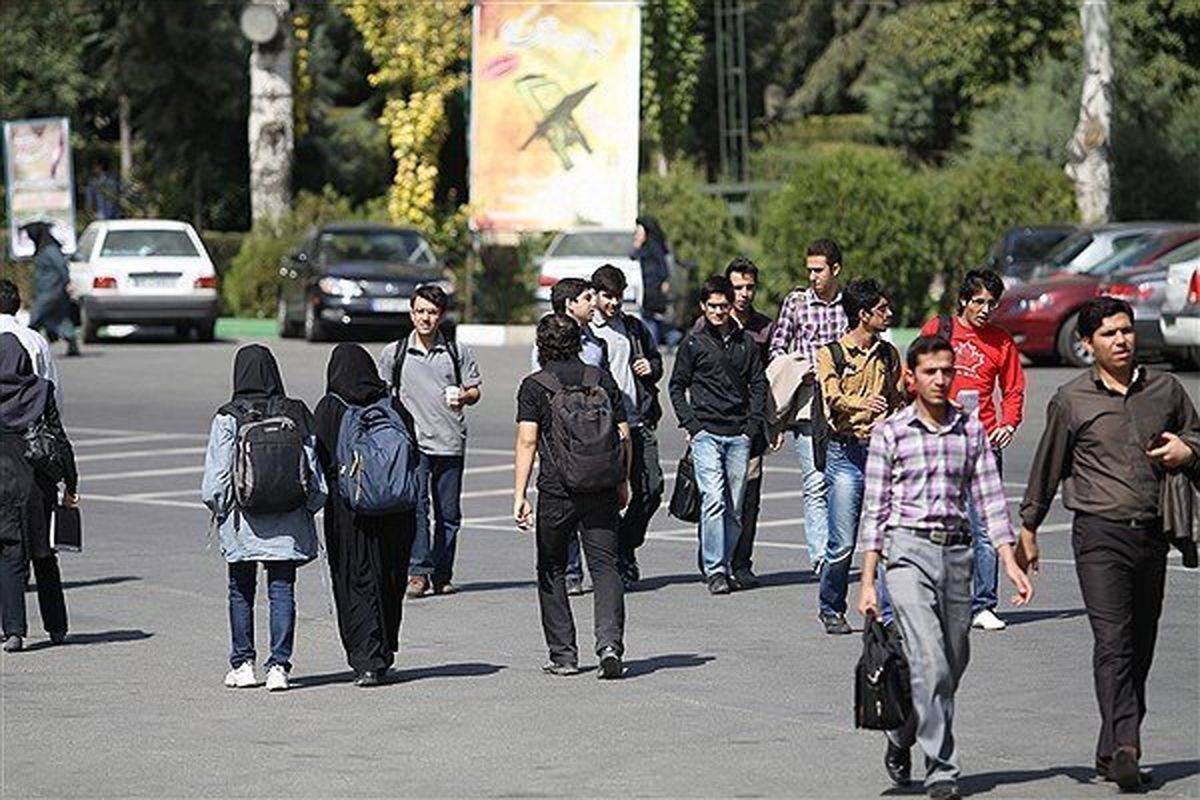
Iran is witnessing a steady decline in its youth population, according to the latest figures released by the Statistical Center of Iran, a trend that is gradually reshaping the country’s demographic and economic outlook.
Official data show that the population aged 15 to 34 stood at more than 28 million in 2017. After a period of fluctuation, that figure fell to around 24 million by 2025, reflecting a gradual reduction in the demographic weight of young people within Iran’s population structure.
In the labor market, official statistics indicate a decline in unemployment among young people aged 18 to 35 in recent years. The youth unemployment rate fell from around 20% in 2017 to roughly 14% by the summer of 2025, a shift that at first glance could be interpreted as an improvement in employment conditions for this age group.
However, this decline has coincided with a sustained drop in youth labor force participation. Data show that the economic participation rate of people aged 18 to 35 and above has been on a downward path since 2019. This suggests that part of the reduction in unemployment has not stemmed from the creation of stable jobs, but rather from young people leaving the labor market altogether or becoming discouraged from seeking work.
The economic participation rate measures the share of a given age group that is either employed or unemployed but actively looking for work. When large numbers of young people stop searching for jobs due to limited prospects, they are no longer counted as part of the active labor force and therefore disappear from unemployment statistics. As a result, the unemployment rate can decline even in the absence of meaningful job creation.
Data on the structure of youth employment further underline underlying vulnerabilities. Around 50% of employed people aged 18 to 35 currently work in the services sector, while industry accounts for about 35% and agriculture for nearly 10%. This distribution points to the dominance of service-sector jobs, which are often associated with higher levels of job insecurity and instability.
Fundamental Transition
Overall, Iran is undergoing a profound demographic transition, moving from a “young” society to a “middle-aged” one and rapidly toward an “aging” population. This shift has been driven largely by a sharp decline in fertility rates over the past three decades.
In the 1980s, Iranian women gave birth to an average of more than six children. Today, Iran’s fertility rate has fallen to a historic low of 1.44, well below the replacement level of 2.1 required to maintain population stability.
Several factors have contributed to this decline, including delayed marriage, a rising average age at marriage—now around 28 for women and 32 for men—higher divorce rates, and a reduced inclination toward childbearing.
Projections suggest that if the fertility rate drops further to around 1.3, Iran’s population growth could turn negative between 2046 and 2051. The country’s age pyramid is already shifting rapidly toward what demographers describe as an “inverted” or aging structure. By 2051, an estimated 30% of Iran’s population is expected to be over the age of 60.
Many population experts warn that Iran is fast losing its so-called demographic window of opportunity—the period in which a high proportion of the population is of working age, boosting economic growth. With the fertility rate hovering below replacement level, this window is expected to close by 2046, exposing the country to deep structural challenges.
One of the most serious consequences of a closed demographic window is a shortage of labor, which would place growing pressure on pension systems in the coming decades. This comes as many of Iran’s pension funds are already facing severe financial strain.
Key Driver
Economic conditions are widely seen as a central driver of Iran’s declining fertility. Years of economic sanctions, coupled with high and persistent inflation, have eroded household purchasing power and pushed families toward having fewer children. Inflation has reduced real incomes while sharply increasing the cost of childrearing, reshaping family planning decisions.
Cultural factors have also played a role, with many households opting for fewer children while allocating more resources to their upbringing and education.
In response to these trends, Iran enacted the “Family Protection and Youth Population” law in 2021. The legislation introduced incentives such as loans for each newborn child, a 15% tax discount for families with three or more children, and budget allocations for population balance programs. At the same time, restrictive measures, including tighter rules on abortion, reduced fetal screening, and the removal of the term “high-risk pregnancy”, were implemented, despite their social and medical implications.
Nearly four years after the law came into force, available indicators suggest that the mix of incentives and restrictions has fallen short of achieving policymakers’ core objective: reversing Iran’s demographic decline.