
Widespread internet disruptions in Iran over the past month have done more than interrupt casual entertainment. They have exposed the structural fragility of the country’s digital ecosystem and placed its emerging gaming industry under severe strain.
For ordinary gamers, professional players, streamers and game developers alike, unstable connectivity has translated into lost access, lost income and growing uncertainty about the future.
What initially appeared to be temporary outages evolved into what many users describe as structural restriction. Connections became unpredictable, unevenly distributed and frequently unusable.
In a sector fundamentally built on real-time interaction and continuous updates, such instability is not a minor inconvenience—it is an existential challenge.
Modern video games are deeply network-dependent. Even single-player titles often require online license verification, cloud synchronization, security checks and platform authentication.
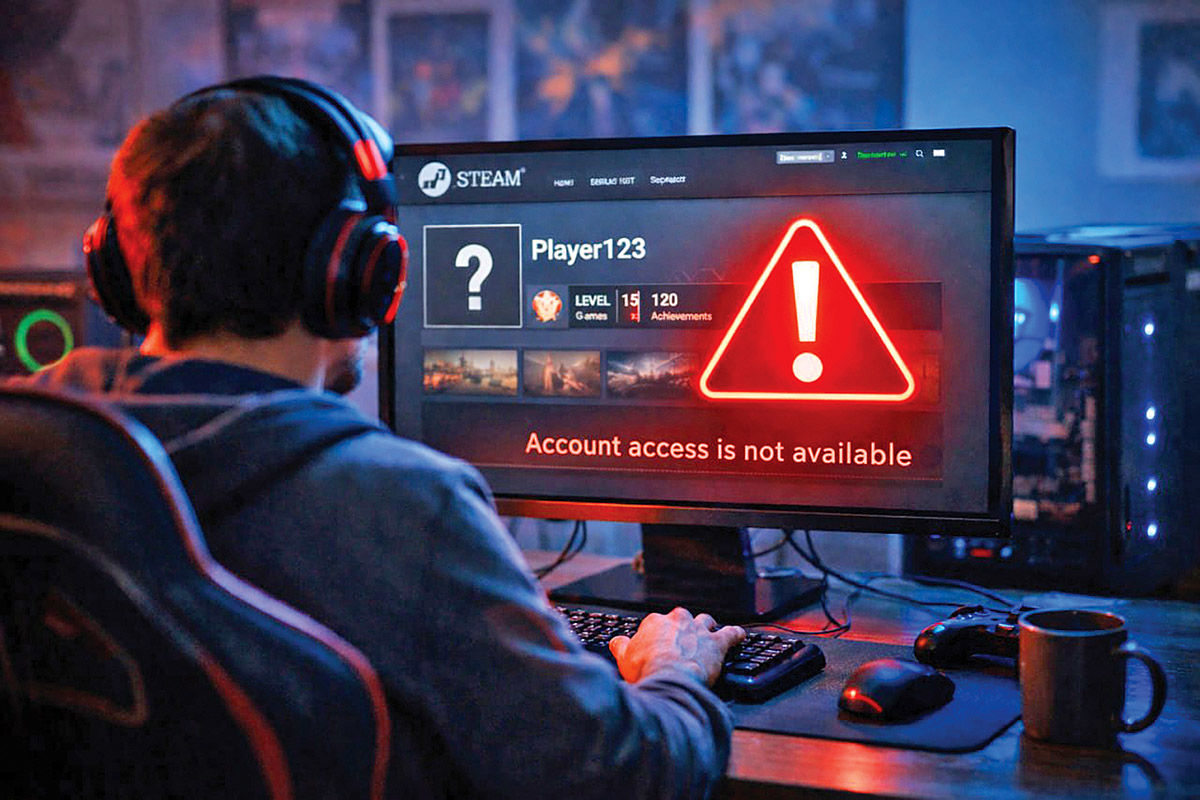
When connectivity falters, digital ownership itself becomes inaccessible. Many Iranian users report being locked out of games they had legally purchased, rendering expensive digital libraries effectively useless.
Console users were particularly vulnerable. Major gaming consoles are designed around persistent connectivity; without stable access, core features are disabled.
In recent weeks, many consoles in Iran have functioned only partially, if at all. PC gamers have sometimes relied on circumvention tools to regain limited access to online services, but this workaround is costly, unstable and risky. Frequent IP changes can trigger automated security systems, leading to account suspensions and further financial losses.
The economic implications extend far beyond gameplay. A segment of Iran’s gaming ecosystem depends on digital trade—buying and selling in-game items, managing accounts or providing online services.
For some, gaming is not merely recreation but a primary or supplementary source of income. The interruption of connectivity has effectively frozen these micro-markets, cutting off cash flow for individuals who were already operating in a constrained environment.
Industry representatives estimate that the recent internet restrictions inflicted roughly 500 billion tomans (about $3 million) in losses on Iran’s game development sector alone.
Long-Term Costs
Beyond direct financial damage, prolonged disconnection from global networks erodes trust with foreign partners and disrupts international collaboration. In a global industry built on cross-border distribution, updates and payments, isolation carries long-term reputational costs.
The crisis has also revealed deeper structural weaknesses. Iran’s gaming community is largely under 25 years old—a demographic already facing high hardware costs, expensive software and limited access to international payment systems.
For years, unstable connectivity has been a chronic obstacle. The recent episode, however, went further: after a complete shutdown, domestic networks remained active but highly unstable, often incapable of reliably supporting even basic websites, let alone online gaming.
Professional players and competitive gamers face unique risks. Their training, rankings and tournament participation depend on consistent, low-latency connections.
A sudden outage can nullify months of effort. Content creators and streamers—whose income relies on continuous broadcasting and audience engagement—have also seen their operations disrupted. For many, the inability to produce content consistently has prompted reconsideration of career plans.
Game developers arguably face the gravest threat. Studios require uninterrupted access to global development tools, distribution platforms and cloud-based collaboration systems.
Reports suggest that some Iranian studios have paused or halted projects due to uncertainty. Meanwhile, the incentive to relocate to countries with stable digital infrastructure appears to be rising. Talent migration, once gradual, could accelerate if unpredictability persists.
Key Question
A key question is whether domestic alternatives have benefited from the disruption. Evidence suggests otherwise. Iran’s local game development ecosystem remains relatively small and concentrated in casual mobile titles, which do not meet the demands of more serious or competitive gamers.
Even domestic online titles reportedly struggled with instability during the recent disruptions. Rather than redirecting demand inward, the restrictions have largely resulted in inactivity and frustration.
The broader lesson is clear: gaming is no longer a peripheral hobby but part of a global digital economy. It relies on open connectivity, predictable infrastructure and integration with international systems.
When access becomes unreliable, the damage ripples outward—from individual users to professional creators and ultimately to the industry’s long-term prospects.
Unless stable and predictable internet infrastructure is restored, Iran’s gaming sector risks gradual marginalization. Participation may decline, professional motivation may erode and development capacity could weaken.
What appears today as a technical disruption increasingly resembles a structural constraint—one that could ground an industry with significant economic and cultural potential.