
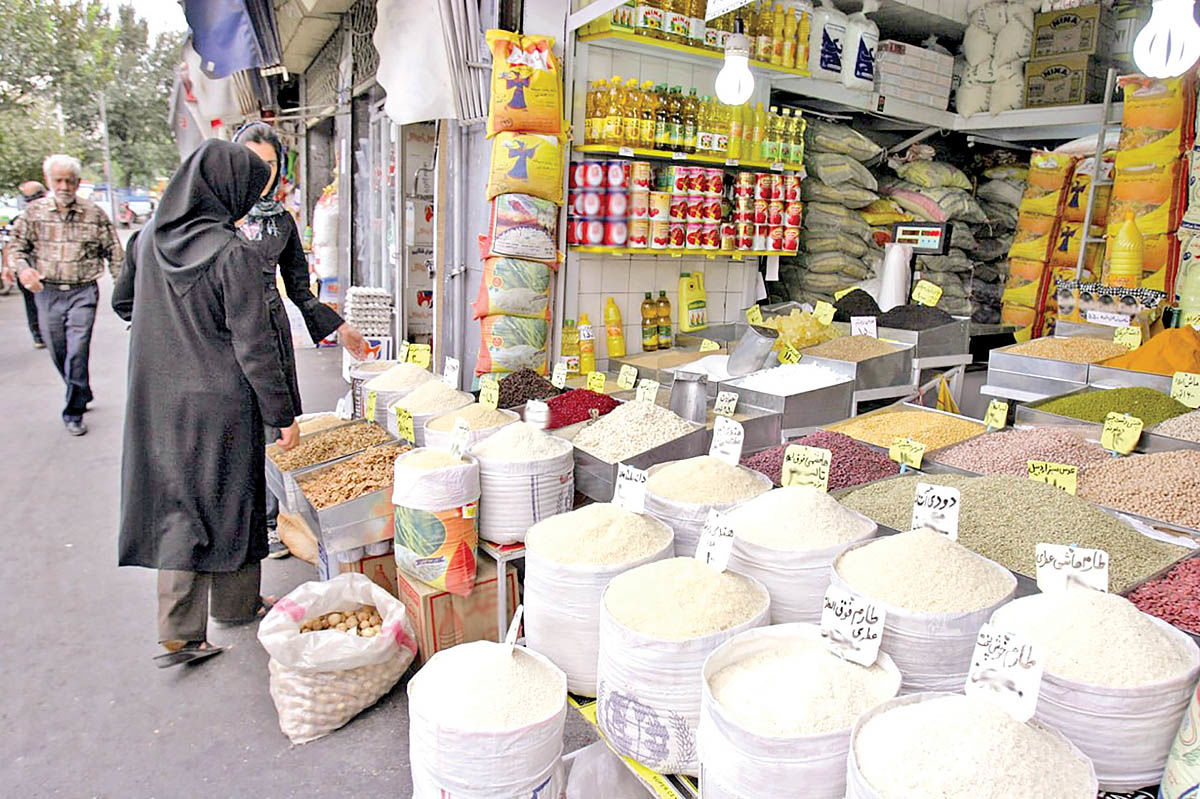
Iran’s consumer markets have experienced a wave of precautionary buying following renewed military tensions, as households rush to stock up on essential goods while authorities and business groups insist that supplies remain stable.
In western Tehran, the shift in consumer behavior is visible in unexpected places. A middle-aged woman enters a baking-supply shop asking to buy paraffin, even though she admits she does not know exactly how to use it. The shop, which normally caters to cake-decorating enthusiasts, has become unusually crowded with people buying wax and candles.
“People come in asking how to make candles,” the shopkeeper said. “Many say they saw instructions on social media and want to prepare in case of power disruptions.”
The surge in demand extends beyond candles. According to retailers and supermarket operators, purchases of bottled water, canned food, detergents and packaged bread have risen sharply in the days following the latest US and Israeli strikes on Iranian territory.
Bakery queues have also grown longer, reflecting a familiar pattern seen in past crises. Many Iranians still remember the eight-year Iran-Iraq war, and the memory of last year’s brief but intense regional confrontation has heightened public sensitivity to geopolitical shocks.
No Supply Shortage
Despite the spike in demand, officials say there is no immediate shortage of essential goods. The government’s communications council issued a statement shortly after the attacks, saying ministries and public institutions are working to ensure uninterrupted supply.
“Essential goods, fuel and medicines are available in sufficient quantities across the country,” the statement said, urging citizens not to worry about shortages.
The Agriculture Ministry has delivered a similar message. Agriculture Minister Gholamreza Nouri said domestic production remains the backbone of Iran’s food security.
“More than 85% of the country’s food needs are met through domestic production,” Nouri told reporters before the escalation. “Therefore there is no concern about famine or shortages of essential goods.”
Over the past week, authorities have also held consultations with agricultural associations, trade unions and food-industry groups to ensure that production and distribution continue smoothly during the conflict.
“Under wartime conditions, everyone must focus on ensuring the timely supply of essential goods and people’s daily needs,” Nouri said during a meeting with agricultural industry representatives. “Associations and cooperatives play a vital role in maintaining the food supply chain.”
Steady Distribution
Private-sector organizations say the distribution network is functioning normally despite the surge in demand. Hamidreza Rastegar, head of the Tehran Chamber of Guilds, emphasized that retailers and wholesalers are working to keep shelves stocked.
“The country does not face a challenge in supplying essential and consumer goods,” Rastegar said. “Our distribution network is extensive, and stores are being continuously replenished.”
He also urged consumers to avoid panic buying. “We ask people to purchase only according to their actual needs,” he said. “Excitement in the market can create unnecessary pressure on the supply chain.”
Uncertain Outlook
While immediate shortages have not materialized, some analysts warn that the medium-term outlook could become more complicated if the conflict disrupts trade routes or financial channels.
Davoud Rangi, vice chairman of the Import Commission at the Iran Chamber of Commerce, said the war has already affected the country’s commercial infrastructure.
“At the moment the entire trade structure has been disrupted,” Rangi said in an interview. “Banking channels are inactive and transportation has been affected. These developments have increased concerns about the future supply of imported food and essential goods.”
Rangi stressed that there is currently no shortage but warned that continued tensions could create difficulties. “For now we do not face shortages in essential supplies,” he said. “However, if these challenges intensify, risks could emerge for the economy.”
He noted that several countries—including neighboring states as well as Brazil and Argentina—play a significant role in supplying food and agricultural products to Iran.
“If relations with these partners face obstacles, securing some imports could become more difficult,” he added.
Tighter Oversight
The government has also stepped up market monitoring to prevent price increases. The Industry, Mining and Trade Ministry recently held a nationwide coordination meeting with provincial officials to assess the supply of essential goods and raw materials.
During the meeting, Minister Mohammad Atabak emphasized the need for round-the-clock supervision of distribution channels and called for immediate reporting of any shortages so they can be addressed quickly.
Authorities have also ordered stricter inspections to prevent retailers from raising prices under the pretext of supply disruptions.
For now, the wave of precautionary buying appears to be easing after the first week of tensions. Still, the episode highlights how quickly geopolitical uncertainty can ripple through Iran’s consumer markets.
With the Persian New Year approaching and Ramadan shopping underway, policymakers face the challenge of maintaining supply stability while reassuring households that essential goods will remain available even under prolonged conflict conditions.