
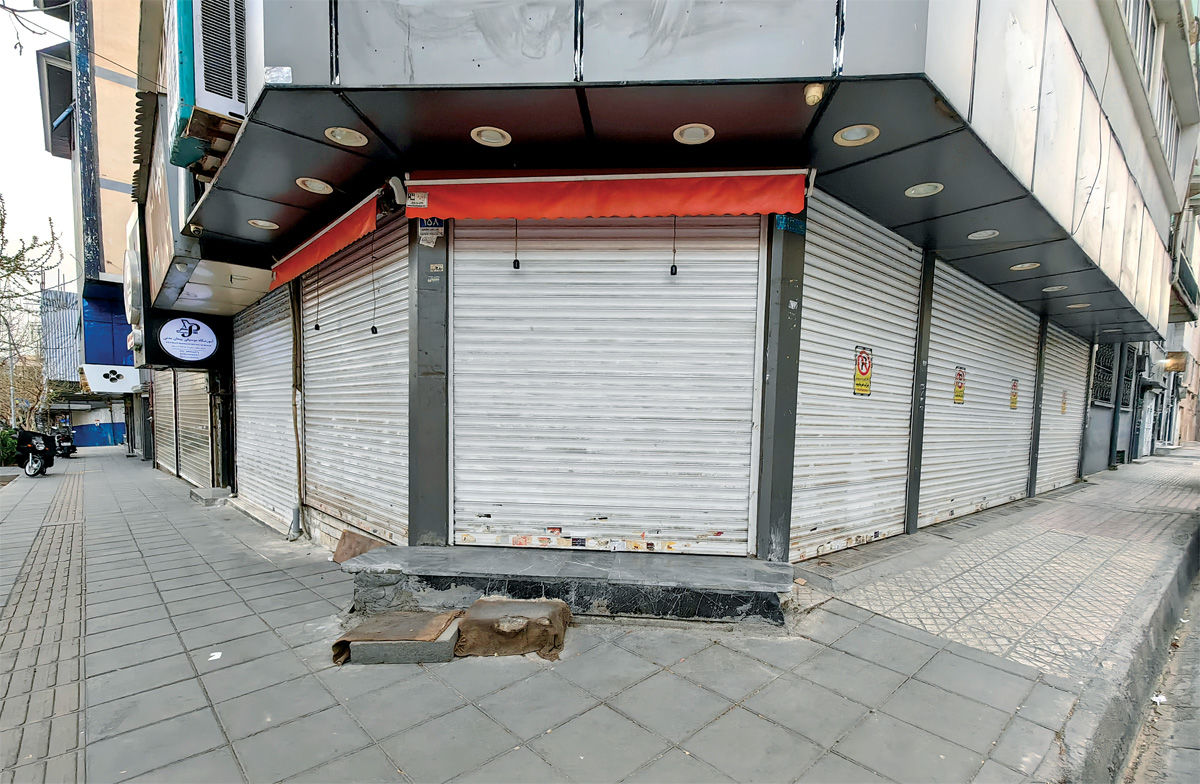
Iran’s year-end shopping season—traditionally one of the busiest periods for retailers—has been overshadowed by war, leaving many businesses across Tehran and other major cities operating at a near standstill.
Field observations suggest that the escalation of hostilities between Iran, the United States and Israel has delivered a sharp shock to urban commerce, disrupting consumer activity, online trade and supply chains just weeks before Nowruz, the Persian New Year.
Esfand, the final month of the Iranian calendar, is normally a peak period for consumer spending as households prepare for the holidays. This year, however, markets appear unusually quiet.
With internet access severely restricted and a portion of Tehran’s population temporarily leaving the capital amid security concerns, economic activity has slowed markedly.
Many shops remain closed, while those that are open often shut earlier than usual. Retailers say the uncertainty surrounding the conflict has sharply reduced demand for non-essential goods.
“Normally these days are our busiest time of the year,” said a shop owner in central Tehran who sells household items. “But this year customers are only buying the basics. People are worried about the situation and prefer to postpone other purchases.”
Essential Goods Supply Stabilizes
The US-Israeli attacks on Iran began February 28, triggering immediate disruptions across parts of the economy. In the first hours of the conflict, panic buying briefly pushed up demand for essential goods such as rice, canned food, cooking oil, bottled water and pasta.
Long queues formed outside bakeries and supermarkets as some households stocked up on supplies or prepared to leave the capital temporarily. According to market observations, however, the surge in demand subsided within a few days.
At present, the supply of essential goods has largely stabilized. Supermarkets and grocery stores continue to operate. Digital payments remain the dominant transaction method as the banking network has not been targeted by cyberattacks.
“Despite the initial shock, the supply chain has adapted,” a wholesale food distributor in Tehran told Donya-e-Eqtesad. “The market mechanism, along with government measures, helped stabilize the availability of basic items.”
The temporary price spikes seen during the first days of the conflict have also eased. For example, chicken prices reportedly rose to as high as 350,000 rials (about 2 dollars) per kilogram during the initial panic but later declined as supply normalized. Potatoes showed a similar pattern, briefly reaching around 170,000 rials per kilogram before falling back to the 60,000–70,000 range.
To prevent shortages and control domestic prices, the government imposed export restrictions on several agricultural goods. Initially, authorities suspended exports of eggs, potatoes, tomatoes and Mazafati dates. Soon afterward, officials expanded the measure, temporarily banning exports of all food and agricultural products to prioritize domestic supply.
Urban Commerce Under Pressure
While essential goods remain available, other sectors of the urban economy have been hit harder.
Reduced traffic across Tehran reflects a noticeable decline in everyday activity. Some residents have temporarily left the city, shifting demand for essential goods to smaller towns and provincial destinations. This shift initially created logistical challenges, but supply channels adjusted within days.
Shopping malls and traditional bazaars were among the hardest hit. Many remained closed during the first week of the conflict, and retailers expect sales to remain subdued even as some centers gradually reopen.
“Customer traffic has dropped dramatically,” said a clothing retailer in a major Tehran shopping complex. “People are not thinking about holiday shopping right now. They are focused on safety and daily necessities.”
Ride-hailing services also experienced volatility. In the first days of the war, fares surged as demand spiked. But as overall mobility declined and fewer residents moved around the city, prices returned to pre-war levels.
Digital Disruptions
The war has also highlighted the vulnerability of Iran’s digital economy. Internet restrictions—introduced amid the escalating conflict—have disrupted online businesses and international trade communications.
Traders say the outages have complicated contact with overseas partners and slowed import and export operations. Similar disruptions occurred during earlier episodes of political unrest this year, causing losses for e-commerce companies.
Shortages have also appeared in an unexpected sector: pharmacies. Although essential goods remain available, some commonly used medicines—not necessarily specialized drugs—have become harder to find in certain locations.
Economic Outlook
For many businesses, the current conflict represents the latest in a series of shocks. Iran’s online sector has already faced three major disruptions this Iranian year: internet shutdowns during the brief 12-day war last June, restrictions during January protests and now the latest escalation.
Some online companies have reportedly begun laying off staff in response to declining revenues and operational uncertainty. Economists say these adjustments could push unemployment higher in the coming months.
According to official figures released last summer, unemployment had already increased by about 650,000 people. Analysts warn that the current war—larger in scope than earlier confrontations—could place additional pressure on the labor market.
For now, many consumers are limiting spending to daily necessities, postponing discretionary purchases traditionally associated with the year-end holiday season.
“There is a sense that the situation could stabilize within a couple of weeks,” said one market analyst in Tehran. “But until the outlook becomes clearer, businesses will remain cautious.”
If the conflict persists, analysts say the economic effects may extend beyond retail to broader indicators such as inflation and economic growth.
Price pressures linked to the war are already emerging in some markets, raising concerns that the closing weeks of the Iranian year could end with an unusually deep economic slowdown.