
Hamid Mollazadeh
As tensions between Iran and the United States escalate in the Persian Gulf, attention has largely focused on oil tankers, refineries, and gas installations. Yet in the littoral states of the Persian Gulf—such as Saudi Arabia, the United Arab Emirates, Qatar, and Kuwait—a far more critical infrastructure quietly sustains life: water desalination plants. In these arid nations, where rainfall is scarce and aquifers are limited, desalinated water is not a convenience—it is essential.
For millions of residents, the water coming out of taps owes more to reverse osmosis membranes and thermal desalination units than to rivers or reservoirs. In Saudi Arabia, for example, over 70 percent of municipal water supply is derived from desalination. Similarly, the UAE relies on desalinated water for nearly all of its urban and industrial needs, from Dubai’s glittering skyline to Abu Dhabi’s massive industrial zones. These plants operate around the clock, producing millions of cubic meters of potable water every day.
Humanitarian Consequences
In a conflict scenario, experts warn that these facilities are far more vulnerable than oil and gas installations—and their destruction would have immediate humanitarian consequences. "The oil and gas sector is crucial for the global economy, but in the Persian Gulf, desalination plants are crucial for survival," said Lina Al-Qasimi, a Middle East energy and water security specialist. “Disrupt these facilities, and you’re threatening the daily life of millions—water rationing, health crises and social unrest would follow rapidly.”
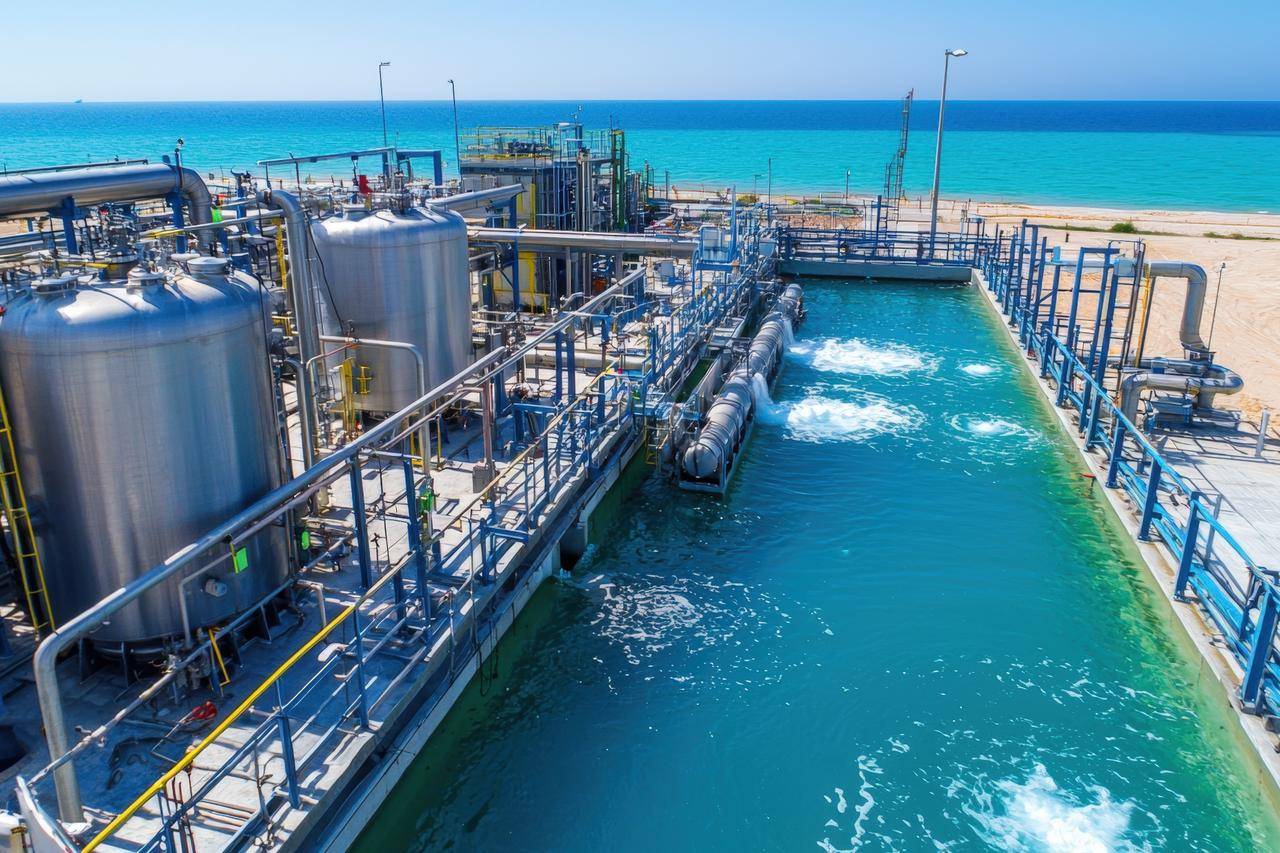
The technical vulnerability is real. Many desalination plants are located on the coast, often adjacent to oil and gas infrastructure, making them susceptible to missile strikes, sabotage, or cyberattacks during hostilities.
Thermal plants, which use heat to evaporate and condense seawater, depend heavily on continuous fuel and electricity supplies. Reverse osmosis plants, which rely on high-pressure pumps and specialized membranes, require constant maintenance and skilled operators. Even brief outages can dramatically reduce output.
Economic Implications
Beyond domestic use, water scarcity has broader economic implications. Industrial hubs, particularly petrochemical and manufacturing facilities, rely on a stable water supply to operate. Any disruption in desalination could halt production lines, affecting exports and regional employment. Urban centers could face immediate water rationing, impacting households, hospitals, and schools.
International observers note a strategic irony: while global attention is drawn to oil and gas in the Persian Gulf, the real vulnerability may lie in water. During the 1990–1991 Gulf War, damage to water and electricity infrastructure in Kuwait led to widespread water shortages, forcing emergency interventions to prevent a humanitarian catastrophe. Today, the stakes are higher: urban populations have grown, and desalination plants now underpin nearly every aspect of daily life.
Countries have attempted to mitigate risks. Redundancy is built into many systems, with multiple plants supplying the same cities and large-scale water storage reservoirs acting as buffers. Yet, experts warn that in a full-scale military confrontation, even redundancies may not prevent severe shortages. “Water is far less replaceable than oil. You can import oil in tankers or tap strategic reserves,” said Al-Qasimi. “You cannot instantly replace millions of liters of drinking water if a desalination plant goes offline.”
First Victims
The strategic implications are clear. In military planning, water infrastructure is as much a target as oil pipelines. Governments in the region increasingly recognize this vulnerability, investing in underground pipelines, fortified facilities, and advanced monitoring systems. However, as the Iran-US tensions continue, experts emphasize that civilians—not just economies—could be the first victims if desalination plants are disrupted.
In a region synonymous with oil wealth, water may now be the most precious resource. As the conflict potential looms, safeguarding desalination plants is not only a matter of national security—it is a matter of life itself. While headlines focus on barrels of crude, the invisible flow of desalinated water will determine whether cities can survive in a prolonged crisis or not.