
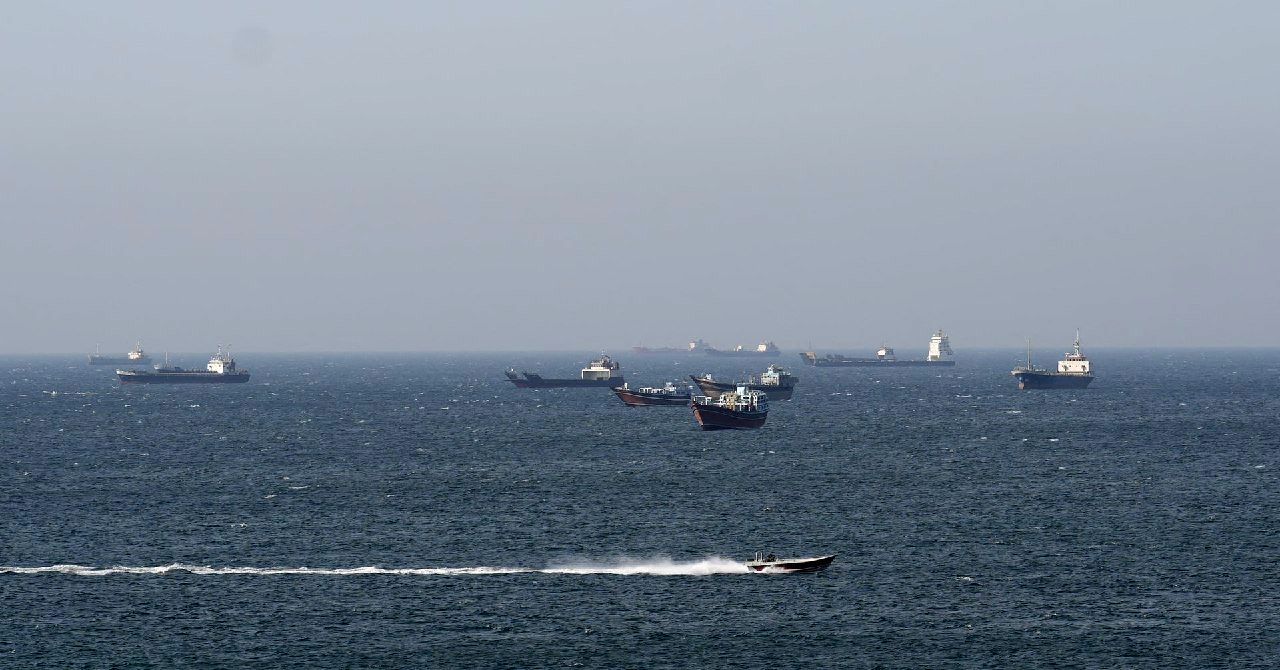
Closing the Strait of Hormuz has long been viewed as one of Iran’s most powerful geopolitical tools, especially during periods of military confrontation with the United States and Israel. Even the threat of disruption in this narrow waterway can send a strong political message, reminding global powers that Iran holds influence over one of the world’s most critical energy corridors.
From a political and security perspective, this leverage has undeniable value. It strengthens deterrence, raises the cost of external pressure, and gives Tehran greater bargaining power in regional and international negotiations. In moments of heightened tension, the possibility of restricting maritime traffic through Hormuz can quickly become a strategic signal that Iran cannot be ignored.
However, once the discussion moves from politics to economics, the calculation changes significantly.
The Strait of Hormuz is not simply a security asset; it is one of the main arteries of the global economy. A large share of the world’s oil and gas exports passes through this route. Any disruption affects not only energy producers in the Persian Gulf but also major consumers across Asia, Europe, and beyond.
This raises a key question: can closing the strait, or even imposing transit fees on passing vessels, serve as a sustainable economic strategy for Iran?
Most evidence suggests the answer is no.
Shared Costs
Disruption in Hormuz would trigger a chain of economic consequences that would hurt nearly all actors involved. Higher security risks would immediately raise maritime insurance costs, discourage shipping companies from using the route, and increase volatility in global energy markets.
Although oil prices could rise in the short term, higher prices do not automatically translate into long-term gains for producers. Uncertainty discourages investment, weakens planning, and increases overall economic inefficiency. What may appear to be an economic pressure tool often turns into a source of instability and lost opportunity.
A recent analysis in The Economist argued that using Hormuz as a short-term revenue source—through tolls or restrictions—may look attractive at first, but could ultimately produce what might be called “small profit, big loss.” If countries begin to develop alternative routes and infrastructure, the strategic importance of the strait could gradually decline, reducing its long-term value for Iran itself.
The United States also has strong economic reasons to prefer an open Strait of Hormuz. Although Washington has reduced its direct dependence on Middle Eastern energy, it still relies on stable global oil markets. A major supply disruption would push up energy prices, increase inflationary pressure, and complicate domestic economic management. It could also require a larger military presence in the region, bringing additional financial and political costs.
For Persian Gulf Arab economies, the risks are even more immediate. Many of them depend heavily on uninterrupted oil and gas exports. Any instability in Hormuz threatens state revenues, investment flows, and broader economic confidence. Unsurprisingly, regional governments consistently emphasize the importance of keeping the waterway secure and open.
China, as one of the world’s largest energy importers, shares the same concern. Its dependence on Persian Gulf oil means that any disruption in Hormuz would directly affect supply chains and industrial stability. Beijing has repeatedly stressed that the strait must remain open and secure, highlighting that this issue is not merely regional but central to global economic stability.
Long-Term Strategy
Some policymakers occasionally raise the idea of charging transit fees to ships passing through Hormuz as a source of foreign currency revenue. In theory, it sounds practical. In reality, it faces major legal, political, and strategic obstacles.
Imposing tolls on an international maritime route would likely trigger strong international resistance. More importantly, higher transit costs would encourage countries and companies to accelerate investment in alternative routes. While such alternatives may be expensive initially, over time they could permanently reduce reliance on Hormuz and weaken Iran’s strategic position.
The stronger economic strategy lies in the opposite direction: ensuring stability, security, and openness.
An open and reliable Strait of Hormuz supports trade flows, lowers risk premiums, improves investor confidence, and creates better conditions for infrastructure development and foreign investment. In that environment, Iran can benefit far more from its geographic position by becoming a central player in regional and global commerce.
This is closely tied to a broader issue: integrating Iran into global trade networks. In an increasingly interconnected world economy, countries that reduce risk and strengthen commercial ties gain more sustainable opportunities for growth. Policies that increase isolation or uncertainty tend to produce the opposite result.
Global markets are already adapting to geopolitical risk. Governments and corporations are investing in alternative transport corridors, new energy systems, and supply chain diversification. If Hormuz is increasingly seen as an unreliable chokepoint, that transition will accelerate.
For Iran, this would mean losing part of the very strategic value that makes the strait important.
Closing Hormuz may offer short-term political leverage, but economically it is difficult to justify as a lasting strategy. Its real value lies not in restriction, but in openness. The choice is ultimately between using the strait as a temporary pressure point or turning it into a durable source of economic strength and regional influence.