Iran’s economy was already under heavy pressure before the recent military attacks by the United States and Israel. Chronic inflation, a persistent budget deficit, energy shortages and the continuing burden of sanctions had left the country in a fragile position. Even before the latest escalation, the economy was struggling with deep structural imbalances that had weakened growth and reduced the ability of policymakers to respond effectively.
Frequent electricity and gas shortages were disrupting industrial production, while government revenues remained far below public spending, creating a permanent fiscal gap. Pension funds were under severe financial stress, and inflation continued to erode household purchasing power, pushing many families toward lower consumption and greater financial insecurity. Economists had long argued that these problems required serious structural reforms and medium-term planning. However, the outbreak of war interrupted that path and imposed a new layer of urgent economic costs.
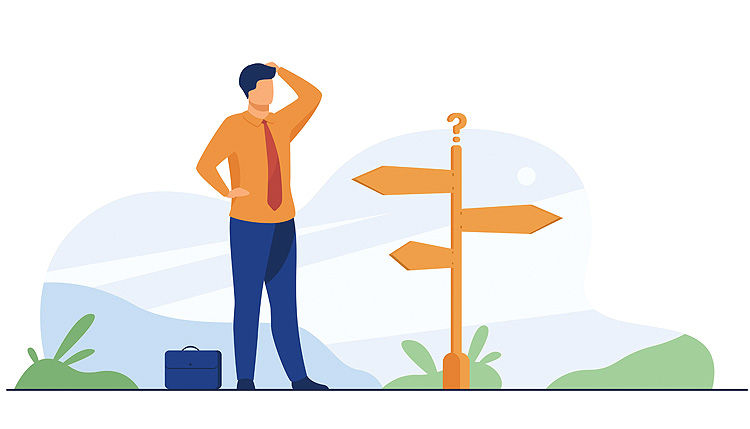
The two imposed wars over the past year pushed this fragile structure much closer to crisis. The damage goes far beyond destroyed roads, power plants and production facilities. The deeper problem is the absence of a clear economic horizon. When households, businesses and investors cannot see what comes next, they stop making long-term decisions. Consumption slows, investment freezes and the economy enters a state of waiting. In many ways, this “fog of uncertainty” may be more damaging than the direct costs of war itself.
The destruction of physical infrastructure such as roads, power plants, refineries and industrial units has major economic consequences. First, there is the direct cost of reconstruction, which could amount to billions of dollars. Second, and often more damaging, is the opportunity cost of lost production. When a factory shuts down or a power station goes offline, the supply chain breaks and gross domestic product declines. Resources that should have been used for development must now be spent simply to restore previous capacity. In effect, money is spent not to move forward, but to return to zero.
Biggest Loss
The biggest loss, however, is human capital. Every skilled worker, engineer, teacher or doctor represents years of investment by both families and the state. Losing this workforce reduces productivity immediately and weakens long-term growth potential. Medical costs for the injured and support for affected families also place additional pressure on public finances and the social welfare system. These are not short-term losses; they shape the productive capacity of the country for years to come.
Education disruption is another hidden but serious cost. Schools and universities are not just service providers—they are the foundation of future labor productivity. Every month of interrupted learning reduces the quality of the future workforce. Over time, this widens Iran’s technological gap with the rest of the world and weakens innovation capacity. War, therefore, does not only delay economic reform; it makes future development more expensive, slower and far more difficult.
Yet the most dangerous economic effect may be uncertainty itself. Economies function on expectations. Investors commit capital when they can estimate returns. Families make major purchases when they trust their future income. Banks provide long-term loans when default risk can be measured. When the future becomes unclear, this decision-making system breaks down and the economy gradually shifts from growth to hesitation.
A clear outlook is the psychological fuel of an economy. If economic actors know when and how a crisis may end, they can plan, invest and allocate resources more efficiently. Without that visibility, uncertainty rises sharply. Higher uncertainty increases the risk premium, meaning investors demand much higher returns before entering productive activities. Financing becomes more expensive, many projects become uneconomical and economic growth slows—or even turns negative. Simply put, when the future is unclear, the economy enters suspension.
Survival Mode
Households are usually the first to react. As concerns grow over jobs, inflation and income stability, families become more cautious. They postpone purchases of durable goods such as homes, cars and major household appliances. Spending on travel, leisure, private education and other non-essential services declines significantly. At the same time, the tendency to save increases. Many households prefer to hold liquid assets or convert savings into forms that are more resistant to inflation and currency depreciation.
From an individual perspective, this behavior is rational. But at the macroeconomic level, it weakens effective demand. Since household consumption is one of the main components of GDP, lower spending directly slows economic growth and deepens recession. What appears to be a protective response for families becomes a source of broader economic stagnation for the country.
Businesses respond in a similar way. Many firms suspend expansion plans, delay capacity increases and postpone investments in new technology. Entering new markets becomes too risky when future conditions are unknown. To reduce supply chain risks, companies often stockpile raw materials and intermediate goods. While this may help maintain operations, it also locks up financial resources and raises storage costs, making production more expensive.
At the same time, cost-cutting policies become common. Hiring freezes begin, temporary workers are dismissed and non-essential expenses are reduced. The focus shifts from growth to survival. Some firms also prefer to increase cash reserves instead of investing, preparing for the possibility of a deeper crisis. At the national level, this behavior reduces private investment, weakens job creation and pushes the economy further into stagnation.
Dangerous Cycle
This creates a dangerous cycle: households spend less and save more, while businesses invest less and hold back resources. The result is weaker demand, lower production, higher unemployment and slower growth. Breaking this cycle requires more than emergency spending or short-term intervention. The most important task for policymakers is to restore predictability.
Governments must provide a clear and credible roadmap—one that explains how inflation will be controlled, how exchange rate stability will be managed, how fiscal discipline will improve and what strategy exists for restoring business confidence. Economic actors need to know which policies will remain stable, what regulations will change and how the broader economic environment will evolve. Sudden and unpredictable decisions increase risk and paralyze planning.
A transparent policy framework reduces the cost of decision-making, strengthens confidence and makes long-term planning possible. When households feel that the future is more stable, they resume major purchases and return to normal consumption patterns. When businesses trust the economic direction, they restart investment projects, hire workers and focus on production instead of defensive survival. Recovery begins not with spending alone, but with visibility and trust.
Iran’s economy today is not only thirsty for capital or reconstruction—it is thirsty for a clear horizon. Without a visible path forward, even the strongest policy tools lose effectiveness. In times of crisis, economies run not only on money, but also on confidence. And confidence begins when the fog starts to clear.