
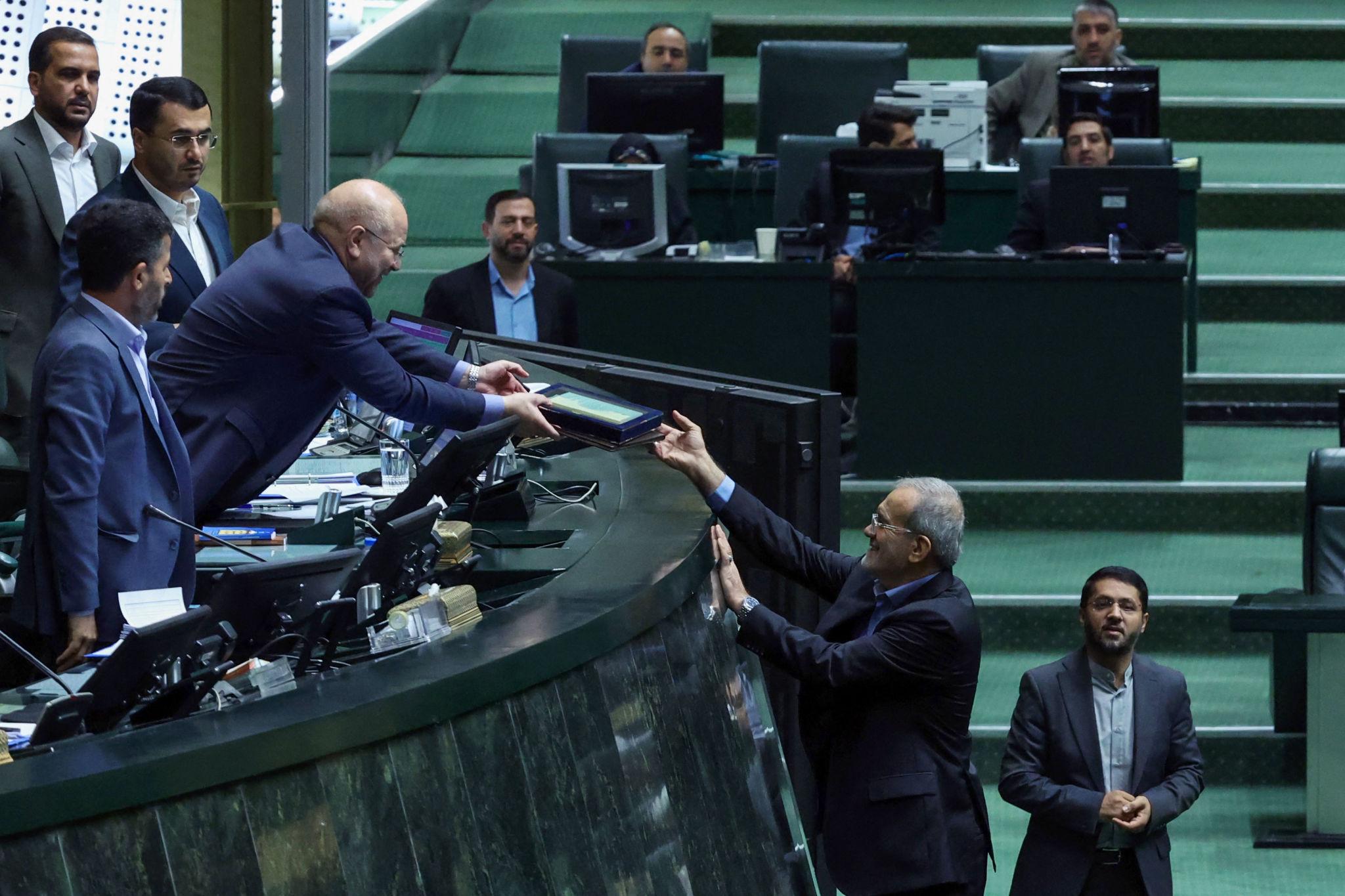
Over the past several years, Iran has gradually tried to reduce its dependence on oil revenue and rely more heavily on taxes to finance government spending. Official figures show that average tax revenue realization between the Iranian years 1399 and 1404 (2020-2025) exceeded 99%, encouraging policymakers to expand the role of taxation in the 1405 budget (March 2026-March 2027). In the new budget, taxes account for nearly 52% of public resources, while oil revenue plays a smaller role in financing current expenditures. The government has presented this shift as evidence that Iran is moving toward a less oil-dependent economy.
Yet the economic conditions facing Iran in 1405 are fundamentally different from previous years. The economy is now operating under the shadow of war, regional tensions and widespread internet disruptions that have damaged large parts of the private sector. Many businesses are struggling with falling demand, higher production costs and declining purchasing power among households. Online commerce and service industries have been hit especially hard by connectivity restrictions and uncertainty surrounding the regional situation. Under such conditions, maintaining strong tax collection will become significantly more difficult.
Tax revenue depends directly on the health of the domestic economy. Governments can collect taxes sustainably only when businesses remain profitable, investment continues and private sector activity expands. Oil revenue functions differently. Even during domestic recessions, the state may still earn foreign exchange from exporting crude oil to international markets. Taxes, however, depend on domestic production, consumption and employment. When economic activity weakens, tax capacity weakens as well.
This distinction highlights one of the most important structural differences between oil and taxation. Oil income is largely foreign currency revenue generated abroad, while taxes are rial-denominated resources extracted from domestic economic activity. During years of strong oil exports, governments could often use foreign exchange earnings to cover budget deficits. In a tax-centered budget structure, however, fiscal stability becomes tied to the condition of the domestic economy itself.
Counterproductive Approach
Some policymakers appear to assume that tax revenue can continue rising indefinitely through higher rates, broader collection or greater pressure on taxpayers. Economists increasingly warn that this approach could become counterproductive in a recessionary environment. If production, investment and consumption decline, the tax base inevitably shrinks. Excessive pressure on struggling firms may not increase government revenue at all. Instead, it could deepen private sector weakness and reduce future tax receipts.
Concerns over overly optimistic revenue forecasts are already growing. Ali Afzali, director general of public sector policymaking at the Economy Ministry, recently warned at a conference on Iran’s 1405 economic outlook that roughly 25% of projected tax revenue may fail to materialize. Such a gap would create difficult choices for the government. Authorities could reduce spending, increase borrowing or intensify pressure on taxpayers. Each option carries serious risks. Spending cuts may deepen recession, borrowing and money creation could accelerate inflation, and heavier tax burdens may force more businesses into layoffs or closure.
The government has expanded tax monitoring systems and tried to reduce tax evasion in recent years. These reforms may improve transparency and efficiency over time. However, structural tax reform differs from raising taxes during an economic downturn. Many small and medium-sized firms already face severe financial pressure. Additional taxation could push even previously stable companies into debt and contraction.
Another debate has emerged over social insurance financing. The labor minister recently proposed cutting the employer insurance contribution from 23% to 7%, with the remaining 16% financed through tax revenue. The proposal aims to reduce labor costs and preserve employment, but it would also place additional pressure on an already uncertain revenue base.
Difficult Balancing Act
Iranian policymakers now face a difficult balancing act. Reducing dependence on oil remains economically sensible, but taxation cannot become a substitute for growth itself. Without political stability, stronger investment and improved business conditions, higher tax targets may ultimately weaken the very economy needed to sustain future government revenue.
At the current moment, the most realistic strategy may be a combination of controlled public spending, gradual fiscal reform and efforts to reduce political uncertainty. Without restoring confidence in economic stability and market access, neither private investment nor sustainable tax collection will recover in a lasting way fully. That remains the central economic challenge confronting Tehran today.