
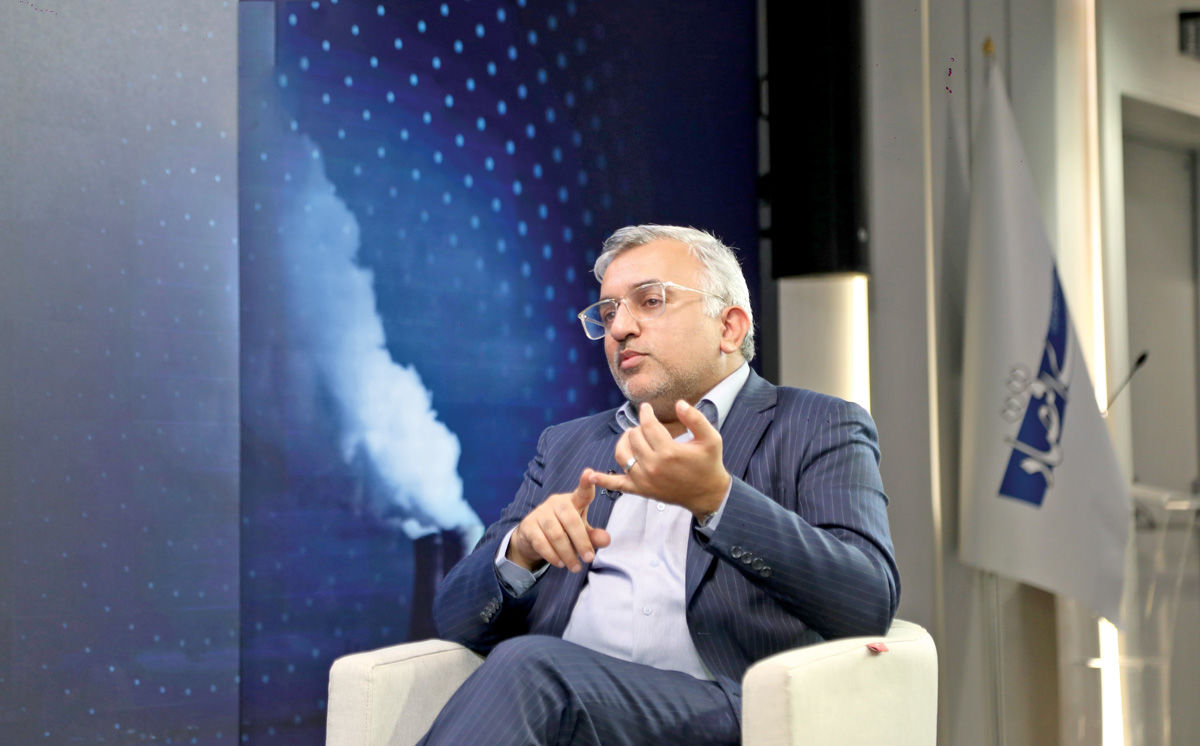
The future of any comprehensive agreement between Iran and the United States will ultimately depend on whether it creates tangible economic benefits for both sides, Hamid Ghanbari, Iran's deputy foreign minister for economic diplomacy, said in an interview with the Donya-e-Eqtesad Media Group.
Speaking after the signing of a 14-point framework agreement between the presidents of Iran and the United States on June 18, Ghanbari said practical implementation and shared commercial interests—not political declarations—will determine whether any future agreement proves durable.
He argued that public debate has focused too heavily on the value of Iran's frozen overseas assets while overlooking the broader objective of rebuilding normal economic relations between the two countries.
According to Ghanbari, discussions about releasing Iranian assets are far more complex than simply announcing a single figure. Different assets are held in different jurisdictions under varying legal arrangements, with some restricted by US sanctions, others tied to court rulings, and some affected by contractual disputes or banking regulations.
"The phrase 'release of assets' in the agreement refers to all Iranian assets," he said. "However, implementation depends on the legal basis of each restriction. Some originate from executive orders, others from congressional legislation, and some from judicial decisions. Each case must therefore be examined separately."
He stressed that Iran will ultimately judge the agreement based on implementation rather than political messaging.
"For Iran, the benchmark is action, not statements or declared intentions," Ghanbari said.
The deputy minister also dismissed reports suggesting that any released Iranian funds would be restricted to purchasing American goods or imports such as wheat and medicine.
No Restrictions on Released Funds
According to him, the framework agreement contains no such condition. He argued that competing political narratives in both countries have fueled misleading interpretations, with supporters and critics alike seeking to portray the agreement in ways that serve domestic political debates.
Ghanbari also addressed the approximately $6 billion of Iranian funds held in Qatar, saying their primary purpose is to facilitate international trade and cross-border payments rather than the physical transfer of foreign currency into Iran.
He acknowledged that US banking sanctions and Financial Action Task Force (FATF) standards continue to increase transaction costs, delays and financial risks. Nevertheless, he said these obstacles do not make international trade impossible, noting that Iran already conducts a significant share of its foreign commerce despite existing restrictions.
One of Ghanbari's central arguments concerned the importance of creating mutual economic interests between Iran and the United States.
He described the absence of direct commercial benefits for American companies as one of the principal shortcomings of the 2015 nuclear deal, arguing that it reduced the political and economic cost of Washington's withdrawal.
The Strongest Guarantee
"In international relations there is no absolute legal guarantee that commitments will always be honored," he said. "The strongest guarantee is the existence of shared economic interests."
He argued that any durable agreement should generate tangible benefits for businesses in both countries, increasing the political and economic costs of abandoning the deal in the future.
Addressing Iran's broader foreign economic strategy, Ghanbari rejected the notion that stronger ties with the United States would come at the expense of relations with China, Russia or neighboring countries.
He said Iran's economic diplomacy is multi-dimensional rather than zero-sum, with every region occupying its own place in Tehran's foreign policy.
"The development of relations with the United States does not mean abandoning eastern partners," he said. "Just as the current administration seeks stronger ties with neighboring countries, China and Russia, it should also not ignore potential opportunities in Europe and the United States."
If conditions become favorable, he added, Iran would welcome American investment, technology and expertise. At the same time, the country cannot afford to delay its own economic development while waiting for relations with Washington to normalize.
Balancing Domestic Reform and Diplomacy
Ghanbari also rejected two opposing narratives regarding Iran's economic future.
One argues that domestic self-reliance alone can solve the country's economic challenges, while the other claims meaningful reform is impossible without fully normalized foreign relations.
He described both positions as incomplete, arguing that Iran must simultaneously strengthen domestic economic capacity while pursuing international opportunities whenever possible.
"The rational path is to move on both fronts simultaneously," he said.
Hormuz and the Sanctions Challenge
Turning to the Strait of Hormuz, Ghanbari described the strategic waterway as an important geopolitical asset but cautioned against overestimating its economic potential.
He argued that Iran should avoid policies that encourage alternative shipping routes or reduce the strait's long-term strategic value. While dismissing proposals to finance the country's economy primarily through Hormuz-related revenues as unrealistic, he said Iran could legitimately expand income by charging for navigation assistance, environmental protection, pilotage, bunkering and other maritime services consistent with international law.
Regarding sanctions, Ghanbari said the framework agreement aims to address not only primary and secondary US sanctions but also measures linked to UN Security Council resolutions and decisions by the International Atomic Energy Agency's Board of Governors.
Still, he cautioned that dismantling decades of accumulated sanctions will not happen overnight.
He described the sanctions architecture as a highly complex network built over nearly five decades through executive orders, congressional legislation, state-level measures, export controls and multiple sanctions lists.
"The negotiating team's main task is identifying the key knots in this network," he said. "By removing a few central obstacles, many secondary restrictions can also disappear."
Ghanbari concluded that successful implementation of any final agreement will require both effective diplomacy and domestic political support.
He said the benefits of sanctions relief would extend beyond any single political faction and ultimately serve the broader Iranian economy.