
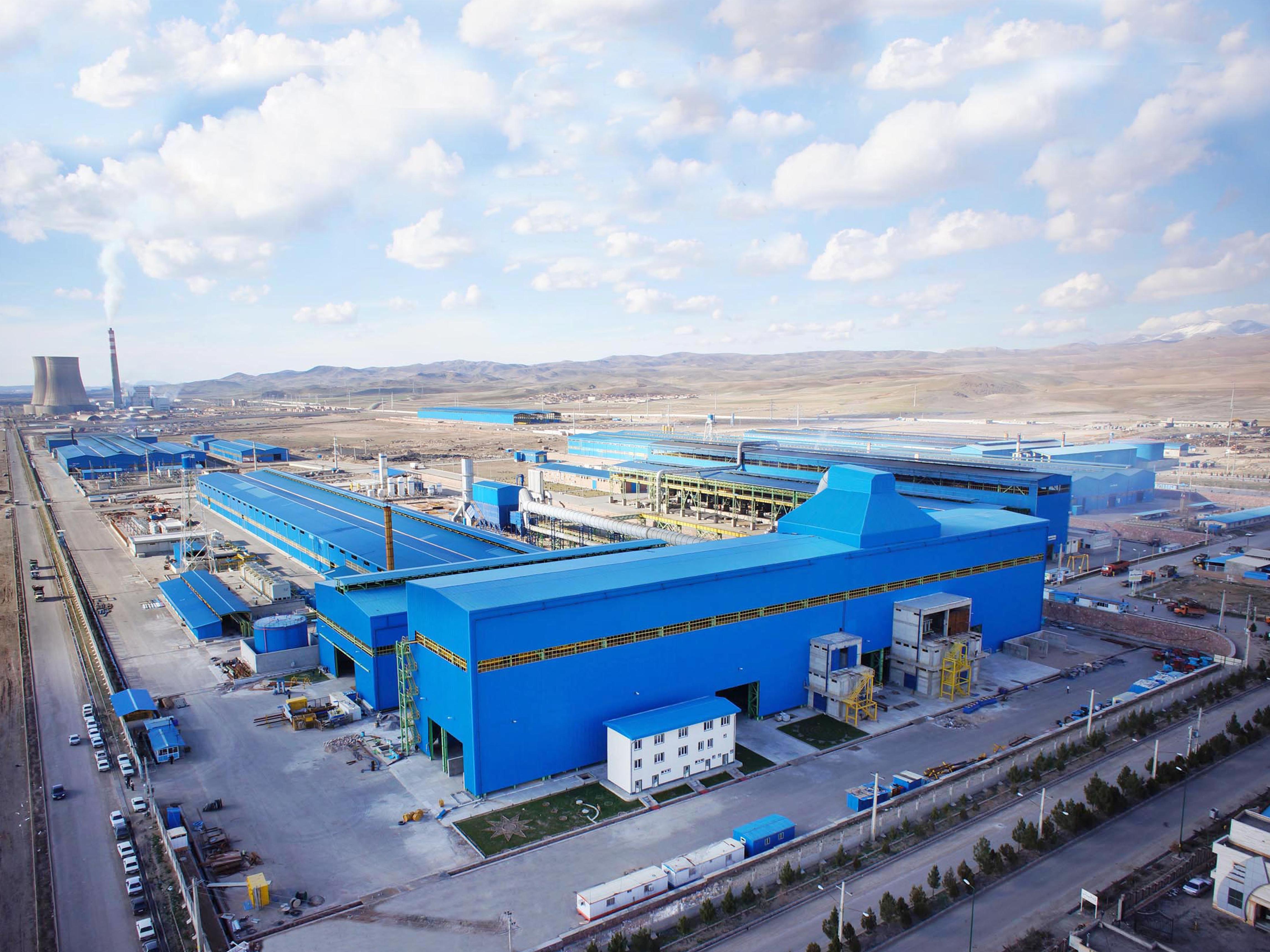
Iran's industrial engine lost momentum during the last Iranian year as production contracted, employment declined and manufacturers struggled with a combination of energy shortages, inflation and policy uncertainty. While the recent conflict added fresh pressure by disrupting supply chains and damaging parts of the country's industrial infrastructure, the latest official data suggest that the sector's problems run much deeper than temporary geopolitical shocks.
According to the Statistical Center of Iran, industrial value added fell by 1.5% in 1404 (March 2025–March 2026), marking a reversal after several years of modest recovery. The sector also shed more than 36,000 jobs, reducing industry's share of total employment by half a percentage point. Together, the figures point to a weakening manufacturing base at a time when Iran needs stronger industrial growth to diversify its economy and create sustainable employment.
Other indicators reinforce the same picture. Purchasing Managers' Index (PMI) data showed manufacturing activity remained in contraction territory for roughly nine months during the year, with business conditions deteriorating steadily over the final five months. Meanwhile, the Monetary and Banking Research Institute of the Central Bank reported that the industrial production index of listed companies declined by 3.7% during 1404 (March 2025–March 2026), the first annual contraction since 1397 (March 2018–March 2019). Monthly production was negative in eight months of the year, indicating that weakness spread across much of the manufacturing sector rather than remaining limited to a handful of industries.
Although the military confrontation intensified existing challenges, economists argue that the slowdown reflects long-standing structural weaknesses that have gradually undermined production capacity, investment and competitiveness.
Energy Squeeze
For many manufacturers, electricity and natural gas shortages remained the most immediate obstacle throughout the year. Repeated power outages forced factories to suspend operations or reduce production, while winter gas shortages created additional disruptions across energy-intensive industries.
At the beginning of 1404 (March 2025), the Energy Ministry projected that the electricity deficit would fall below 10,000 megawatts, significantly less than the previous year. However, estimates by the Parliamentary Research Center placed the peak shortfall at around 14,700 MW, suggesting that the imbalance between electricity supply and demand remained severe.
Analysts note that the apparent improvement was driven less by higher electricity generation than by weaker industrial demand. Electricity production increased only marginally during the year, implying that slower factory activity itself contributed to narrowing the gap.
Farshid Shokrekhodaei, chairman of the Investment and Financing Commission of the Iran Chamber of Commerce, believes energy shortages became the single biggest factor behind the sector's weak performance.
"The most important reason for the decline in industry was the difficulties manufacturers faced throughout the year," he told Donya-e-Eqtesad newspaper. "Power outages inflicted serious damage on production units, while winter gas shortages further disrupted industrial activity."
According to Shokrekhodaei, manufacturers also struggled with delayed import registrations, slow foreign currency allocation and lengthy customs procedures that kept machinery, raw materials and production equipment waiting for months before entering factories.
High inflation further complicated the situation by discouraging productive investment. As financial assets generated faster nominal returns, businesses found it increasingly difficult to justify long-term industrial investment. At the same time, government price controls squeezed profit margins, limiting producers' ability to purchase higher-quality inputs or modernize production lines.
"If industry continues to shrink," Shokrekhodaei warned, "the impact will extend well beyond manufacturers. Lower industrial output ultimately translates into weaker employment, lower value added and slower economic growth."
Labor Market Under Strain
The industrial slowdown has also been reflected in Iran's labor market. Official statistics show that industrial employment declined during 1404, as factories struggling with lower production and higher costs scaled back hiring or reduced their workforce.
Zahra Karimi, a labor economist, said the deterioration was hardly surprising given the widespread disruptions manufacturers experienced throughout the year.
"Many factories were forced to cut production because of repeated electricity and gas shortages," she told Donya-e-Eqtesad. "When production declines, companies inevitably reduce their workforce."
Karimi noted that while the economic impact of the recent conflict will become more evident during 1405 (March 2026–March 2027), the sector had already entered a period of weakness well before the latest geopolitical tensions. Rising prices for industrial inputs—particularly steel and petrochemical products—had increased production costs, while persistent inflation continued to erode household purchasing power, weakening demand for domestically manufactured goods.
She added that displaced workers often struggle to find comparable industrial jobs. Many men move into lower-paying informal service occupations, while a significant number of women leave the labor force altogether. Official figures show women's labor-force participation declined from 14.1% in 1403 (March 2024–March 2025) to 13.4% in 1404 (March 2025–March 2026), highlighting the broader social consequences of industrial stagnation.
Business leaders argue that the sector's problems extend well beyond energy shortages. Mohammadreza Ghaffarollahi, a member of the Iran Chamber of Commerce's Board of Representatives, said sanctions, policy instability, inflation, financing constraints and supply-chain disruptions have collectively undermined manufacturers' ability to plan and invest.
"A series of simultaneous shocks deprived businesses of the ability to plan even for the medium term," he said. "Without stability, investment naturally declines."
Ghaffarollahi also argued that sanctions have raised both import and export costs, while inflation has weakened domestic demand. He stressed that private manufacturers are not seeking subsidies but rather a more predictable business environment, less bureaucracy and easier access to financing that would allow them to expand production and invest in new capacity.
The latest data suggest that the contraction recorded in 1404 represents more than a temporary setback. Years of underinvestment, unreliable energy supplies, policy uncertainty and limited access to finance have gradually eroded the foundations of Iran's manufacturing sector. The recent military confrontation has intensified these pressures, but it did not create them.
Reversing the trend will require structural reforms that improve energy reliability, strengthen macroeconomic stability, encourage private investment and create a more predictable environment for businesses. Without such changes, analysts warn that industrial production, employment and productivity are likely to remain under pressure, limiting Iran's broader economic growth and reducing one of the country's most important sources of non-oil value added.