
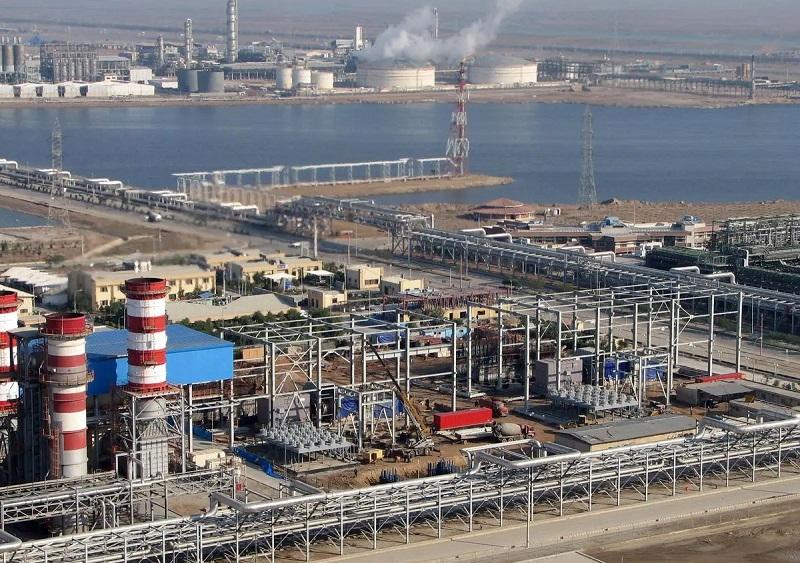
Iran's petrochemical industry has been given a brief opportunity following the temporary 60-day suspension of US sanctions on Iranian oil and petrochemical exports. While the measure is unlikely to trigger major foreign investment, industry experts believe it offers a valuable chance to rethink the country's long-term development strategy. Rather than focusing solely on higher exports, they argue that Iran should use this window to strengthen upstream energy production, secure reliable feedstock supplies and accelerate the transition from exporting raw materials to producing higher-value petrochemical products.
The temporary suspension, authorized by the US Treasury until Aug. 21, allows transactions involving Iranian crude oil, petroleum products and petrochemicals. Although the period is too short for large investment decisions, it has revived discussions about the future direction of one of Iran's most important export industries.
First Priority
Ali Fathalizadeh, head of Research and Technology at the Development and Engineering Department of the National Iranian Oil Company, believes restoring upstream capacity should be the industry's first priority.
"The immediate focus must be repairing damaged oil and gas infrastructure and restoring production capacity," he said. "Without stable upstream production, downstream petrochemical expansion will remain vulnerable."
According to Fathalizadeh, the short duration of the sanctions relief makes it unrealistic to expect international companies to commit billions of dollars to long-term projects. Instead, he said Iran should maximize production at undamaged petrochemical plants, increase exports and improve financial transactions while preparing the ground for broader cooperation if sanctions are lifted permanently.
He also warned that years of underinvestment have left many Iranian oil and gas fields in the second half of their production life, making new investment increasingly urgent. Developing downstream industries without expanding upstream production, he said, would be "like constructing additional floors on an unstable foundation."
Industry estimates suggest that every additional 50,000 barrels per day of oil production capacity requires roughly $1 billion in investment. Expanding national production capacity by several million barrels per day would therefore demand tens of billions of dollars in direct investment.
Beyond oil production, Fathalizadeh highlighted liquefied natural gas (LNG) as another strategic priority if international cooperation becomes possible. At the same time, he emphasized that investment decisions in downstream industries should favor sectors with strong feedstock advantages, export potential, advanced technology and relatively short project completion periods, particularly engineering polymers and polypropylene value chains.
Cautious Optimism
The temporary sanctions relief has also generated cautious optimism among market analysts.
Mohammadreza Shiri, a senior analyst in Iran's gas and petrochemical industry, believes the announcement carries greater political significance than immediate economic impact.
"This is more a political signal than an economic breakthrough," he said. "It may indicate the possibility of moving toward permanent sanctions relief, but it is far too early to make major investment decisions."
Shiri noted that more than a week after the announcement, few practical effects have become visible. Nevertheless, some easing of shipping restrictions has helped facilitate imports of essential goods. He believes exports of products such as methanol, urea and ammonia could rise during the temporary suspension, provided implementation proceeds quickly.
He also argued that Iran's petrochemical strategy should no longer revolve around expanding methanol production alone. Instead, investment should increasingly target propylene derivatives, propane dehydrogenation (PDH) projects and engineering polymers capable of generating substantially greater value added.
For many experts, permanent sanctions relief would require a broader transformation than simply increasing exports.
Fozieh Morovat, Director of Technology, Innovation and Product Development at Persian Gulf Petrochemical Industries Holding, believes Iran's long-term competitiveness depends on shifting toward specialized, technology-intensive products.
"The industry's strategic priority should be completing the value chain rather than expanding raw material exports," she said.
She argued that although Iran has achieved significant production capacity in methanol, urea and commodity polymers, much of these products are still exported without further processing, allowing most of the added value to be created abroad.
Morovat believes future investment should prioritize advanced catalysts, digital technologies, artificial intelligence, carbon capture, green hydrogen and engineering polymers. Stable feedstock pricing, predictable economic policies, stronger support for knowledge-based companies and expanded international technology partnerships will also be essential to attract long-term investors.
Need for Stability
Other industry representatives argue that downstream manufacturers stand to benefit the most if sanctions relief becomes more durable.
Saeed Torkman, head of the National Association of Polymer Industries of Iran, said the country's polymer sector requires stability more than temporary policy changes.
"Our industry needs long-term planning, not short-term opportunities," he said. "If international restrictions continue to ease alongside domestic economic reforms, downstream manufacturers will be able to invest with greater confidence."
According to Torkman, uncertainty following the sanctions announcement initially reduced trading activity in Iran's commodity exchange as producers and buyers waited for clearer signals on future prices and exchange rate policies. However, he believes sustained improvements in financial transactions, equipment imports and raw material supplies could significantly strengthen Iran's non-oil exports over time.
Despite differences in emphasis, experts interviewed for this report share a remarkably consistent message. The temporary suspension of sanctions should not be viewed as the beginning of a new investment boom but as an opportunity to prepare for one. Lasting growth will depend less on short-term export gains than on whether policymakers can implement reforms that improve investor confidence, ensure reliable feedstock supplies and encourage technological upgrading.
Completing petrochemical value chains has become a recurring recommendation. Rather than expanding capacity for basic products with increasingly narrow profit margins, experts argue that Iran should move toward higher-value chemicals, engineering polymers and advanced manufacturing that can generate stronger export revenues while creating skilled employment at home.
Major Challenge
The industry also faces a broader strategic challenge. As the global energy transition gradually reduces long-term demand growth for fossil fuels, Iran's window for monetizing its vast hydrocarbon reserves may become narrower. Delaying investment in upstream production, technology and downstream diversification could therefore carry significant long-term costs.
Ultimately, the current sanctions suspension is better understood as a test than a turning point. If it evolves into permanent sanctions relief, Iran could gain access to foreign capital, advanced technologies and international markets that have remained largely out of reach for years. If not, the industry will still face the same structural constraints that have limited its growth under sanctions.