
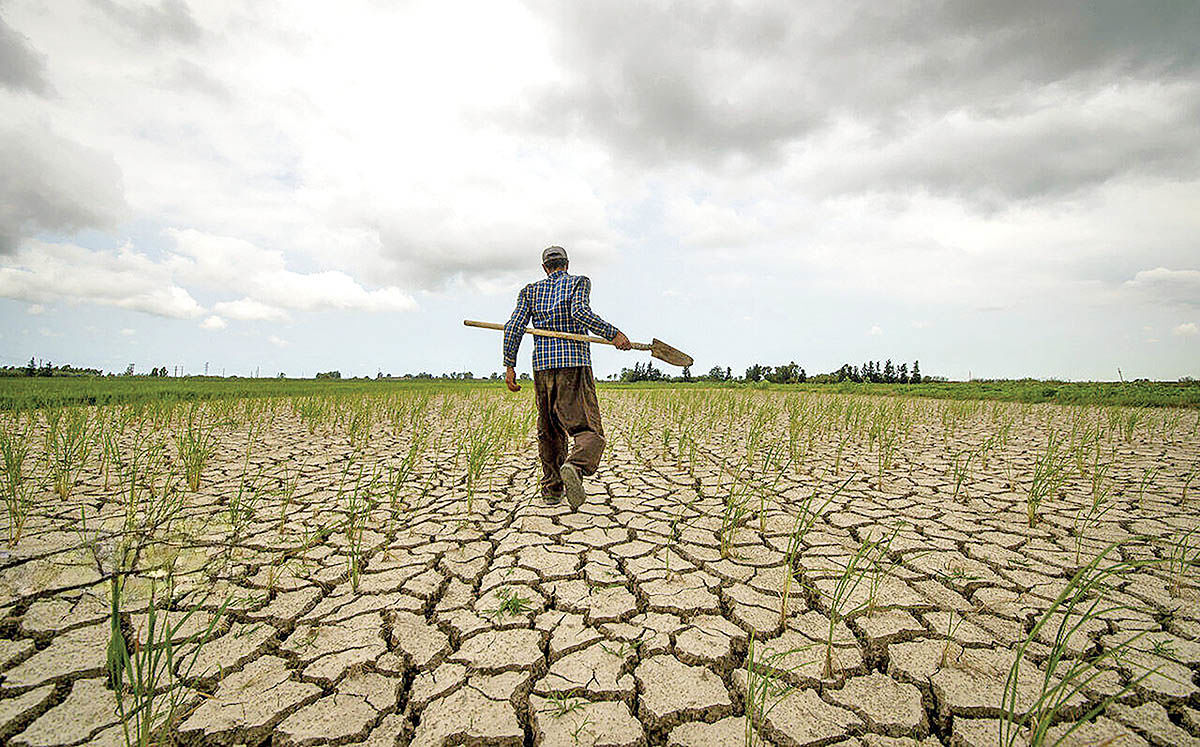
Iran’s agricultural sector experienced a difficult year in 1404 (March 2025–March 2026), with new official data showing that declining farm output became a major drag on the country’s non-oil economy. According to the latest national accounts released by the Statistical Center of Iran, the sector’s value added fell by 2.9% compared with 1403 (March 2024–March 2025), making agriculture the weakest-performing major sector of the economy after electricity, gas and water supply.
The figures suggest that the slowdown is not simply the result of temporary weather conditions or seasonal fluctuations. Instead, they point to deeper structural challenges that have gradually weakened one of Iran’s most important productive sectors. Given agriculture’s role in food security, rural employment and the supply of raw materials for the food industry, its continued weakness has implications that extend well beyond farms.
The decline also coincided with slower activity across the broader economy. Iran’s non-oil gross domestic product contracted by 0.3% in 1404, with weaker agricultural production contributing to the disappointing performance. Meanwhile, other sectors provided only limited support. Services expanded by just 0.3%, while industries and mining recorded growth of 0.5%, leaving the economy without a strong engine of expansion.
Structural Challenges
Perhaps the most notable aspect of the latest report is the consistency of agriculture’s decline throughout the year. Instead of experiencing a temporary setback during one growing season, the sector remained in negative territory during every reporting period. Value added fell by 2.7% in the first quarter, 3% during the first half of the year, remained down 3% after the first nine months and ended 1404 with a 2.9% contraction.
Such a pattern suggests that the sector’s problems are structural rather than cyclical. If adverse weather alone had been responsible, some improvement might have appeared later in the year. Instead, the persistent weakness indicates that farmers have been coping with several challenges simultaneously.
Among the most significant constraints are water shortages and declining rainfall in many agricultural regions. Iran has faced growing pressure on its water resources for years, forcing producers in some areas to reduce cultivation or shift to less water-intensive crops. Climate conditions have therefore added another layer of difficulty to an industry already operating under economic constraints.
At the same time, production costs have continued to rise. Higher prices for fertilizers, seeds, machinery, fuel and other agricultural inputs have increased operating expenses, while access to affordable financing has remained limited. Many producers have also struggled to secure sufficient working capital, making it more difficult to maintain production or invest in new equipment.
Investment Slowdown
These pressures affect investment decisions as well. When production costs increase faster than selling prices, farmers have less incentive to expand cultivation or modernize their operations. Over time, weaker investment can reduce productivity and make future output even more difficult to improve.
The latest national accounts reinforce that concern. Gross fixed capital formation declined by 2.8% in 1404, while private final consumption expenditure fell by 1.4%. Together, these figures point to weaker domestic demand and lower investment across the economy.
For agriculture, reduced investment carries particular importance because improving productivity increasingly depends on modern irrigation systems, mechanization, improved storage facilities and more efficient farming technologies. Without sufficient capital spending, producers may struggle to offset rising costs and increasingly difficult environmental conditions.
Wider Implications
The implications extend beyond economic growth. Lower domestic agricultural production can increase reliance on imported food products, placing additional pressure on foreign exchange resources at a time when Iran continues to face external financial constraints. Greater dependence on imports can also leave the country more exposed to volatility in international food markets.
Rural communities could also feel the effects. Lower farm incomes reduce the ability of households to invest in land, equipment and technology while encouraging migration from villages to cities in search of better economic opportunities. Over time, these trends can weaken agricultural production further and make recovery more difficult.
The latest report from the Statistical Center of Iran therefore presents more than a disappointing annual result. It highlights structural challenges that have gradually reduced the sector’s contribution to economic growth. Reversing the trend will likely require sustained investment, more efficient water management, improved access to financing and a stable policy environment that encourages long-term production. Without such measures, agriculture may remain one of the principal constraints on Iran’s non-oil economy even if other sectors begin to recover.