
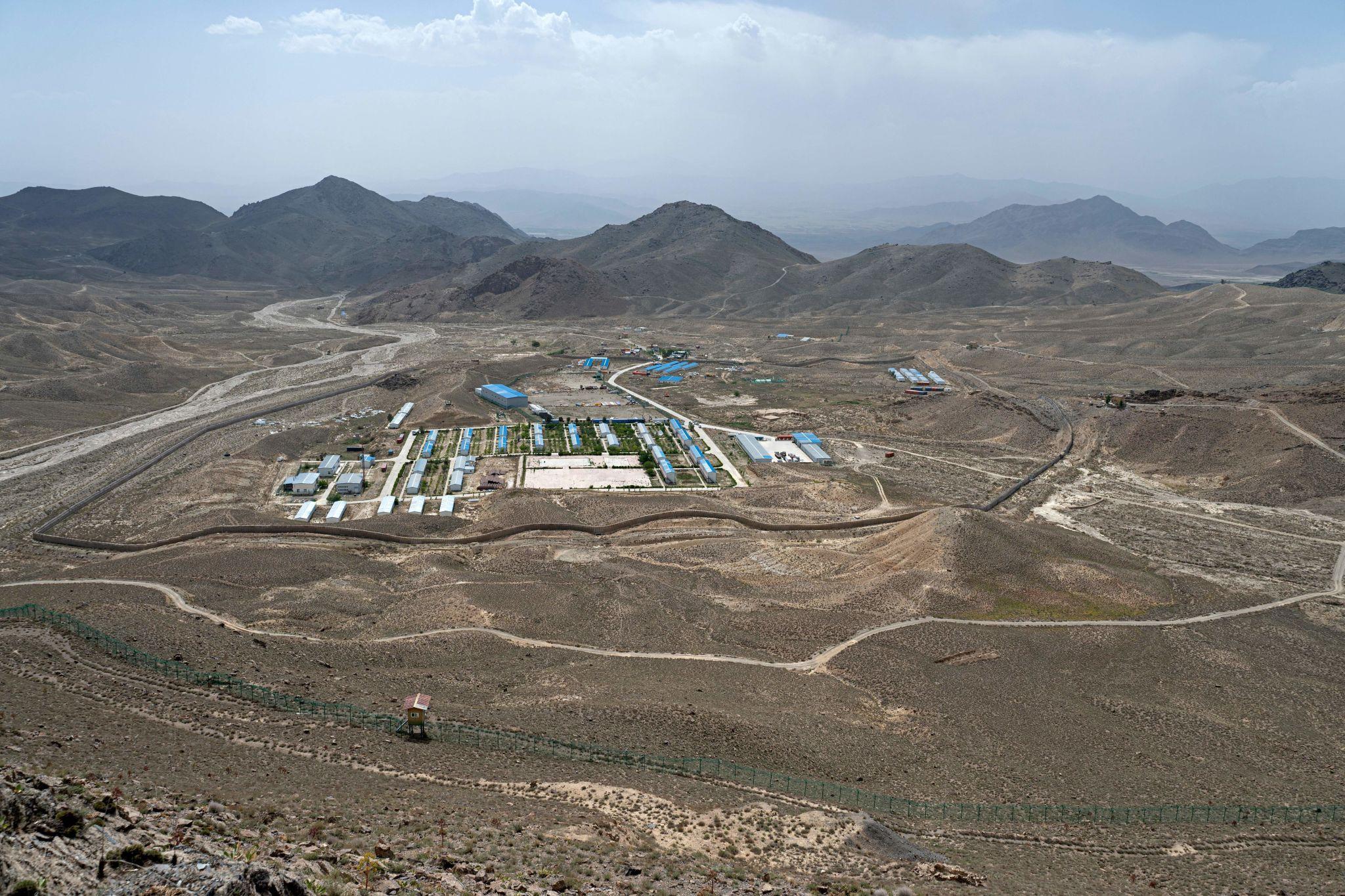
Afghanistan is home to some of the world's richest untapped mineral deposits, yet decades of conflict have kept most of those resources buried underground. As security conditions gradually improve and Kabul seeks to attract investment, the country's mining sector is entering a new phase. For neighboring Iran, the shift presents both an opportunity and a strategic challenge. While Iranian companies possess mining expertise, growing competition from China, India and other regional players could leave Tehran behind unless it moves quickly.
Afghanistan is believed to hold vast reserves of iron ore, copper, lithium, rare earth elements, lead, zinc, oil and natural gas. Estimates place the value of its mineral wealth at between $1 trillion and $3 trillion, although comprehensive exploration has yet to be completed. For years, however, war, political instability and poor infrastructure prevented these resources from being developed.
Today, the Afghan government is gradually replacing the traditional state-controlled model with long-term contracts for private investors while retaining ownership and regulatory authority. The strategy is intended to attract foreign capital and technology, although domestic private firms lack the financial resources needed for large-scale mining projects.
Security Matters
Mahmoud Siadat, head of the Iran-Afghanistan Joint Chamber of Commerce, believes security has always been the decisive factor.
"The biggest obstacle to foreign investment in Afghanistan's mining sector has been the lack of security," he told the Persian daily Donya-e-Eqtesad. "Most major mines are located far from urban centers, and access routes were unsafe for decades."
According to Siadat, recent improvements in security have encouraged new investment and exploration activities. Extraction has already begun in several deposits, but he said only a small portion of the country's mineral potential has been developed.
Beyond security, Afghanistan still faces structural challenges, including expensive energy, inadequate transport infrastructure, limited technical expertise and a shortage of modern mining technology. Nevertheless, the gradual arrival of foreign equipment and engineering services is expected to accelerate production in the coming years.
Another important policy shift is the Afghan government's effort to increase domestic value added. Authorities have announced restrictions on exports of raw minerals and are encouraging investors to establish processing facilities inside the country.
Beyond Raw Exports
Siadat described the policy as positive because it could create jobs and generate greater economic benefits for Afghanistan. However, he noted that limited financing and insufficient infrastructure have forced authorities to adopt a more flexible approach in recent months.
For Iran, the policy also changes the nature of bilateral cooperation. Instead of simply importing raw materials, Iranian companies could provide mining equipment, engineering services and processing technology.
"Iran has already entered Afghanistan's mining sector, although mostly through technical and exploration support rather than direct investment," Siadat said. He added that Iranian expertise in mining machinery and engineering services could become a valuable export if supported by government guarantees, temporary equipment permits and stronger investment protection.
He also emphasized the importance of expanding railway links, including projects connecting Herat with northern Afghanistan, arguing that improved transport infrastructure would facilitate mineral trade between the two neighbors.
Untapped Giants
Among Afghanistan's best-known mining projects is the Hajigak iron ore deposit, regarded as one of Asia's largest undeveloped iron ore reserves. International interest has existed for years, but repeated security setbacks have delayed development.
Mining analyst Keyvan Jafari Tehrani recalled that Iranian firms participated in the 2012 bidding process but were removed because of sanctions. The project was later awarded to an Indian consortium, which withdrew after security conditions deteriorated.
The Aynak copper mine followed a similar path. A Chinese state-owned company won development rights in 2007 but suspended operations after militant attacks forced its personnel to leave the site. Negotiations are now underway for China to resume the project.
According to Jafari Tehrani, Afghanistan's mining policies have also changed significantly under the current administration.
"The government has made it clear that it will not allow the export of raw minerals," he said. "Any mining investment must include processing facilities inside Afghanistan."
That requirement creates both opportunities and complications for Iranian investors. While Iran has experience in mineral processing, developing such projects requires reliable electricity, natural gas and significant financial resources.
Jafari Tehrani argued that financing remains one of Iran's biggest disadvantages. Large state-owned and semi-state mining companies may have the capacity to invest, but private firms still face serious financial constraints. He also stressed that Afghan authorities must provide credible guarantees to protect foreign investments if they hope to attract long-term partners.
Race for Resources
Competition is also becoming more intense. China, India, Turkey, Qatar and even American investors have shown interest in Afghanistan's mineral sector. Despite sharing a long border and strong commercial ties with Afghanistan, Iran has yet to establish a major industrial mining project there.
At the same time, regional transport routes are evolving in ways that may reduce Iran's strategic advantage. New corridors linking Central Asia with Pakistan's Gwadar Port, together with alternative Belt and Road routes bypassing Iranian territory, have increased competitive pressure.
Afghanistan's mineral wealth offers significant opportunities, but geography alone will not guarantee Iran a leading role. Success will depend on investment capacity, infrastructure, technology transfer and effective economic diplomacy. Without coordinated policies and stronger financial backing, Iran risks watching others develop one of the region's richest untapped mining frontiers.