
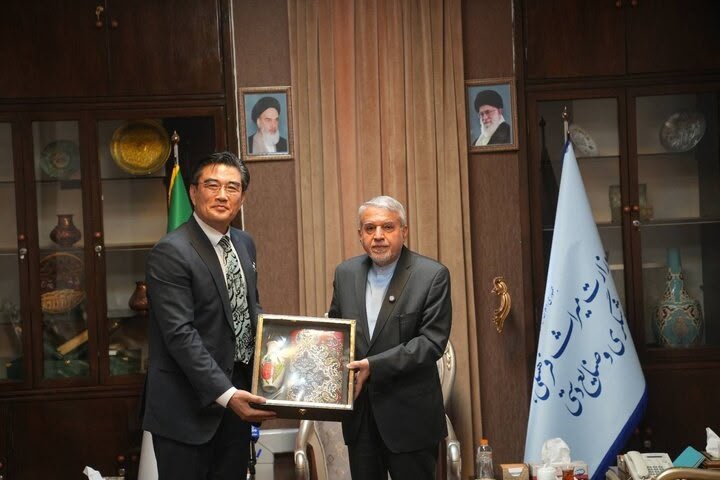
As Iran and South Korea mark over six decades of diplomatic relations, a renewed momentum is sweeping across their bilateral agenda—with culture, tourism, and creative industries taking center stage. At the heart of this cultural renaissance is a series of high-level strategic talks in Tehran, complemented by the relentless on-the-ground efforts of South Korean Ambassador Kim Junpyo, who has transformed the embassy into a vibrant hub of cultural diplomacy while personally traversing the length and breadth of Iran to forge people-to-people connections.
In a significant meeting that set the tone for future cooperation, Iran's Minister of Cultural Heritage, Tourism and Handicrafts Seyyed Reza Salehi-Amiri emphasized the urgent need to expand strategic cooperation with South Korea. Yet, beyond the closed doors of ministerial offices, Ambassador Kim is actively turning these diplomatic blueprints into tangible cultural exchanges, organizing numerous events at the embassy, undertaking extensive provincial visits, and immersing himself in Iran's rich historical tapestry to build a lasting bridge between the two nations.
High-Level Talks Pave the Way for a Strategic Cultural Partnership
The recent meeting between Salehi-Amiri and Ambassador Kim Junpyo in Tehran marked a pivotal moment in the bilateral cultural calendar. During their discussions, Salehi-Amiri underscored that entering the creative industries economy is a strategic priority for his ministry, explicitly pointing to South Korea's remarkable achievements in this domain. "The Republic of Korea holds a remarkable and distinguished position in many indicators within this sector," the minister stated, adding that South Korea's successful experience is highly valuable for Iran.
With 29 sites already inscribed on UNESCO's World Heritage List and 58 others on the tentative list, Iran possesses a wealth of cultural capital. Salehi-Amiri highlighted a particularly exciting development: the official announcement of the UNESCO registration of the Alamut Fortress historical complex, expected to be made at the upcoming World Heritage Committee session hosted by South Korea. He described this as a "turning point" in bilateral cultural cooperation, offering a tangible symbol of the deepening trust between Tehran and Seoul.
The Iranian minister did not limit his proposals to heritage alone. He laid out an ambitious framework for joint initiatives, including reciprocal exhibitions of historical artifacts in museums across both countries, joint training programs in monument restoration, and expanding collaborations between universities and specialized centers. He also expressed Iran's keen interest in tapping into South Korea's cutting-edge advancements in digital technologies and artificial intelligence. By inviting Korean cultural figures, celebrities, and influencers to explore Iran, Salehi-Amiri proposed, the country's historical and tourism capacities could reach a global audience through international social media networks, firmly positioning Korea as a trusted partner in this cultural journey.
Ambassador on the Frontline: Provincial Tours and Hands-On Diplomacy
While the ministerial meeting provided the strategic framework, Ambassador Kim Junpyo is the engine driving the practical execution of these cultural ties. His dedication to understanding Iran beyond the capital is exemplary. During the meeting with Salehi-Amiri, the Ambassador spoke fondly of his first provincial visit to Qazvin—a trip that left an indelible mark on his perception of Iranian civilization. The site of his visit was the historic Alamut fortress, an experience he described as both challenging and awe-inspiring.
"The difficult path of climbing to the Alamut fortress was itself part of the appeal of this valuable heritage," Ambassador Kim remarked. He noted that upon seeing the site, he immediately wondered why such a significant landmark had not already been inscribed on the UNESCO list. His personal excitement upon learning of its impending registration speaks volumes about his genuine passion for Iran's heritage, a sentiment that has driven him to explore numerous other provinces and cultural sites across the country.
This hands-on diplomacy extends far into the embassy's programming. Ambassador Kim has been instrumental in hosting a wide array of events that bring Iranian and Korean cultures into direct dialogue. In a vibrant celebration of diplomatic ties, the Embassy of the Republic of Korea hosted the Korea-Iran Calligraphy Exhibition on October 23, 2025, commemorating the 63rd anniversary of diplomatic relations. The event, held at the Ambassador's Residence, was transformed into a crossroads of artistic tradition. Under the meaningful theme of "Family," the exhibition united the delicate harmony of Persian Nasta'liq script with the refined elegance of Korean calligraphy. In his address, Ambassador Kim noted that this was the first visit by Korean calligraphy artists to Iran in nine years, marking a significant reunion that embodies the shared values of creativity and respect between the two cultures.
Mobile Museums and Institutional Dialogues: Embassy Initiatives Redefining Exchange
The embassy's cultural programming has been remarkably innovative, seeking to break down physical barriers to cultural access. On International Museum Day, held on May 18 at the embassy premises in Tehran, Ambassador Kim and his team unveiled a strikingly creative initiative: the "Korean Culture Box." Described as a mobile mini-museum, this concept was born from the idea that museums should no longer remain confined to specific spaces but should go directly to where people are.
"This small museum is a modest gift to the people of Iran who love Korean culture," read a video message from Dr. Jang Sanghoon, Director of the National Folk Museum of Korea. The Culture Box comprises four distinct boxes introducing the Sarangbang (men's space) and Anbang (women's space) in traditional Korean society, alongside displays of Hanbok (traditional clothing) and Hangeul (the Korean writing system). This portable exhibition demonstrates the unique characteristics of Korean culture while showcasing the universality of human culture, making it accessible to Iranian audiences across the country.
First Secretary Dr. Ohk Nara set the poetic tone for the event by reciting a Korean poem translated into Farsi, a gesture of profound cultural respect that resonated deeply with the Iranian museum officials present. Ambassador Kim reinforced the importance of this dialogue by pointing to the existing Memorandum of Understanding signed between the National Museums of Korea and Iran. However, he stressed the desire to expand exchanges further, hoping that institutions like the National Art Collection of Iran and the National Folk Museum of Korea would serve as new links in the chain of cultural understanding.
Digital Horizons and the Road Ahead: A Vision for the Next 63 Years
Looking forward, the partnership between Iran and South Korea is poised to transcend traditional cultural exchanges and enter the digital age. Salehi-Amiri explicitly highlighted Iran's eagerness to learn from South Korea's advanced experience in digital technologies and artificial intelligence, aiming to apply these modern tools to the preservation of cultural heritage, the promotion of tourism, and the revitalization of handicrafts. This forward-thinking approach aligns seamlessly with the Korean cultural wave, which has captured the imagination of Iranian youth and the broader public.
Ambassador Kim has consistently expressed his hope that these exchanges will grow even stronger and more enduring. During his calligraphy exhibition speech, he looked beyond the present anniversary, stating, "On this 63rd anniversary, let us look forward to the next 63 years—and beyond—with the hope of writing new chapters of friendship, creativity, and respect together." This long-term vision is backed by concrete steps, from the proposed reciprocal museum exhibitions to the joint restoration projects that preserve shared human history.
Moreover, the ambassador's initiative to invite cultural figures and influencers to Iran suggests a sophisticated understanding of modern diplomacy, leveraging soft power to reshape international perceptions of Iran. As Salehi-Amiri affirmed, "We consider the Republic of Korea a trusted partner of Iran in developing cultural, civilizational, and tourism cooperation."
In conclusion, the cultural and tourism relationship between Iran and South Korea is no longer just a diplomatic formality—it is a living, breathing partnership. From the high-level strategic discussions in Tehran to the intimate settings of calligraphy exhibitions and the innovative deployment of the Korean Culture Box, both nations are actively weaving a tapestry of mutual respect. Ambassador Kim Junpyo's tireless efforts—his provincial travels to historical marvels like Alamut, his hosting of diverse cultural programs, and his personal engagement with Iranian communities—are proof positive that cultural diplomacy thrives not on speeches alone, but on shared experiences, artistic dialogue, and a genuine commitment to understanding one another. As these ties deepen, the future promises an even richer exchange of ideas, art, and heritage between these two ancient civilizations.