Iran’s economy entered the Persian year 1404 (March 2025–March 2026) under exceptional pressure, as external shocks coincided with long-standing structural weaknesses. Two military confrontations added to fiscal and infrastructure costs while heightening uncertainty, inflation expectations and investment risks. These developments unfolded against a backdrop of chronic inflation, structural budget deficits and weak investment, pushing the economy deeper into stagflation. Even so, the outlook for the coming year suggests that lower geopolitical tensions could create an opportunity for greater stability—provided domestic reforms move forward.
Stagflation remains one of the most difficult economic conditions for policymakers because it combines two challenges that usually require different policy responses. Economic growth weakens while inflation remains elevated, reducing purchasing power, limiting business activity and putting additional pressure on employment. Iran experienced both trends during 1404 as weaker domestic demand, lower investment and persistent liquidity growth combined to create a difficult macroeconomic environment.
Non-Oil Weakness
Recent data from the Central Bank of Iran and the Statistical Center of Iran show that non-oil economic growth turned negative compared with the previous year. This indicator offers a more accurate picture of domestic economic performance than oil output, which is heavily influenced by global markets and geopolitical developments. A contraction in the non-oil economy suggests that productive sectors are struggling not only to generate new value but also to maintain existing production capacity.
The slowdown reflects weaknesses across the key drivers of sustainable growth: production, investment and productivity. Agriculture continues to face mounting pressure from water shortages, declining rainfall, soil degradation and insufficient natural resource management. As an important contributor to employment and food security, the sector's ability to expand has become increasingly constrained.
Industry is confronting equally significant obstacles. Frequent energy shortages, limited access to financing, rising costs for raw materials, aging equipment and restricted access to modern technologies have all reduced productivity and competitiveness. Many manufacturers are prioritizing business continuity over expansion, delaying investment decisions until economic conditions become more predictable.
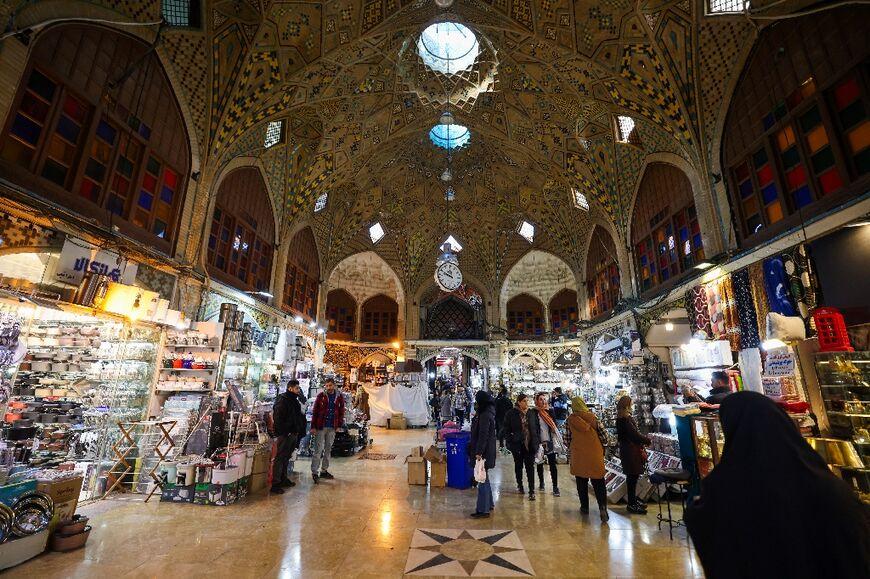
The services sector, which had previously helped cushion economic downturns, has also lost momentum. Declining household purchasing power has weakened demand across retail, tourism and urban services. Softer consumption is translating into slower business activity and weaker job creation, reinforcing the broader economic slowdown.
Looking ahead, the recent understanding between Iran and the United States has become one of the most significant political developments shaping expectations for 1405 (March 2026–March 2027). While such diplomatic progress could reduce geopolitical tensions and improve business sentiment, it should not be viewed as a complete solution to Iran’s economic challenges.
The immediate benefits of lower political risk would likely include greater exchange-rate stability, reduced speculative activity and a modest improvement in trade conditions. However, Iran’s principal economic constraints remain domestic. Past experience has shown that even when external pressures ease, sustainable growth is unlikely without meaningful structural reforms. Diplomatic progress can improve the environment for economic activity, but it cannot substitute for policy reform.
The roots of Iran’s stagflation lie primarily in persistent macroeconomic imbalances. Chronic fiscal deficits continue to fuel inflationary pressures, while weaknesses in the banking sector and growing pension obligations add to financial vulnerabilities. At the same time, declining investment has reduced the economy’s ability to increase productive capacity and improve long-term productivity. Private investors continue to seek greater policy consistency, transparency and predictability before committing capital to long-term projects.
Two Paths
The outlook for 1405 can broadly be viewed through two scenarios. In the more optimistic case, lower regional tensions and continued diplomatic engagement could help stabilize financial markets and gradually slow inflation. Such conditions would allow the economy to move toward a period of fragile stability, although robust growth would remain unlikely without addressing underlying structural constraints.
A more cautious scenario assumes that regional uncertainty persists. Under these conditions, Iran would continue to face weak growth, elevated inflation and gradual erosion of productive capacity. Reconstruction costs, fiscal pressures and continued liquidity growth would remain the principal sources of macroeconomic instability. Rather than representing a decisive recovery, the coming year would likely focus on containing economic pressures and preventing a deeper slowdown.
Iran’s economy is entering a period where stability may become more achievable than rapid expansion. Lower geopolitical tensions could improve confidence and reduce market volatility, but lasting progress will ultimately depend on addressing structural challenges at home. Fiscal discipline, banking reform, stronger private investment and a more predictable policy environment will determine whether the economy can transform greater stability into sustainable and inclusive growth.