
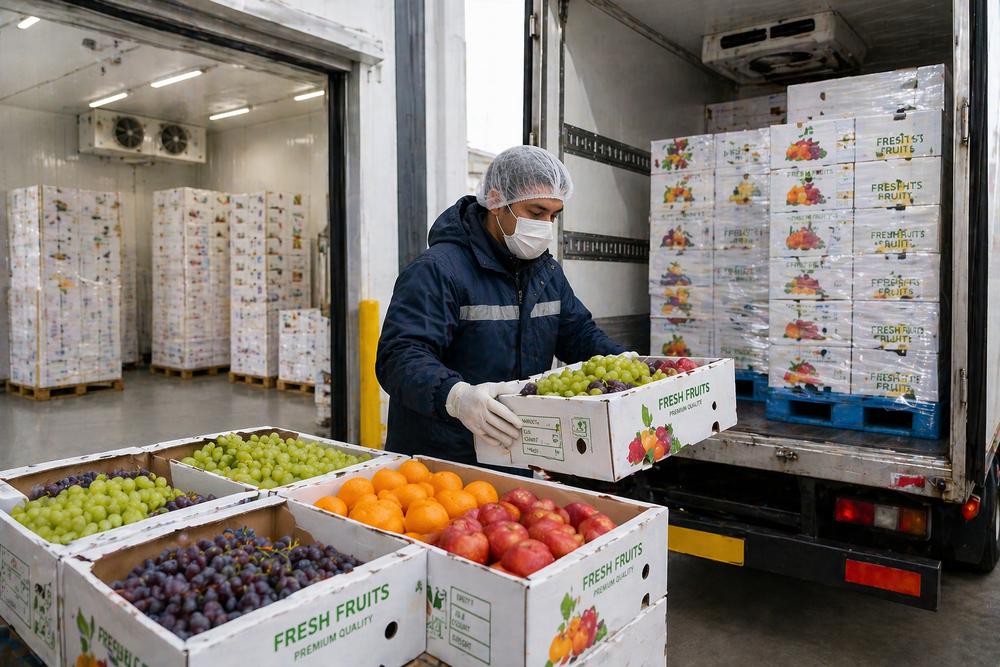
Qatar's $1.2 billion fresh fruit import sector represents one of the most commercially attractive near-shoring opportunities for Iranian horticultural exporters. However, according to a new market intelligence brief from Tehran's commercial attaché in Doha, logistical proximity alone will not guarantee market share—competitors are outmaneuvering Iranian rivals through superior branding, packaging, and supply-chain reliability.
Geographical Dividend vs. Operational Reality
Abbas Abdolkhani, Iran's Commercial Attache to Qatar, notes that the emirate's arid climate, limited water resources, and constrained domestic agricultural output render it almost entirely dependent on foreign fruit imports—a dependence that is intensifying as Qatari consumer demand for premium, fresh produce continues its upward trajectory.
Iran's competitive calculus rests on several tangible advantages: climatic diversity enabling four-season production, high organoleptic quality (taste and variety), and critically, a short maritime lane from Dayyer Port to Al Ruwais. This transit corridor, measurable in hours rather than days, provides a decisive edge in cold-chain integrity, reducing post-harvest waste and extending shelf life at the retail endpoint—a logistical differentiator that distant suppliers such as South Africa and European Union member states cannot replicate.
The Competitive Landscape
Nevertheless, the attache warns that quality and proximity are no longer sufficient differentiators. Turkey, Egypt, Jordan, Lebanon, South Africa, India, Pakistan, and select European nations have made substantial capital investments over recent years in advanced sorting lines, standardized export packaging, cold-storage infrastructure, and aggressive in-market promotional campaigns. These players have successfully captured significant and stable market segments, signaling a clear message to Iranian producers: product quality is a baseline requirement, not a winning strategy.
Operational Necessities for Sustainable Penetration
For Iranian exporters to transition from sporadic spot-shipments to reliable, long-term supply partners, Abdolkhani outlines several non-negotiable operational upgrades:
· Standardization & Grading: Investments in mechanized sorting and consistent grade classification to meet Qatari retail specifications.
· Cold-Chain Compliance: Reliable use of refrigerated containers across the entire sea-freight leg.
· Supply Continuity: Ability to guarantee regular, uninterrupted delivery schedules throughout the season.
· Brand Equity: Development of reputable export-specific brands that signal reliability and consistent quality to Qatari importers and chain stores.
Market Entry Strategy
The attache emphasizes that Qatari buyers prioritize stable, predictable suppliers over lowest-cost options. A producer offering consistent quality, uniform packaging, and dependable delivery will command premium agreements over an erratic, cheaper competitor. Consequently, Iranian private-sector actors must adopt a professionalized approach—eschewing ad-hoc trading in favor of direct, long-term partnerships with Qatari importers, distribution logistics firms, and multi-brand retail chains. This requires sustained marketing investment and a commitment to regulatory compliance with Qatari food-safety and phytosanitary standards.
Economic Multipliers
Beyond direct foreign-exchange earnings, a strengthened presence in the Qatari market promises substantial secondary benefits: increased domestic horticultural production capacity, expansion of the packaging and cold-logistics ecosystem, measurable reductions in agricultural post-harvest waste, and the creation of sustainable, high-value employment opportunities for private-sector stakeholders across the entire value chain.