
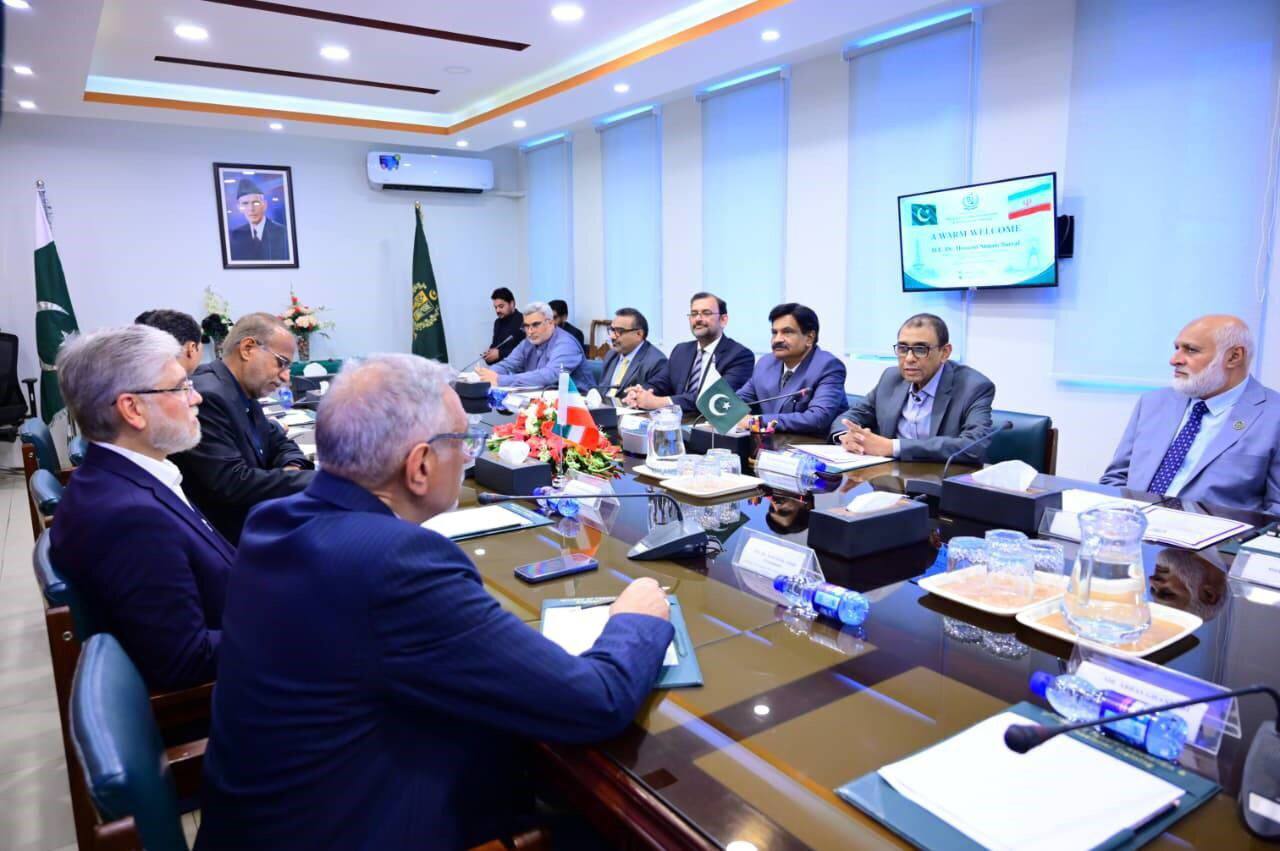
In a series of strategic meetings held on the sidelines of major international events—including the ECO Science Ministers’ conference in Islamabad, the TETZ 2026 summit in Istanbul and the UNESCO General Conference in Samarkand—senior officials from Iran and Pakistan have agreed to expand scientific cooperation, with a focus on artificial intelligence, educational technology and skills development.
Federal Minister Khalid Maqbool Siddiqui and his Iranian counterpart Hossein Simaei-Sarraf are leading efforts to transform the two countries’ shared cultural and academic ties into practical innovation and research outcomes. The cooperation aims to strengthen regional capabilities by promoting joint projects, knowledge exchange and the development of skilled human resources.
A key outcome of the discussions was a proposal to establish a joint scientific working group to accelerate collaboration in high-potential fields, including AI, educational technology and technical-vocational training. Pakistan’s State Minister Wajiha Qamar highlighted Iran’s experience and achievements in areas such as agriculture, construction and production technologies, saying closer cooperation could help both countries develop domestic expertise and reduce dependence on external sources of knowledge.
Existing memorandums of understanding, particularly with Pakistan’s National University of Modern Languages (NUML), have already created a foundation for further cooperation. The next phase will focus on commercializing joint research initiatives and organizing academic conferences to strengthen links between universities and industries.
As part of efforts to expand educational exchanges, Iran has offered to open Sistan-Baluchestan University to Pakistani students while supporting the establishment of Persian and Urdu language programs in both countries. Officials believe such initiatives can help create sustainable talent pipelines and deepen long-term academic relations.
With Iran’s Komeil Tayyebi currently serving as president of the ECO Science Foundation, analysts view the initiative as part of a broader effort to strengthen regional scientific and technological cooperation. Both sides have pledged to maintain close institutional coordination, aiming to translate academic partnerships into tangible economic benefits and support sustainable development across the region.