
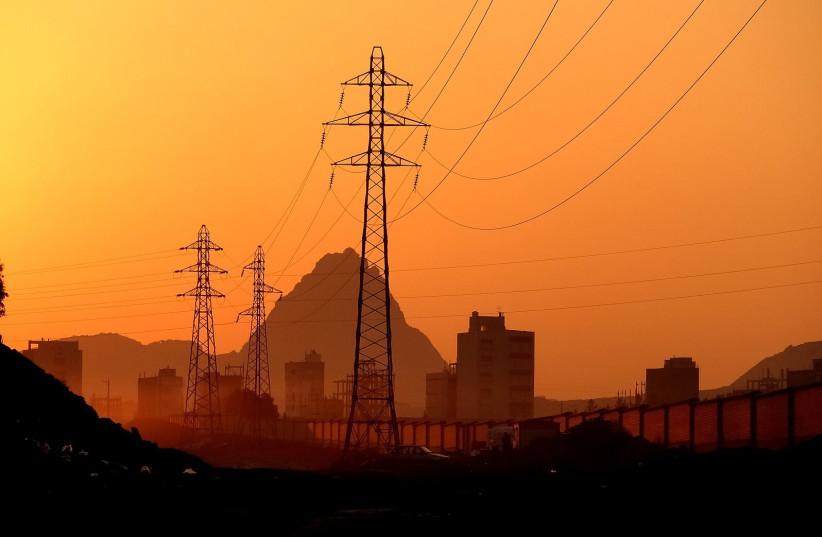
As Iran's energy infrastructure faces unprecedented pressure from both cyber and kinetic strikes, the country's electricity network has demonstrated what officials describe as a "remarkable" level of resilience—surviving a direct campaign against its generation and transmission assets while maintaining uninterrupted service for the 23rd consecutive year.
At a technical briefing held in Zanjan province on Tuesday, senior executives from Tavanir, the state-owned utility responsible for power generation and distribution, outlined how the grid withstood a coordinated assault that saw more than 2,000 individual points of the network physically struck and approximately 4,500 megawatts of generating capacity—largely from independent private producers—knocked offline.
According to company officials, the attack, which targeted energy infrastructure including the giant South Pars gas field, required crisis managers to respond within ten minutes to prevent a cascading failure. Emergency measures included switching power plants from natural gas to liquid fuels and implementing targeted load-shedding, moves that collectively averted what could have been a nationwide blackout.
Mohammad Allahdad, Tavanir's managing director, framed the grid's performance not merely as an engineering achievement but as a matter of national security. "Grid stability is not just a technical requirement," he said. "It is a vital component of Iran's national defense."
The company's strategy has increasingly leaned away from centralized command-and-control models toward a more distributed architecture. With more than one million kilometers of transmission lines and 910,000 substations spanning the country, officials acknowledged that top-down management alone is no longer viable. The shift toward "decentralized and sustainable governance" across power plants, substations, and control facilities is now considered an operational imperative rather than a long-term aspiration.
Dispatching centers—the network's nerve hubs—proved particularly critical. The South Pars incident, according to Allahdad, demonstrated that these facilities are the "beating heart" of crisis response, and their reinforcement is directly correlated with the overall integrity of the national grid.
The Zanjan region has become a testing ground for this new approach, with several new control centers inaugurated in recent months. These facilities are designed to enable finer-grained monitoring, faster local decision-making, and improved redundancy—features that officials believe will be decisive against future threats, whether military, cybernetic, or natural.
While the government has not disclosed the full extent of the damage or the identity of the perpetrators, the subtext of the briefing was clear: Iran's electricity sector is being reorganized for a protracted period of heightened vulnerability, and its ability to absorb punishment while keeping the lights on is now considered a strategic asset on par with its missile programs or cyber capabilities.
For now, the grid holds. But whether its newly adopted decentralized model can withstand a more sustained or sophisticated assault remains an open question—one that engineers and security planners are racing to answer before the next test arrives.