
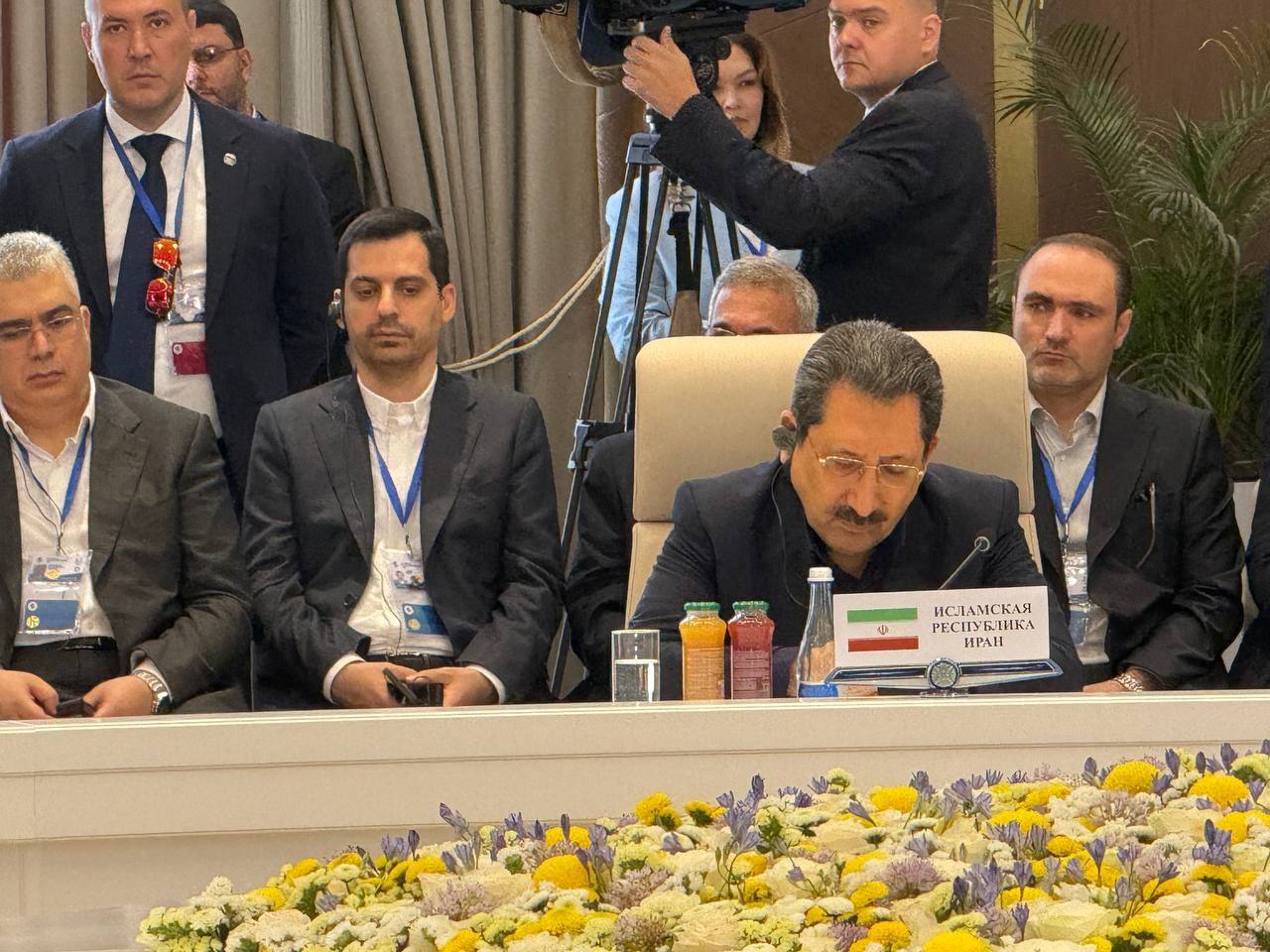
Iran is positioning itself as a strategic partner within the Eurasian Economic Union (EAEU), signaling a clear shift toward long-term economic integration as a buffer against external pressures and a pathway to regional stability.
Speaking at the second meeting of the EAEU’s Intergovernmental Council in Kyrgyzstan this week, Iran’s Minister of Industry, Mining and Trade, Seyyed Mohammad Atabak, underscored Tehran’s commitment to deepening trade and investment ties with the union’s five member states. At the top of the agenda: full implementation of a free trade agreement, development of transit corridors, and creation of alternative financial mechanisms independent of Western-dominated systems.
“Economic integration and long-term regional cooperation are the keys to sustainable growth and shared prosperity,” Atabak said, emphasizing Iran’s belief in multilateral frameworks that operate without extra-regional interference. He pointed to Iran’s active membership in ECO, BRICS, the Shanghai Cooperation Organization, and other regional bodies as evidence of its pivot toward Eastern and Southern alliances.
The minister confirmed that Tehran would host the second Joint Committee meeting with the Eurasian Economic Commission later this year, alongside a working group on technical trade barriers. These follow-ups come roughly three months after the first anniversary of the free trade agreement’s implementation—a deal Atabak described as the most significant bilateral economic step in the past year.
Beyond trade in goods, Atabak raised a more ambitious goal: building a parallel financial architecture. He proposed that EAEU central banks collaborate on developing central bank digital currencies (CBDCs) and explore a new interbank messaging system to replace SWIFT. “The union has reached sufficient maturity to create an independent financial and banking system,” he said, framing the move as essential for members pursuing independent foreign policies.
Iran also sees itself as a logistics hub for the bloc, leveraging its position along the north-south and east-west transit corridors. Atabak offered Iranian expertise in energy, customs modernization, and digital infrastructure to EAEU members, arguing that shared transport and energy networks would reduce poverty, narrow economic disparities, and stabilize the region.
“By relying on cultural and historical commonalities and geographical proximity, we can portray a successful model of regional integration,” he said, adding that Iran supports the creation of a common market for oil and petroleum products within the union.
The minister’s remarks come at a time when Iran is seeking to offset the impact of sanctions and isolation through deeper engagement with non-Western economic blocs.
Iran and EAEU appear eager to turn declaratory policy into tangible results.