
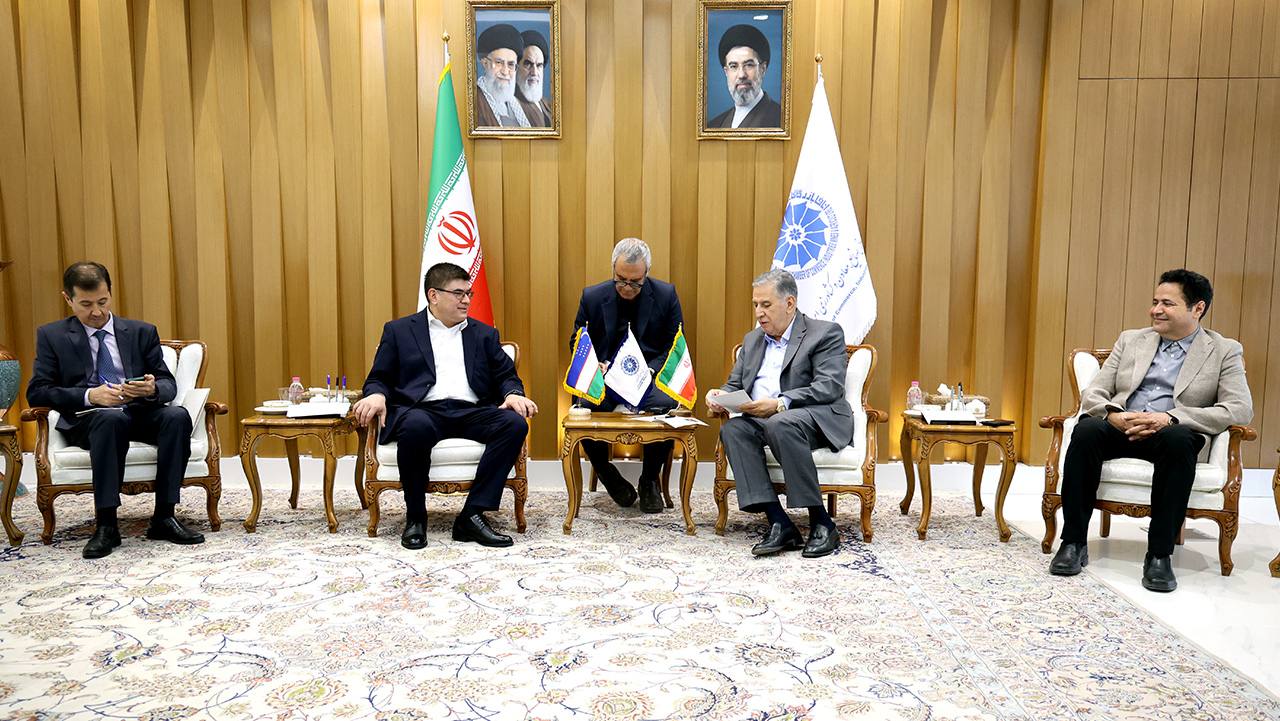
Iran and Uzbekistan have signaled renewed commitment to expanding economic ties, with senior officials from both sides outlining concrete steps to remove logistical and regulatory barriers that have long constrained bilateral trade.
During high-level talks in Tehran, Samad Hassanzadeh, head of the Iran Chamber of Commerce, Industries, Mines and Agriculture, called for accelerated transit facilitation for Iranian goods passing through Uzbek territory, identifying visa liberalization for Iranian businesspeople as a priority. "Tehran has already unilaterally waived visa requirements for Uzbek nationals. We expect reciprocal measures to enable smoother travel for our economic operators," he said.
The meeting, which also involved Uzbekistan's ambassador to Iran, Fariddin Nasriyev, served as a preparatory session for a joint business forum aimed at realizing a previously agreed target of $2 billion in annual trade turnover by 2027—a figure that would represent a significant leap from current modest levels.
Hassanzadeh acknowledged that geopolitical pressures, including the naval blockade on Iran and disruptions linked to recent regional conflicts, have complicated transit logistics. He urged Tashkent to streamline road transport procedures and expedite customs clearance along the transit corridor, noting that 29 joint projects in technical engineering, water infrastructure, and sewage treatment are already under negotiation between private sector actors.
On investment, both sides reaffirmed their intention to establish a joint fund to finance collaborative ventures. Hassanzadeh highlighted Iranian capabilities in power generation equipment, renewable energy infrastructure, and petrochemicals, while also proposing Uzbek-Iranian partnerships in steel production, textile manufacturing, and greenhouse farming.
His deputy, Hossein Pir-Moazzen, elaborated on agricultural cooperation, pointing to complementarities in hydroponic greenhouse technology and seed production. "We are not competitors in seasonal produce—we are natural partners," he noted, echoing earlier remarks by the Uzbek ambassador.
For his part, Ambassador Nasriyev raised the issue of transit tariff asymmetry, observing that Iranian levies on Uzbek trucks are significantly higher than those imposed by Uzbekistan on Iranian vehicles. He called for a recalibration of fees to encourage more balanced two-way traffic, and expressed interest in securing storage and handling facilities at Iran's southern port of Bandar Abbas.
Beyond transit, Nasriyev signaled Tashkent's readiness to purchase Iranian crude and derivatives, while offering increased exports of cotton fiber, yarn, and textiles—sectors where major international brands have already established production footholds in Uzbekistan. He also confirmed that Iranian companies would be eligible for land allocations in Uzbek free trade zones, a move aimed at attracting foreign investment and joint manufacturing.
The discussions underscore a broader realignment in Central Asia's trade architecture, as landlocked Uzbekistan seeks reliable access to international waters via Iran, while Tehran looks to diversify its overland trade routes amid persistent maritime constraints. Whether the two sides can translate diplomatic momentum into measurable commercial outcomes will depend on the speed of implementing visa and tariff reforms, as well as the operationalization of the proposed investment fund.