
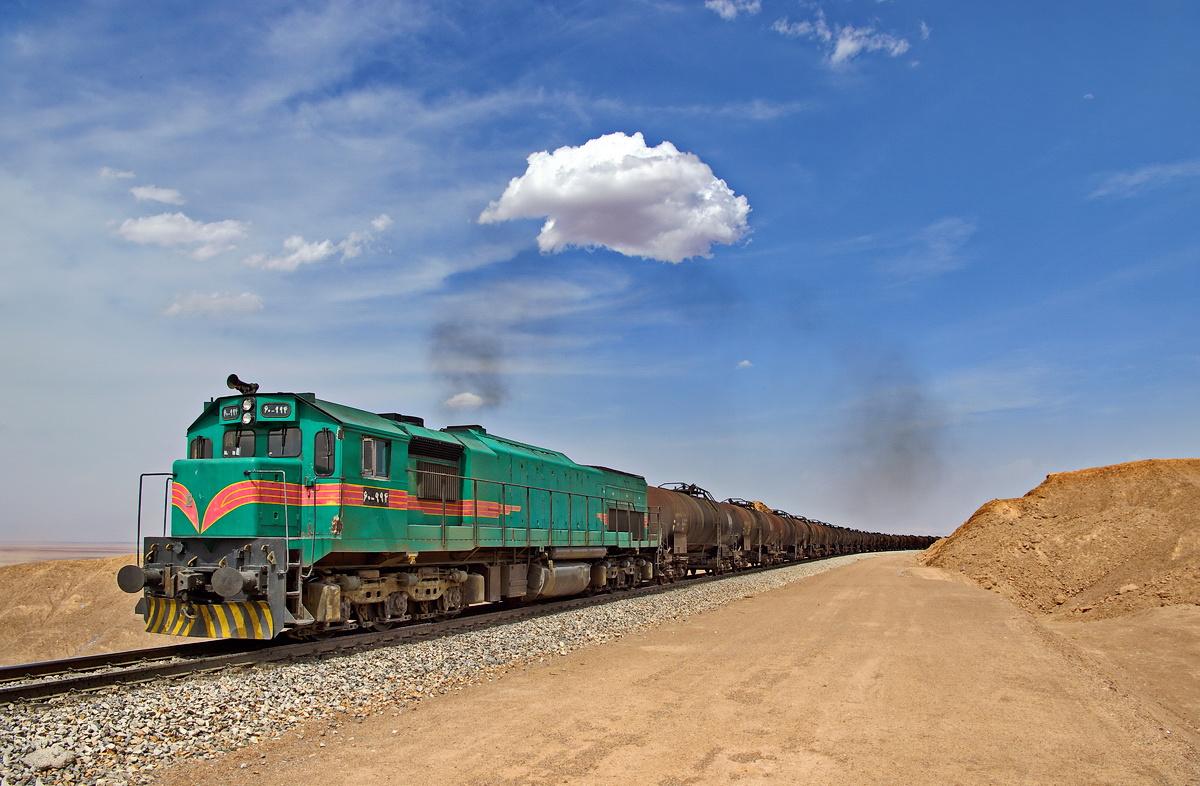
Iran's transport network has demonstrated remarkable resilience during recent crises, yet a significant portion of its capacity remains unused, according to a senior industry official.
Sobhan Nazari, chairman of the board of the Rail Transport and Related Services Association, told reporters on Monday that through managerial and policy reforms — without major infrastructure investment — freight and passenger capacity on existing rail and road networks could increase by up to 50 percent.
"The Persian Gulf is a major international waterway," Nazari noted. "Restrictions there don't pressure only Iran — they affect other economies by disrupting raw material supplies."
Over the past decade, Iran's combined road and rail freight transport has grown from 211 billion to 329 billion ton-kilometers, despite sanctions and economic pressures. The country ranks among the top 15 to 20 nations globally in network length, vehicle numbers, and route diversity — factors that have enhanced resilience against disruptions.
However, productivity lags severely. Truck and freight wagon efficiency is just one-third to one-quarter of global benchmarks, while rail productivity is one-tenth to one-fifteenth. The railway currently handles only 8 percent of freight transport, far below the 30 percent target set in several development plans.
Investment and Policy Hurdles
Nazari pointed to fleet shortages and declining investment appeal as key obstacles. While domestic wagon manufacturers have sufficient capacity, a lack of orders has stifled growth. He called on the government to implement Article 12 of the production law, which commits to phased payments for wagon purchases, thereby improving returns and shortening payback periods.
He also suggested that state-affiliated funds move away from direct enterprise management and instead diversify into liquid investments, noting that private-sector management tends to be more agile and productive.
Fuel Subsidies Distort Choices
Cheap fuel artificially favors road transport over rail, Nazari explained, making it difficult for passengers and cargo owners to choose rail despite its efficiency. He warned that fuel price reform — if gradual and paired with expanded public transport — could shift demand toward rail.
Hidden subsidies for energy, water, and transport have also distorted industrial location decisions, he added. Some steel plants, for instance, were built far from ports or water sources, appearing viable only because transport costs were negligible in calculations. Such misallocations, he cautioned, can have consequences lasting decades or even generations.
"Mandatory pricing and artificially low input costs are not just short-term issues," Nazari said. "They create decisions whose errors may take generations to correct."