
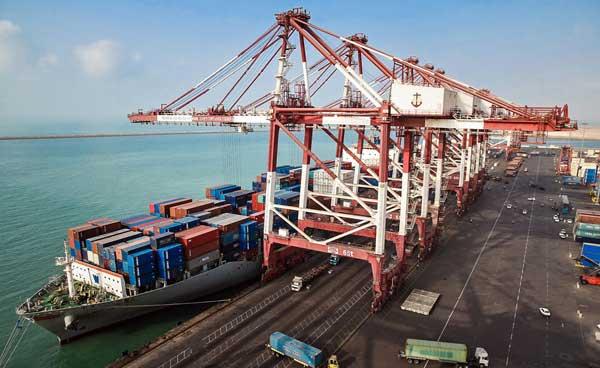
Iran's ports have handled more than 55 million tons of cargo since the onset of the third imposed war in March, according to the country's Ports and Maritime Organization — a figure that officials say reflects both careful advance planning and rapid crisis response.
Mohammad Shakiabi-Nasab, who heads the organization, told IRNA that the ports have continued operations without interruption despite wartime conditions and restrictions. He credited a combination of business continuity scenarios, capacity management, and inter-agency coordination for keeping supply chains alive.
"The country has been involved in two wars since last year," Shakiabi-Nasab said. "We planned for various scenarios to ensure port activities would not cease."
A key driver of the performance, he said, was the formation of a national headquarters for accelerating cargo clearance, led by the Ministry of Transport and Urban Development and involving all relevant bodies. The secretariat was housed at the Ports and Maritime Organization, with provincial follow-up under governors and local port departments. The result: faster customs procedures and quick resolution of bottlenecks.
The official also noted that new records were set in both discharging and loading cargo during the period — a rare achievement under siege-like conditions.
On the issue of containers belonging to Iranian traders stranded in neighboring countries, Shakiabi-Nasab said a significant portion have already been discharged in Iran, and the rest are expected to arrive through ongoing economic diplomacy.
"We had the necessary capacities at all stages," he added, "and in many cases, through relocation and capacity management, we made even fuller use of port facilities."
The official expressed gratitude to both private sector operators and his own colleagues at the organization, describing the ports' performance during the crisis as "exceptional."
With all available capacities now activated, Iran's ports appear to have weathered the worst — though the coming months will test whether the system can sustain its current momentum.