
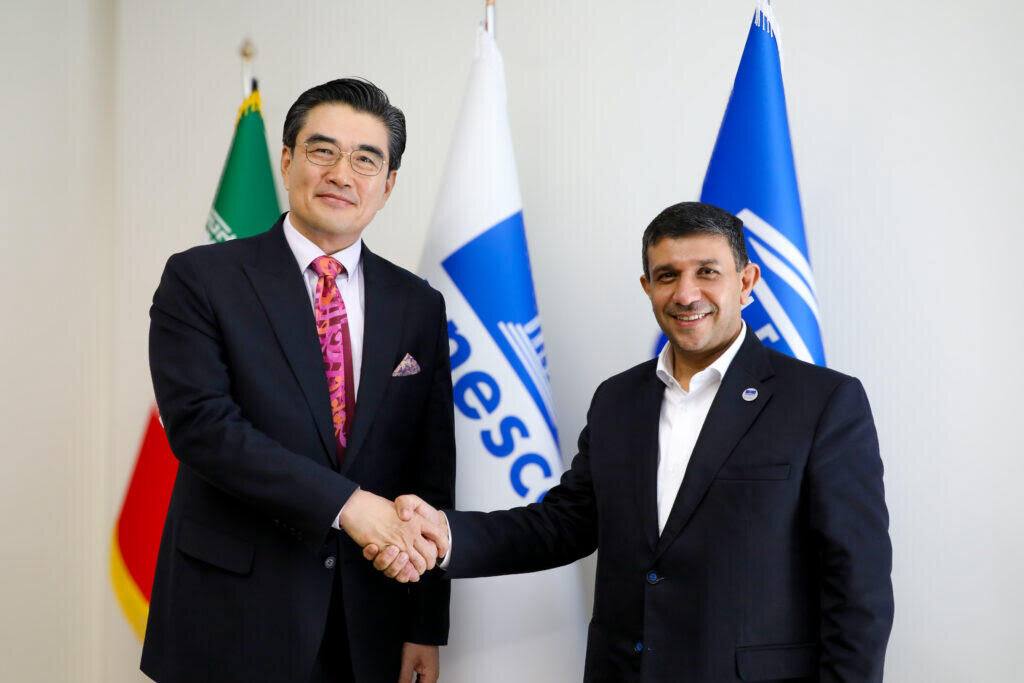
The recent UNESCO World Heritage inscription of Iran's Alamut Castle has not only marked a historic milestone for the country's cultural heritage but has also opened a promising new chapter in bilateral relations with South Korea, as officials from both sides engage in high-level talks to expand cooperation across multiple sectors.
The diplomatic momentum was set in motion when Kim Junpyo, the South Korean Ambassador to Iran, visited the Iranian National Commission for UNESCO for discussions with Dr. Hassan Fartousi, the Commission's Secretary-General. The meeting focused on identifying opportunities for joint collaboration in education, culture, science, and tourism.
Dr. Fartousi expressed gratitude for South Korea's support during the 48th session of the UNESCO World Heritage Committee in Busan, where Iran's Alamut Castle was successfully inscribed as the country's 30th tangible cultural property on the prestigious list. He noted that the achievement was the culmination of a 25-year process of dossier preparation and international advocacy, and emphasized the need to leverage global partnerships for the preservation and promotion of this invaluable site.
Discussions also explored UNESCO Category 2 Centers and chairs, with both sides identifying existing capacities in South Korea that could complement Iran's scientific and cultural institutions. Specialized working groups within the Iranian Commission were introduced, outlining the country's readiness for deeper academic and technical exchanges.
Cultural Diplomacy
Ambassador Kim, who has made cultural diplomacy a personal priority, described his visit to the Alamut fortress in Qazvin province as a transformative experience. He expressed admiration for the site's historical and architectural significance and underscored its potential to introduce Iran's rich history to a global audience. Tourism, he stressed, serves as a vital platform for fostering mutual understanding between nations and preserving cultural heritage for future generations.
In a separate meeting with Seyyed Reza Salehi-Amiri, Iran's Minister of Cultural Heritage, Tourism and Handicrafts, the Ambassador explored additional avenues for cooperation, including creative industries, handicrafts, and digital technologies. Minister Salehi-Amiri proposed reciprocal museum exhibitions, joint restoration training, and expanded university partnerships, while inviting South Korea to participate in the Tehran International Tourism Exhibition.
The Busan meeting also produced a concrete outcome: Minister Salehi-Amiri proposed the establishment of a joint task force with South Korea's Heritage Service, focusing on restoration, conservation, and digital documentation. The proposal, welcomed by Ho Min, head of the Korean agency, signals both nations' commitment to transforming diplomatic goodwill into sustainable operational cooperation. With Ambassador Kim's active engagement and institutional backing from both governments, Iran and South Korea appear well-positioned to build a lasting partnership that bridges heritage, innovation, and mutual understanding.