
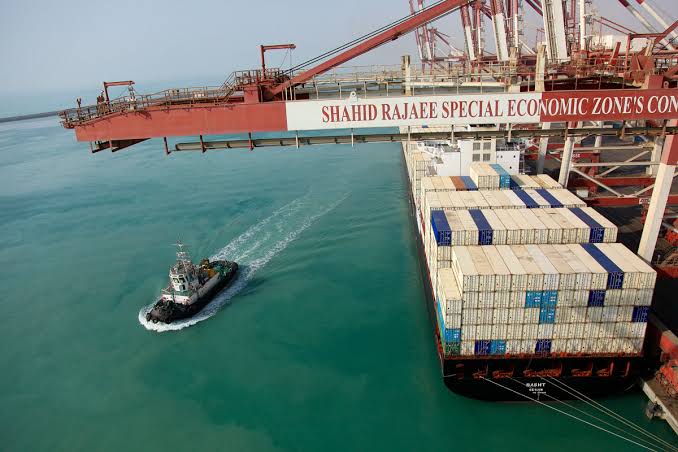
Every crisis carries within it the seed of opportunity. The recent 12-day war and its aftermath have undoubtedly tested Iran's economic resilience, but they have also revealed a vital truth: Iran's foreign trade is ready for a long-overdue transformation. The question is not whether we can adapt, but how quickly we will embrace the change.
Mohammad Lahouti, head of Iran's Export Confederation, has sounded a clarion call for renewal. In a recent interview, he argued that the country's trade policies—designed for a different era—must now evolve. "The current conditions are in no way comparable to pre-war times," he said. "We need new approaches." This is not a cry of despair, but a call to action—an acknowledgment that Iran's economic potential is far greater than current policies allow.
Consider the facts: sanctions may have tightened, but Iran's private sector has repeatedly proven its ingenuity. The war may have disrupted some industrial units, but it has also revealed the nation's capacity for rapid adaptation. Trading partners may be cautious, but they have not abandoned Iran—they are waiting for clearer signals and smoother processes.
Lahouti's prescription is both practical and hopeful: align currency policy with trade policy, reduce bureaucratic barriers, and replace rigid restrictions with flexible facilitation. "Instead of unnecessary strictness," he said, "a facilitation approach should be strengthened." This is not about lowering standards—it is about raising efficiency. It is about trusting Iranian businesses to compete and succeed when given the room to do so.
The Central Bank and the Ministry of Industry must now work in harmony, not at cross-purposes. When these institutions coordinate effectively, exporters and importers can focus on what they do best: building bridges to global markets, generating foreign currency, and driving economic growth.
Iran has weathered far worse storms than this. The nation's history is a testament to resilience and reinvention. The war may have ended, but the journey toward a more dynamic, diversified, and competitive economy is only beginning. "Overcoming the current situation is not optional," Lahouti reminded us. "It is mandatory."
With the right policies in place, Iran's trade sector can emerge from this moment stronger, smarter, and more resilient than ever. The tools are in our hands. The path is clear. Now is the time to act—with confidence, with determination, and with the unwavering belief that Iran's best economic days are still ahead.