
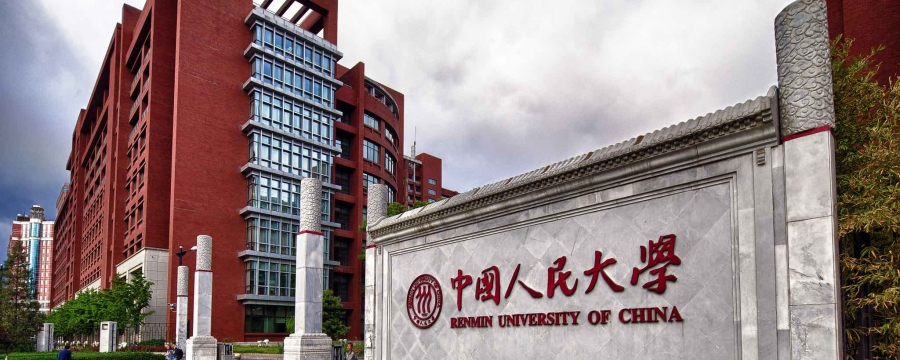
The China International Press Communication Center (CIPCC) officially launched the second half of its 2026 program on Friday with an orientation session at Renmin University of China (RUC) in Beijing.
The flagship initiative, established by the China Public Diplomacy Association (CPDA), serves as a cooperation platform between Chinese media and their counterparts in emerging markets and developing countries, particularly across the Global South.
Since its launch in 2014, the program has grown significantly. This year's edition has brought together more than 100 journalists from around 100 countries for a three-and-a-half-month stay in China.
Development Goals Emphasized
CIPCC Director Yu Lei welcomed participants at the orientation, describing the program as an opportunity for communicators to present an accurate and comprehensive picture of China to global audiences.
Yu stressed that the initiative has a dual focus: strengthening media ties with developing and Global South nations while actively supporting their development objectives.
The director also took questions from attendees, continuing a tradition of open dialogue from previous editions.
Regional Structure and Campus Stay
The program operates through six regional press centers, each staffed with coordinators and student volunteers who organize training, interviews, and cultural activities.
This year, participants are housed on the RUC campus, providing journalists with the experience of studying at one of China's top institutions for journalism and communication.
Iran's Continued Participation
Iranian journalists have become a regular presence in the program. Following representatives from the Tehran Times in 2024 and 2025, a journalist from Iran Daily has joined the 2026 edition. Iranian participants have consistently received a warm reception in China, reflecting strengthening media ties between the two countries.
First Lecture Delivered
The program's first lecture was delivered by Dr. Zhong Xin, a professor at RUC's School of Journalism and Communication and director of the CIPCC-RUC Program. The presentation focused on the recent earthquake along the Nepal-China border, highlighting the program's emphasis on current and relevant topics.
Comprehensive Professional Development
According to Yu Lei, participants will undergo journalism training, diplomatic briefings, cultural immersion, and official visits both in and outside Beijing. Practical training attachments at major Chinese media outlets are also scheduled.
Previous editions have included trips to different provinces in China, giving journalists firsthand exposure to China's development.
Media Diplomacy on the Rise
China's media diplomacy efforts have attracted growing international attention, complementing the country's emergence as an economic, technological, and industrial model.
Participants are encouraged to observe China directly and share their experiences with audiences in the Global South.
Through its focus on international communication and cross-cultural exchange, the CIPCC continues to foster understanding between China and developing nations in an era of rapid global change.