
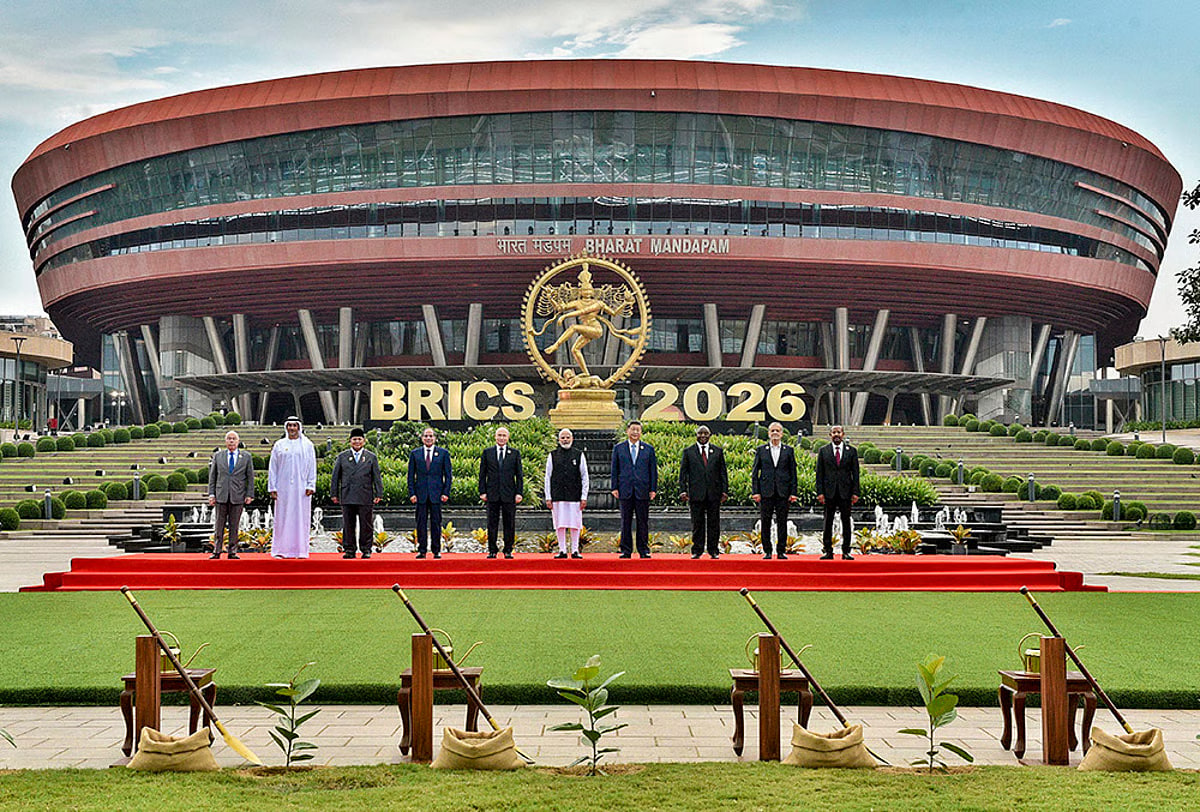
Iran’s full membership in BRICS marks a turning point in its foreign trade. For a country long constrained by sanctions and dollar-dominated banking, BRICS offers more than a political platform: a vast market, growing payment alternatives, and new transit routes. With members’ combined merchandise exports near $6 trillion and intra-bloc trade around $1.2 trillion, the group represents a major opportunity for Iranian exporters and importers alike.
Iran already trades heavily with BRICS partners. Customs data show exports to member states reached $23.7 billion in 1403, while imports totaled $38.8 billion. Membership can improve the quality, not just the volume, of this exchange. India’s 2026 chairmanship is pushing to connect central bank digital currencies and expand local-currency settlement, steps that could lower costs, speed transactions, and reduce reliance on the dollar.
China remains Iran’s leading partner, accounting for 26 percent of both exports and imports in 2024. But BRICS also opens doors to India, Russia, the UAE, Saudi Arabia, Egypt, Ethiopia, Indonesia, Brazil, and South Africa. Expanding ties with them can diversify Iran’s trade and reduce dependence on a few routes.
Iran’s geography is another asset. The North–South Corridor can connect Russia and northern Eurasia to southern waters and India, turning Iran into a producer, exporter, and transit hub. If realized, this could multiply the value of membership.
BRICS is not yet a free trade area, and challenges remain. But the direction is promising. With active diplomacy, Iran can use BRICS to build payment channels, attract investment, boost non-oil exports, and integrate into regional supply chains. The bloc’s size alone will not solve every problem—but it gives Iran a rare opening to expand trade, strengthen its economy, and turn sanctions pressure into new partnerships. The opportunity is clear; Iran must now turn it into deals, payments, and goods.