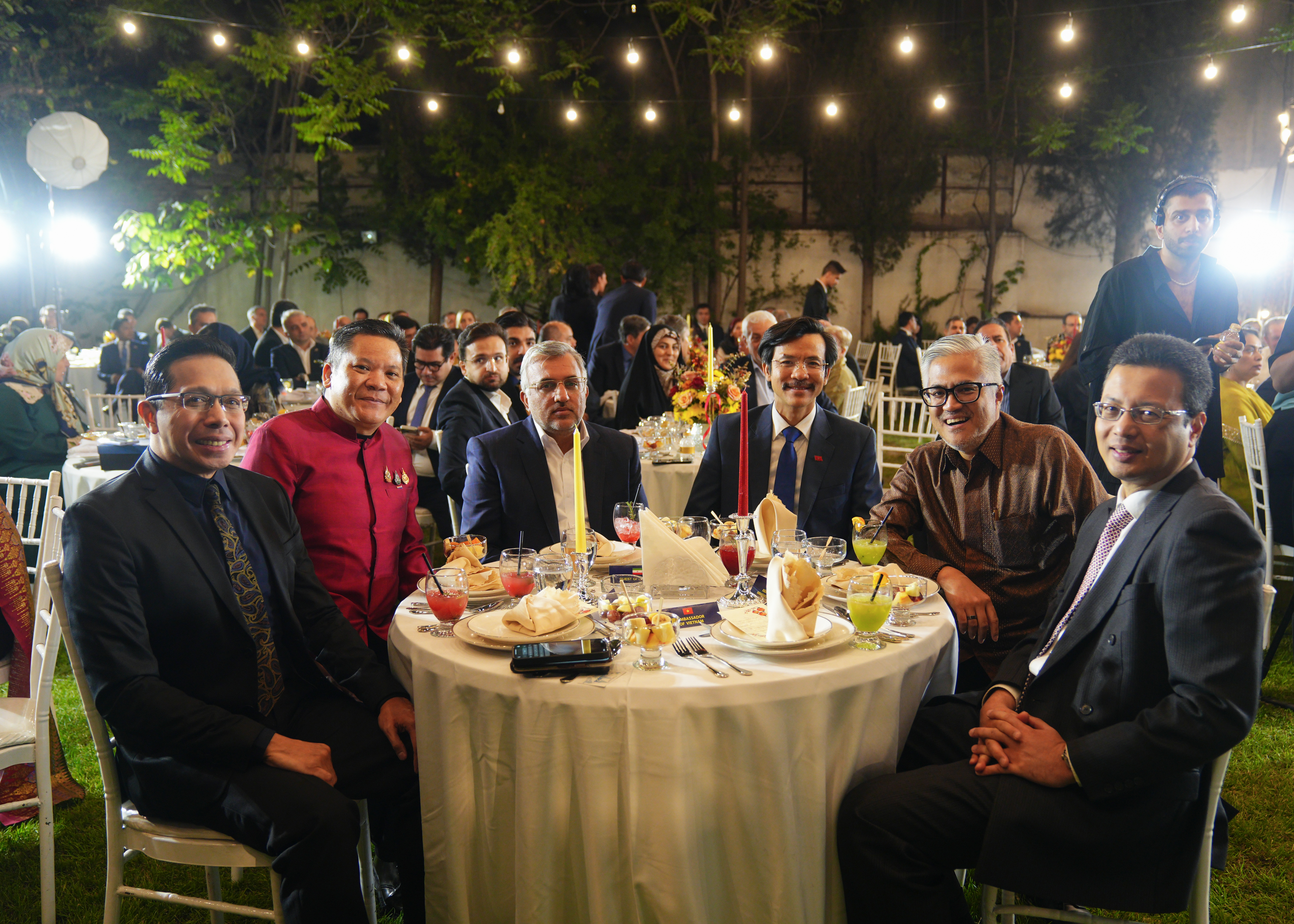
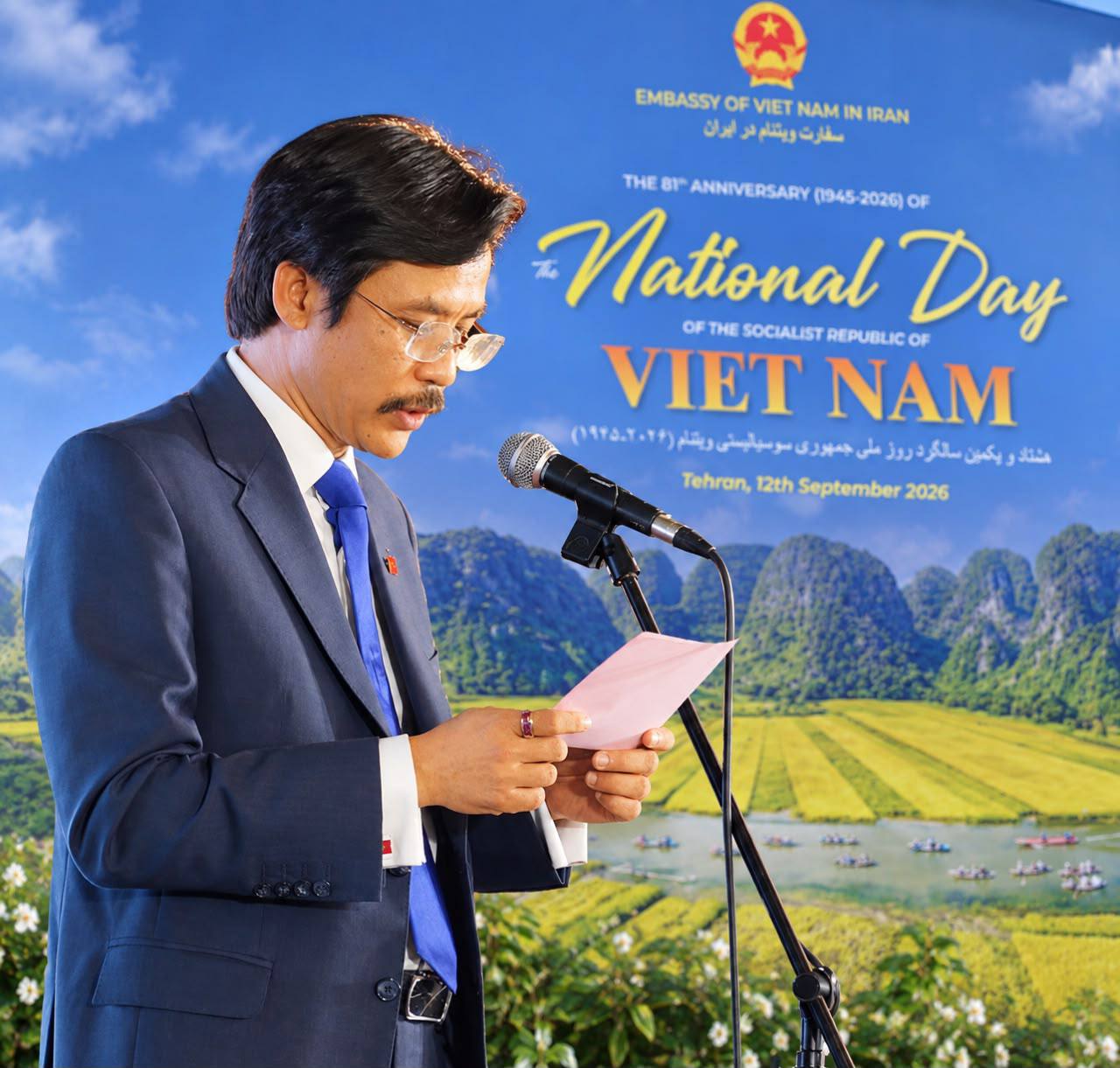
The aroma of slow-simmered broth mingled with the sound of Vietnamese and Iranian melodies at the Vietnamese Embassy in Tehran on Saturday evening, September 12, as diplomats, officials and friends gathered to mark the 81st anniversary of the Socialist Republic of Vietnam’s National Day.
The warm welcome extended by Vietnam’s Ambassador to Iran, Nguyen Luong Ngoc, and his embassy team, who greeted each arriving guest personally, gave the evening the feel of a gathering of friends rather than a formal protocol event.
Addressing the reception, Ambassador Nguyen Luong Ngoc recalled 2 September 1945, when President Ho Chi Minh proclaimed the birth of an independent Vietnam. Eighty-one years on, he said, that same spirit of self-reliance has turned a war-scarred nation into a dynamic economy worth US5,000 and trade ties spanning 230 countries and territories.
The ambassador placed particular emphasis on the Middle East, expressing Vietnam’s hope for lasting peace and stability in the region through dialogue and respect for national sovereignty and international law.
Turning to bilateral ties, he noted that Vietnam and Iran established diplomatic relations on 4 August 1973 and have since built a relationship rooted in mutual respect for independence and sovereignty. Bilateral trade rose from US170 million in 2025, with Vietnamese rice, coffee, cashews and seafood complementing Iranian industry, pharmaceuticals, minerals and agricultural products.
“Vietnam–Iran relations should be built not only on the tradition of more than half a century of friendship, but also on new, practical and effective cooperation,” he said.
Dr. Hamid Ghanbari, Deputy Foreign Minister for Economic Diplomacy, echoed that optimism. “Vietnam is an important member of ASEAN and plays a significant part in the economic architecture of Southeast Asia, while Iran enjoys a strategic geopolitical position — this gives our cooperation a wider perspective,” he said. “Iran and Vietnam can serve not only as economic partners, but also as gateways to the respective regions.”
He added that both sides possess the political will and complementary capacities to “open a new and more dynamic chapter” in relations.
The cultural program featured live performances of Vietnamese and Iranian songs and a music video showcasing Vietnam’s landscapes, which the ambassador hoped would reach a wider Iranian audience and bring the two peoples closer.
Guests then sat down to a dinner of Vietnamese and Iranian dishes. The standout was pho, Vietnam’s iconic rice-noodle soup — its fragrant broth, silky noodles, fresh herbs and tender beef delivering a taste of Vietnamese street life at a shared table.
For this correspondent, the evening stirred vivid memories of a long journey to Vietnam in November 2024. Across its cities, I was struck by the country’s natural beauty, the warmth and hospitality of its people, their historic spirit of resistance and tireless hard work — and by the sophistication of its tourism policies.
Watching the music video at the reception brought those days vividly back. Now that direct flights connect the two countries, I hope many Iranians and Vietnamese will visit one another’s homelands, discover each other’s cultures, and strengthen a friendship that clearly has much further to travel.