
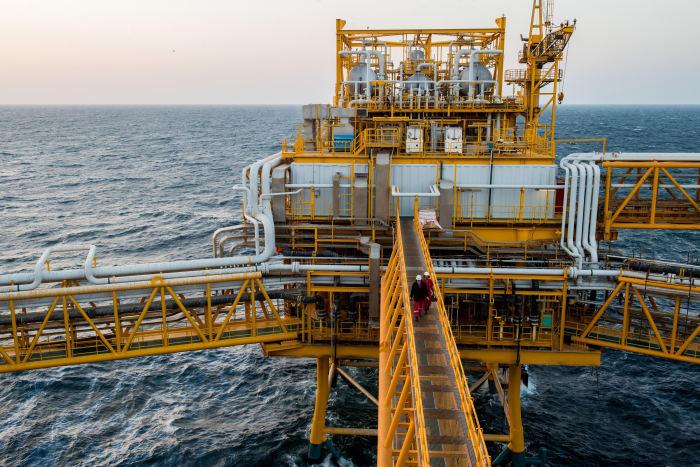
The shared Salman Field in Lavan is in the second half of its reservoir life and no longer produces naturally. Gas lift is essential, but sanctions and aging Solar Mars 90 turbo-compressors made it difficult. Iran has instead injected high-pressure gas from the Salman gas field into the oil reservoir. Officials say this has earned more than $21.5b since Iranian year 1385 (2016), including $1.2b in the two years since the 14th administration took office. A newly commissioned turbo-generator will also allow main water-injection pumps to work alongside booster pumps.
Associated gas capture is advancing. A draft contract with a domestic petrochemical company is ready, covering modernization of gas-lift equipment and gradual collection of flare gas. Turbine purchases are in final stages. The 30-inch Salman-Siri gas line is operational. A new pipeline is being supplied from China: of 52,000 tons ordered, 20,000 tons have been produced and 8,039 tons delivered.
The 32-inch Siri-Assaluyeh line, which once sent 500 million cubic feet per day of sour gas to Assaluyeh, ruptured in 1402. Repairs were halted by the Ramadan war. A diving vessel recovered equipment, but saturation diving by a foreign team remains blocked by security and GPS risks. If conditions allow, the line could restart in six months. Drilling of 55 oil and gas wells is also due for completion in the first half of the year. In short, Salman is not idle: production, gas gathering and infrastructure are being pursued together. Officials insist work has not stopped.