
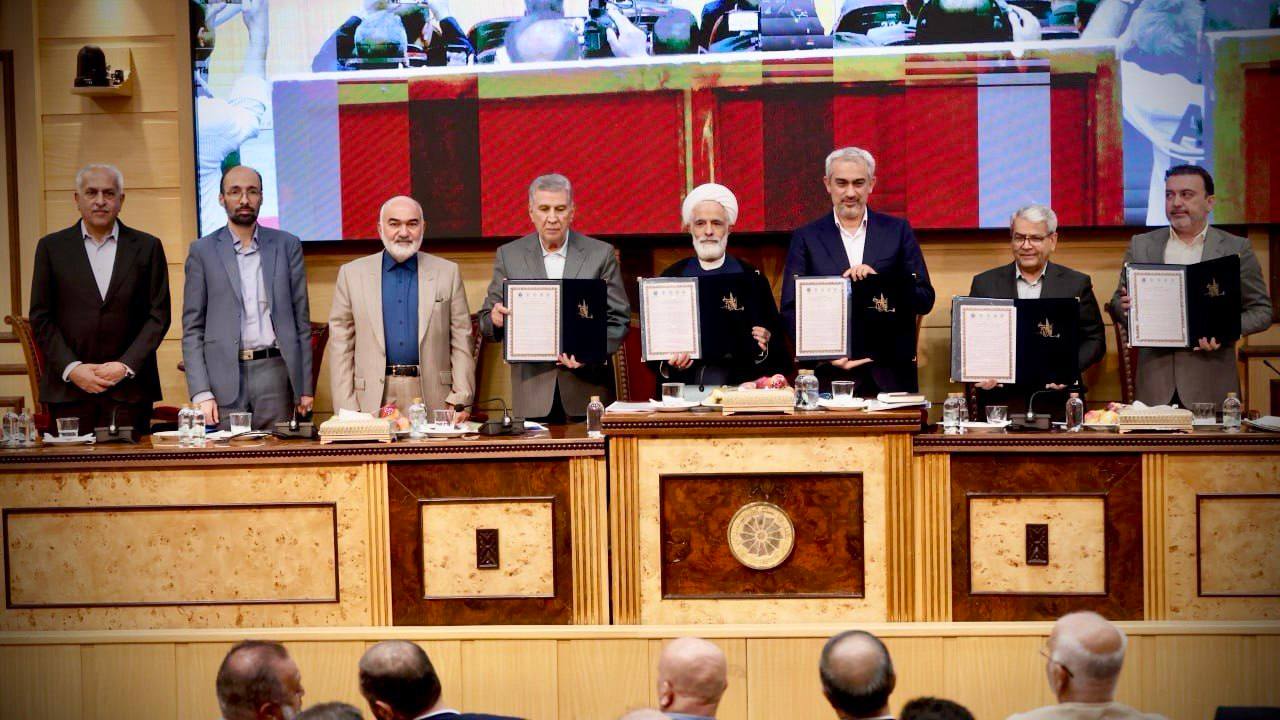
In a move meant to turn dialogue into delivery, five Iranian institutions signed off on a business-environment memorandum at the 138th Government-Private Sector Dialogue Council. The Iran Chamber, Economy Ministry, Interior Ministry, Presidency Legal Deputy and Government Board Secretariat pledged coordinated action on deregulation, transparency and investment security.
Chamber chief Samad Hassanzadeh framed the deal as a test of implementation, not ceremony. Stability, predictability and a private-sector voice in policy-making, he argued, are as vital as tax breaks or permits. Deputy secretary Keyvan Kashefi said 10 axes and 16 programs had already produced results; the expanded five-party version, launched in mid-July, now covers seven areas, from licensing to data access. Economy Minister Seyed Ali Madanizadeh admitted government has become a "regulation-production factory," while Legal Deputy Majid Ansari noted some 90,000 rules still choke business. Interior official Mehdi Dousti reported 228 provincial regulations and inconsistent enforcement across provinces.
But the council's agenda also exposed a sharp dispute over the 12-per-thousand customs levy on imported goods. Customs says it is merely enforcing the 1405 budget, with essential goods and medicine exempt; 11,000 billion tomans has been collected. Chamber customs chief Mohammad Reza Faroughi countered that a new revenue line, No. 1655, and a higher exchange-rate basis—70,000 to 131,000 tomans—have imposed hidden costs on importers. Parliament's Abbas Sufi insisted the money belongs directly to municipalities. Agriculture committee head Mohammad Asgari warned of higher food prices.
Madanizadeh defended the levy as a legal obligation, pointing objectors to the Administrative Justice Court. Ansari added that since collection has begun, the cleanest fix may be an inquiry to Parliament. The outcome will show whether five-party synergy can survive its first real test.