
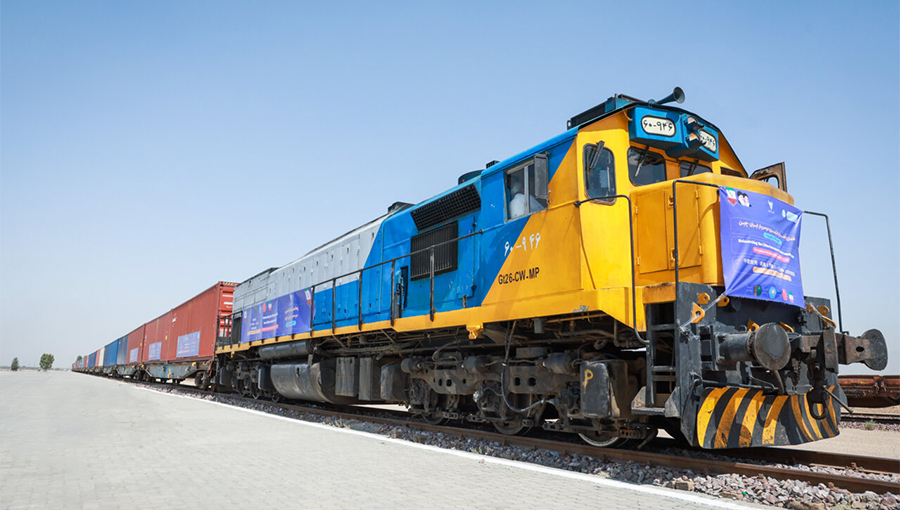
Iran is rerouting its trade map. With sea and border routes under pressure, Tehran is negotiating with China to expand rail transit, and some cargo already moves to China via Yazd Dry Port, says Amir Roshanbakhsh Ghanbari, TPO deputy for international business development.
The challenge is clear. Iran exported about 155 million tons and imported 42 million tons last year, much by sea. Rail offers partial relief: a train carries roughly 1,500 tons in 55 wagons; a ship carries about 100,000 tons; trucks would need 3,000 vehicles for the same load. Rail and road must complement, not replace, maritime trade.
TPO has split its response into short-, medium- and long-term measures. Short-term steps include boosting executive capacity, managing borders and using border provinces. At Bazargan, queues partly reflect limited acceptance capacity on the other side—not every bottleneck can be solved at home.
For Ghanbari, the crisis exposed deeper flaws. Trade governance and transport infrastructure need reform, or similar disruptions will recur. Trade finds its way, he suggests, but only if alternative arteries exist when main ones are blocked.
The 30th National Export Day, starting Monday 20 Mehr (October 1) will spotlight trade infrastructure and sustainable routes, with a joint event with the Ministry of Roads and Urban Development. A second day will focus on higher export value and services.
The numbers show why. Iran’s exports average $300–350 per ton, while some knowledge-based and high-tech goods reach $1,500–2,500. Services exports hit about $3 billion in 1404 (2025), including $1.8 billion in technical and engineering services, up from $790 million in 1403 (2024).
For National Exemplary Exporters, 277 of 367 files reached final evaluation: 235 in goods, 26 in knowledge-based goods and 16 in services. TPO launched an Export Atlas mapping markets and competitors, with meetings planned on financing, standards and trade law.