
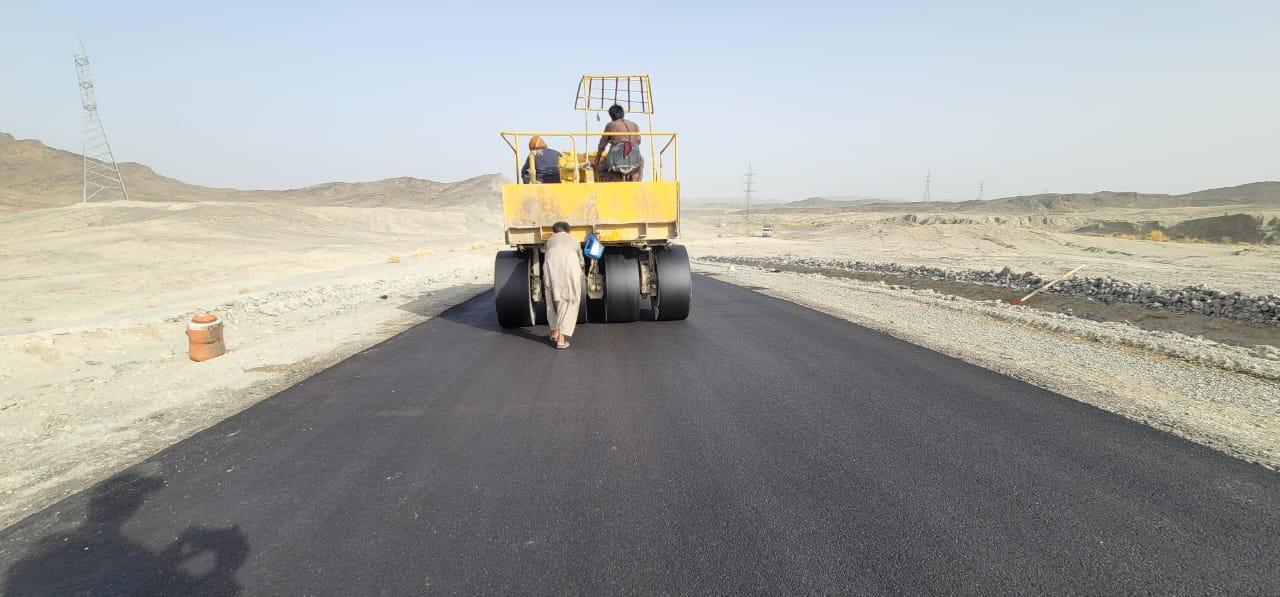
In a province where distance has long defined daily life, 281 kilometers of new highway and main road are more than pavement. They are a quiet assertion that geography can be rewritten.
Transport Minister Farzaneh Sadegh inaugurated the projects, valued across Sistan-Baluchestan. The breakdown tells its own story: 134 kilometers in the south, 89 kilometers in the north, and 58 kilometers along the North-South Corridor and coastal routes.
Deputy Minister Houshang Bazvand framed the opening not as a ribbon-cutting but as economic statecraft. "Inaugurating transport infrastructure is not merely a construction measure," he said, calling it part of the province's economic power and security. He noted that with such efforts, Sistan-Baluchestan "can no longer be considered a remote region" — it has become an economic and trade gateway.
The strategic logic runs through corridors. The coastal corridor stretches over 1,116 kilometers within the province, while the East-West Corridor begins at the Mirjaveh border and cuts through Kerman, Fars, and Kohgiluyeh-Boyer Ahmad before reaching Khuzestan. Bazvand stressed special attention to the Jask-Chabahar coastal route.
Beneath the ceremony lies a larger shift. Fifty-nine active construction sites — 16 in the north, 43 in the south — now employ roughly 6,000 people. Contractors, heavy machinery, material supply, and technical services generate indirect economic activity that ripples outward.
Bazvand quoted the minister's guiding principle: a road is a great wealth. The view, he said, must evolve "from road as project, to road as corridor, and ultimately to economy."
For a province bordering Afghanistan and Pakistan, with access to open waters and vast mineral and trade capacities, every four-lane kilometer narrows the gap between production and market, port and hinterland, border and center. The roads opened this week are not an endpoint. They are infrastructure for a different future.