
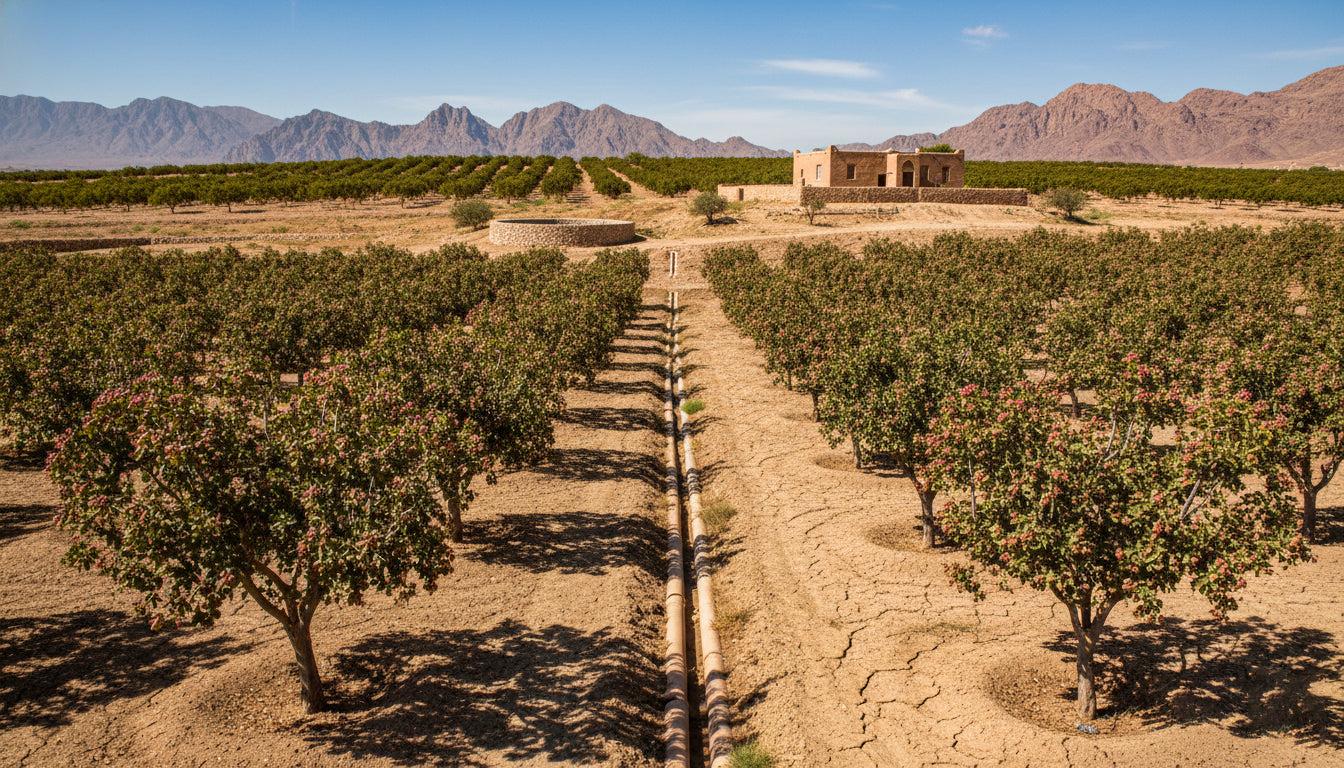
Iran's horticulture sector stands at a defining moment. With 25 million tons of annual production and more than 800,000 people directly employed, it remains a pillar of the agricultural economy. Yet water scarcity, declining productivity, and a weak knowledge-transfer system threaten its future.
A new future-studies report, examining the role of research, education, and extension, has proposed a path forward: a "technology-driven development" scenario for the horizon of Iranian calendar year 1420, which begins in March 2037. The study drew on data from the Statistical Center of Iran, the Ministry of Agriculture-Jihad, and Iranian Customs, and used Computable General Equilibrium modeling, ARIMA time series, and Monte Carlo simulation with 10,000 iterations to quantify outcomes.
The contrast between scenarios is stark. Under "continuation of the existing trend," agricultural employment falls from 2.07 million to 1.94 million — a 6 percent decline — while the horticultural trade balance reaches $4.7 billion.
The technology-driven scenario assumes two key shifts: raising the research budget to 1.5 percent of the agricultural sector's value added and extending outreach to 80 percent of beneficiaries. If realized, the modeling suggests horticultural value added would rise 61 percent, creating 480,000 new jobs across the value chain and lifting agricultural employment by 26 percent.
Water productivity would improve by 78 percent, climbing from 18.5 to 33 thousand rials per cubic meter. Horticultural exports would reach $12 billion — 94 percent higher than the business-as-usual path.
The numbers sketch a future in which research and extension are not peripheral costs but central investments. Whether Iran's orchards follow that path depends on decisions made long before 2037.