
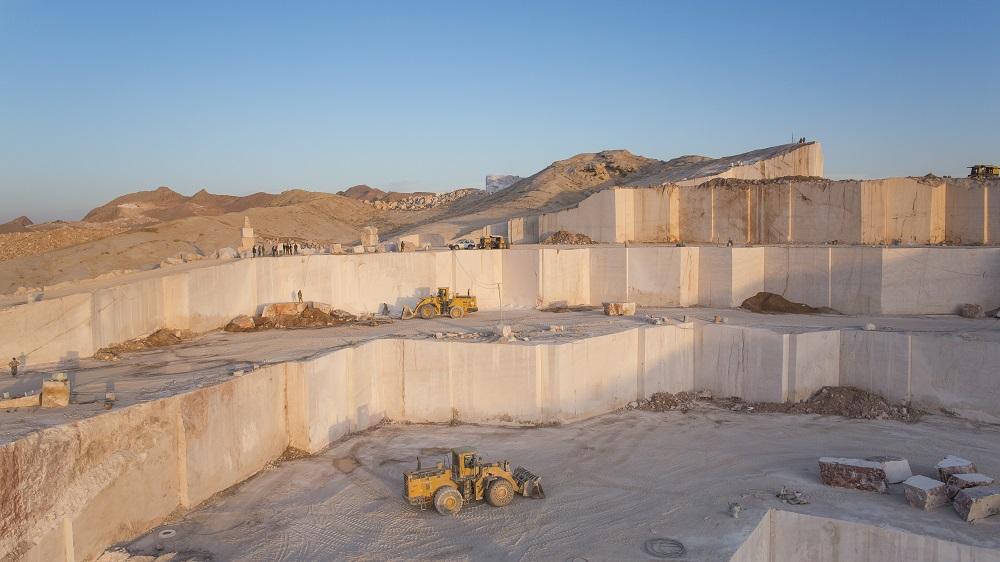
Iran's stone industry could earn at least $5 billion in exports if supported, Iran Stone Association head Bahram Shokouhi told a Tehran press conference ahead of the 18th Iran International Stone Exhibition in Mahallat-Nimvar, running October 6–9. The event will host over 600 Iranian and foreign firms across 120,000 square meters, display more than 45,000 tons of block stone, and welcome delegations from Russia, Pakistan, Turkey, India and Egypt.
Yet the numbers reveal a gap. Iran produced 10–12 million tons of stone in 1403 but exported only $230 million—tiny against the $42 billion global market. About 85% is consumed domestically; only 15% is exported, mostly cut stone. Turkey, by contrast, produced 15 million tons and exported 41%.
The expo aims to close that gap. For the first time, a stone service desk will bring together mining officials, the Trade Promotion Organization, the Mining Engineering Organization and Iran University of Science and Technology. Five panels will cover carbon-era challenges, multi-wire technology, miners' families and export solutions. The reactivated Stone Headquarters will tackle exploration, extraction, processing and export barriers.
Industry leaders flagged fuel shortages—last year's distribution was 25% below need—and wartime transport delays at land borders. They called for a "green lane" for export cargo and fewer regulations. New wire-cutting technology, using wires as thin as dental floss, could raise block recovery by 35–40%.
Mahallat's advantages are clear: 70% of Iran's exportable stone mines lie within 300 kilometers, and the site neighbors the country's first private stone export terminal. Organizers say the exhibition is the only Iranian stone event on the global calendar. With carbon passports and a World Stone Federation on the horizon, Iran hopes to turn stone diversity into market share—and jobs.