
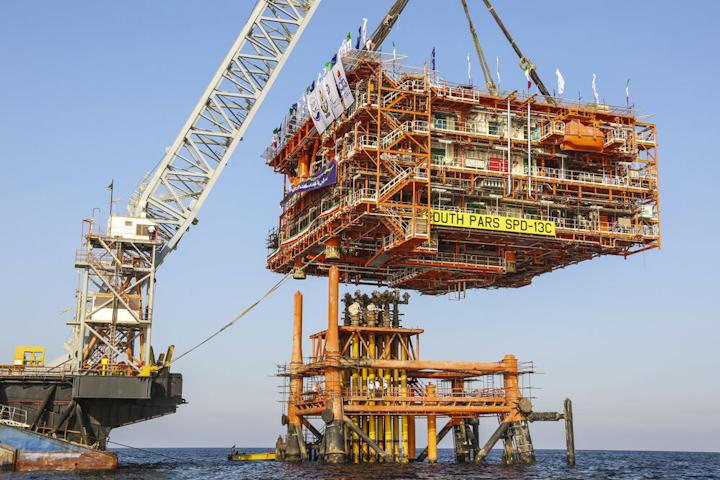
Iran has reached a milestone at South Pars Phase 11: output at offshore position B has hit its nominal 1 billion cubic feet per day, without the foreign partners—Total and CNPC—that once held stakes. Tehran presents the result as proof that domestic engineering can deliver complex offshore gas projects despite sanctions.
The final step was completing the 12th well at position B. After nitrogen lifting, test production began; following acidizing and pressure stabilization, the well should join full output within days. Petropars CEO Hamidreza Saghafi said platform B now produces more than 28 million cubic meters per day, up from about 400 million cubic feet per day in earlier periods, when only four wells operated.
In 17 months of work, active wells tripled to 12. More than 26,000 meters of offshore drilling were completed, bringing total drilling at the platform to 50,000 meters. The extra volumes—roughly 17 million cubic meters per day—should help stabilize household and industrial gas supply this winter and slow pressure decline in the shared reservoir.
Position A, supporting Phase 11’s second stage, is also advancing. Its 4,000-ton jacket has been installed after more than 700 meters of piling, while topside construction has risen from about 4 percent to nearly 50 percent. Officials plan to load out the structure at around 80 percent completion. Initial operation will begin with four to six wells, then one new well every four months for about three years.
Officials say work continued despite sanctions, security threats, and even projectile strikes near the position A topside site. Petropars, which has executed over half of South Pars’ onshore and offshore works, now frames Phase 11 as a model for national megaprojects: not merely a production record, but evidence that Iranian expertise can turn strategic uncertainty into sustainable supply.