
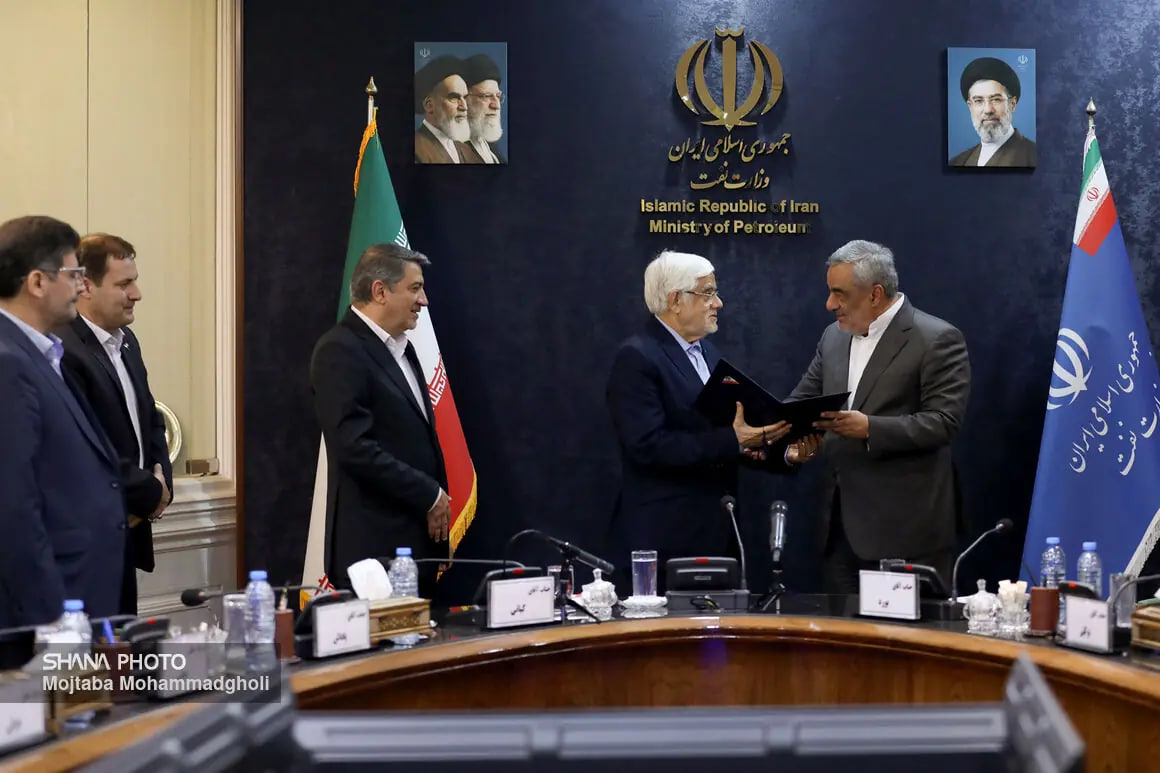
Iran’s newly appointed acting oil minister, Hamid Bovard, used his first days in office to signal continuity rather than change, saying oil sales policies are being pursued “as seriously as ever” while declining to disclose details. Speaking at his introduction ceremony, Bovard said production and development programs are moving ahead with greater speed and precision and promised stronger commercial and sales policies to keep the industry “shining.”
His refusal to discuss oil sales specifics is notable. With sanctions still constraining Tehran’s energy exports, the ministry appears intent on keeping operational details out of public view. Bovard also urged Iranians to avoid wasteful consumption, framing energy management as a national effort to achieve stronger savings than in previous years. Winter fuel allocations for industry, he said, will be decided by the government’s Fuel Committee and communicated to all agencies.
At a meeting with the National Iranian Oil Refining and Distribution Company, Bovard stressed strategic, scientific decision-making based on domestic capacity. He called for coherent management summaries, warning that daily details can obscure major issues. Fuel consumption management—especially gasoline and diesel—is a priority, but he cautioned that smart fuel cards must be protected against cyber threats. He also pushed for governance reform, university partnerships and better use of young talent. A 35-year oil industry veteran, Bovard said experts are a bulwark in difficult times and likened large organizations to a fish in water: those inside often underestimate their own achievements. He stressed that decisions on fuel must rest on domestic capacities, not external pressures.
CEO Mohammad Sadeq Azimifar reported gains: gasoline output up about 17 percent, product output up 3 percent, and gasoline consumption growth falling to zero and turning negative in Shahrivar. Diesel use dropped 2–3 percent. CNG consumption rose 12 percent after the third-price plan. Anti-smuggling efforts organized 66,000 cases, reviewed 77,000 waybills and identified 2,000 migrant fuel cards, with 600,000 cards being organized. About 1,000 km was added to the pipeline network in two years. The main goals, he said, are curbing consumption, raising output, strengthening storage and reducing gasoline import dependence.
Separately, Bovard visited the National Iranian Gas Company’s dispatching center. He said stable winter energy supply requires full coordination across gas production, transmission and distribution, and called for modern technology and upgraded monitoring. CEO Saeed Tavakoli said overhauls were done early and scenarios prepared for all provinces amid possible gas tensions. The message: continuity in sales, discipline in consumption and readiness for winter.