
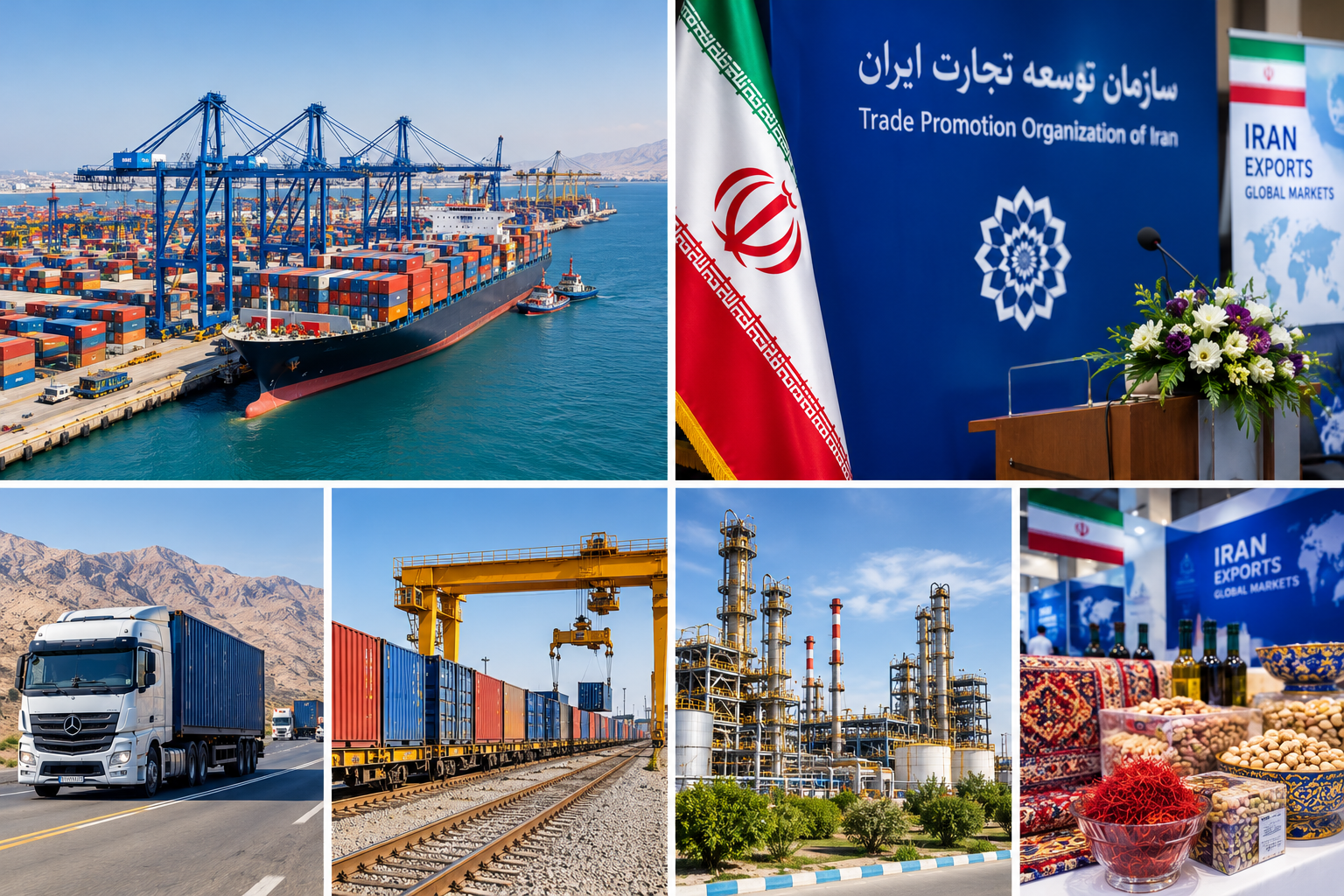
As global trade restrictions reshape Iran's commercial landscape, the country's exporters are finding new paths to market—and next week, the nation will honor those leading the charge.
Mohammad Ali Dehghan Dehnavi, head of the Iran Trade Promotion Organization, offered a candid assessment of the current trade environment during a press conference announcing the 30th National Export Day, set for October 21. His message was clear: while the challenges are real, so is the resilience.
A Trade Landscape Transformed
The numbers tell a sobering story. Iran's foreign trade weight dropped 34 percent in the first half of the year, with roughly 75 percent of last year's trade having moved by sea through the Persian Gulf and Sea of Oman. Maritime restrictions dealt a heavy blow, yet Dehghan Dehnavi was quick to dismiss rumors of border closures as false, noting that exports continue via sea, land corridors, and rail.
The shift has come at a cost. Land and rail transport is inherently pricier than sea freight, and rerouted demand has created congestion at some crossings. A $50-per-ton premium may render low-value goods uneconomical, but higher-value products continue to flow—explaining why export value fell only 20 percent while weight dropped far more sharply.
Imports: Leaner but Focused
Import management has followed a similar logic. Import weight fell 20 percent, but value dropped 35 percent—a deliberate outcome of policies steering foreign currency toward essential goods and raw materials. Dehghan Dehnavi reported that staple supplies remain sound, while demand management for machinery and non-essentials has conserved resources.
With 85 percent of imports consisting of raw materials, intermediate goods, and machinery, officials are working to sustain supply lines through alternative routes. "We hope facilitating measures and greater export support will offset part of the decline," he said.
Seven Days of Export Focus
Beginning this week, Iran observes National Export Week, with each day dedicated to a different facet of trade: corridors and infrastructure, knowledge-based exports, technical and engineering services, export management companies, legislative reform, foreign exchange facilitation, and trade diplomacy. The main ceremony on Mehr 29 will honor the nation's top exporters—43 exemplary and 13 distinguished—selected through a fully systematized, criteria-based process for the first time.
Exporters as Economic Drivers
Dehghan Dehnavi reserved his strongest words for the role of exporters themselves. "A producer who sells domestically does valuable work," he said. "But one who reaches global markets demonstrates superior quality, knowledge, and capability." He contrasted exporters with importers, noting that while importing is essential, selling abroad demands skill, marketing, and perseverance.
The message underpinning Export Week is unity: government bodies, private associations, chambers of commerce, and the media must all rally behind non-oil exports. "We support exporters," Dehghan Dehnavi affirmed. "Greater support and better conditions are needed so they can expand in global markets."
In a year of blockades and war, Iran's trade has been managed—not painlessly, but steadily. The coming week aims to prove that even under pressure, Iranian exporters can keep the wheels of commerce turning.