
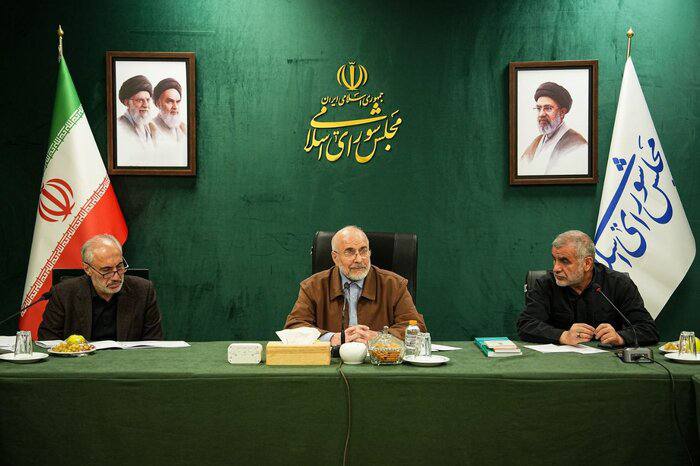
Parliament Speaker Mohammad-Baqer Qalibaf has urged the government and parliament to forge a shared understanding of Iran's economic challenges, warning that fragmented decision-making could deepen the pressures facing ordinary Iranians.
Speaking at a joint meeting of senior economic officials and parliamentary committee heads, Qalibaf said the first six months of the year have provided valuable experience that should inform planning for the remainder. "We must determine what scenario lies ahead and, if we agree on it, we can design better for it," he said.
The gathering brought together key figures including Central Bank Governor Abdolnaser Hemmati, Minister of Economic Affairs Seyyed Ali Madanizadeh, Minister of Cooperatives, Labor and Social Welfare Ahmad Meidari, Agriculture Minister Gholamreza Nouri Qezeljeh, and Plan and Budget Organization head Seyyed Hamid Pourmohammadi. Discussions covered the commodity coupon plan, livelihood support for citizens and armed forces, agricultural production, input supply, investment growth and war damage compensation.
Qalibaf identified two urgent priorities: improving livelihoods and supporting the armed forces. He stressed that decisions must be calibrated so that "the people's table is the last place affected by sanctions and war, and the first place where sound management has a positive effect."
The speaker described the current confrontation as primarily an economic war, calling it more significant than cognitive, military or cyber threats. "In economic war, our main challenge is decision-making, management and stable governance," he said.
He called on officials to act with courage and coordinate closely. "If we move forward together, we can place parliament and government on a single economic axis," Qalibaf said, adding that times of crisis also present the greatest opportunities.
The meeting signals growing recognition that coordinated action is essential as Iran navigates sanctions, regional tensions and domestic economic pressures in the months ahead.