
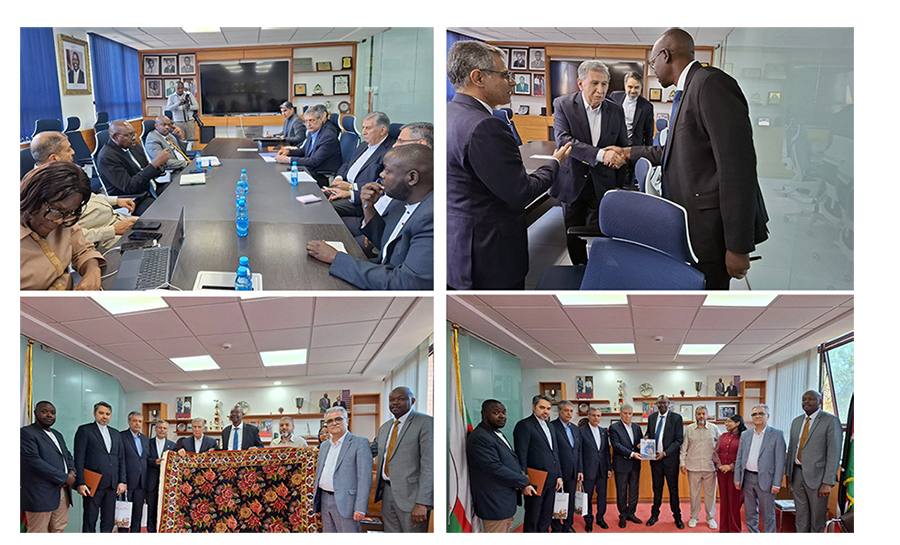
Iran and Kenya are seeking to move beyond diplomatic goodwill and build a practical trade corridor, with Nairobi positioned as a gateway to Africa and Tehran as a bridge to Central Asia and Eurasia.
During a visit to Nairobi, Samad Hassanzadeh, head of the Iran Chamber of Commerce, Industries, Mines and Agriculture (ICCIMA), met Eric Ruto, president of the Kenya National Chamber of Commerce and Industry (KNCCI). Hassanzadeh congratulated the Kenyan chamber on its 60th anniversary and welcomed Ruto’s membership in the General Council of the World Federation of Chambers, calling it a platform for closer cooperation in international forums.
Both sides acknowledged that current Iran-Kenya trade remains far below potential. Hassanzadeh said sanctions have constrained Iran’s economic relations, but argued that private sectors and chambers carry a duty to help their nations. He described Kenya—with its strong financial infrastructure and the strategic port of Mombasa—as the most important entry point for Iran and other countries into Africa. In return, he said, Iran can serve as Kenya’s gateway to Central Asia and Eurasia.
Iran’s offer covers health and medicine, agriculture, energy, petrochemicals and fertilizer, infrastructure, housing and technology. Hassanzadeh said Iranian companies are ready to supply medicine and medical equipment, pursue joint production in Kenya, and transfer technical knowledge in mechanization, modern irrigation, processing and post-harvest waste reduction. He also cited Iranian competitiveness in bitumen, petrochemicals and chemical fertilizer, and readiness to join energy and renewable projects.
In infrastructure, Iran is prepared to share expertise in construction, dam building, power plants, mass housing and information technology. Other proposed areas include overseas cultivation, road construction and petrochemical and refinery facilities. Iran also wants sustainable trade, including imports of Kenyan tea, coffee and agricultural goods, with barter used to expand exchanges.
To ease business travel, Hassanzadeh pushed for direct Tehran-Nairobi flights and invited Ruto to lead a trade delegation to Tehran. Seyed Mehdi Tabibzadeh, head of the Kerman chamber, called for a joint business committee to remove customs and tariff barriers and suggested a permanent Iranian products display center in Nairobi.
Ruto welcomed the delegation and said Kenya values foreign participation in dam and road construction, mining and health services. KNCCI Vice President Mostafa Ramadan said existing trade numbers are inadequate, arguing Iran could access an African market worth more than $1 billion through Kenya. Energy, logistics and technical engineering, he said, are now sectors where Iran can expand—if obstacles are removed.