
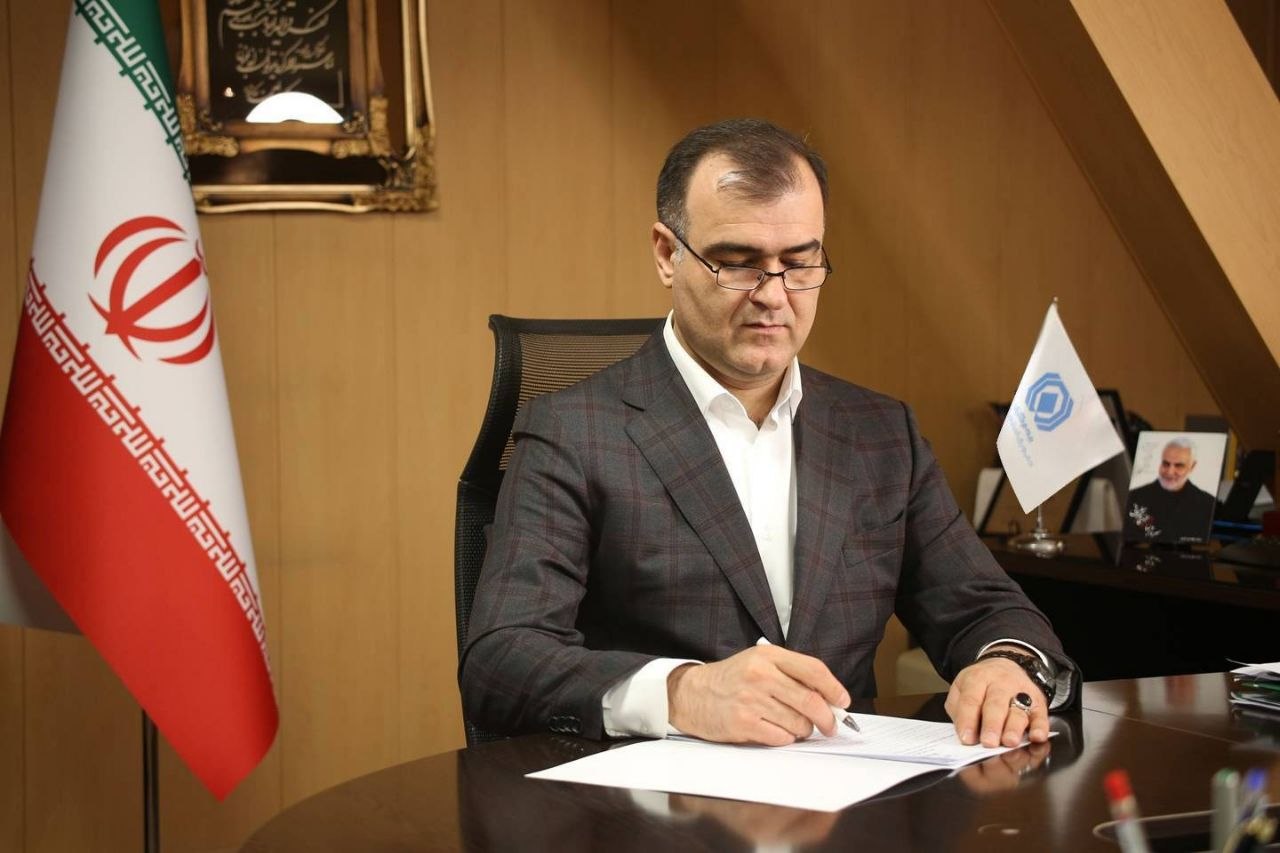
Mousa Rezaei Mirghaed, President of the Central Insurance of the Islamic Republic of Iran (CII) and Chairman of the Policy Council of the Insurance and Development Conference (ICID 2026), outlined the approach of this year’s conference by stating that the event serves as an opportunity for intellectual synergy and collaboration among various sectors of the insurance industry and the nation’s academic community. He noted that this year’s focus is built upon tightly bridging academic discourse with executive challenges and the future demands of the industry, ensuring that the outcomes of this event are directly utilized in decision-making and operational planning.
Referring to the overarching conference theme, “Smart Insurance Governance and Institutional Trust: The Infrastructure of an Insurance-Driven Economy,” he added that the expansion of the digital economy, the evolving nature of risks, and shifting public expectations have confronted the insurance industry with novel responsibilities and opportunities. Responding to these conditions necessitates a revision of governance methodologies, the reinforcement of specialized capacities, and closer cooperation among the regulatory body, insurance companies, the distribution network, academic institutions, and technological ecosystems.
Rezaei emphasized that public trust constitutes the foundational pillar of the insurance industry. This trust is forged through transparency, professional conduct, the financial soundness of companies, and the timely fulfillment of commitments, while being reinforced by satisfying consumer experiences. Furthermore, technological development and innovation must lead to enhanced service quality, increased accountability, and the strengthening of this trust.
He continued by highlighting that what distinguishes this year’s conference is its simultaneous attention to the academic, executive, and technological dimensions of issues. The programs have been designed to transcend conventional paper presentations, incorporating problem-oriented panels, the exchange of executive experiences, the introduction of technological achievements, and the identification of top-tier talents alongside scholarly activities. The overarching objective is to strengthen the nexus between knowledge production and its practical application within the industry, ensuring that the collaborations forged during the conference persist beyond the conclusion of the event.
Smart Governance: Expanding Equity and Enhancing Public Satisfaction
Elucidating the concept of smart governance, the CII President stated that smart governance rests upon data-driven decision-making, transparency, accountability, and effective supervision. The value of this approach becomes fully apparent when it leads to the expansion of equity in accessing insurance services, precise evaluation and prompt payment of claims, and heightened satisfaction among the public and the distribution network. The development of digital systems and infrastructures serves as an instrument to realize these objectives and should not be construed as the ultimate end in itself.
He added that equity in service delivery dictates that an individual’s place of residence, mobility constraints, or familiarity with administrative procedures must not preclude them from exercising their insurance rights. Smart governance must facilitate public access to services, enabling the submission of requests, status tracking of cases, claims follow-up, and grievance filing with minimal cost and physical attendance. Alongside digital services, preserving in-person pathways and effective support for individuals lacking adequate access or digital literacy remains imperative.
Rezaei proceeded to note that one of the most critical anticipated outcomes of smart governance is the reduction of the temporal gap between the notification of a claim and its settlement. Information integration, the elimination of redundant applications, the assignment of clear unit responsibilities, and the monitoring of processing durations must culminate in the fair assessment and accurate disbursement of covered claims within the shortest possible timeframe. Furthermore, citizens must be enabled to remain informed regarding the processing stages, the basis of claim calculations, and the causes of any potential delays.
He identified the prevention of fraud and irregularities as another imperative of this approach, stating that data analytics, systematic information exchange, and the identification of anomalous patterns can facilitate the early detection of fraud, prevent unjustified disbursements, and safeguard the resources of the insurance industry. These controls must be targeted and proportionate to the risk level to avoid imposing unnecessary delays or superfluous administrative formalities upon the public. System-driven decisions must likewise be explainable and reviewable to mitigate the probability of error and discrimination.
Rezaei added that transparency must be heightened across all processes of the insurance industry, thereby reinforcing accessibility to information, oversight, and follow-up mechanisms. The clarity of regulations, responsibilities, and service delivery stages establishes the groundwork for reducing ambiguity, preventing infractions, and ensuring more effective accountability. These measures must translate into a more rigorous observance of public rights, enhanced customer satisfaction, and the wider dissemination of equity in the provision of insurance services.
Digital Transformation in the Service of Productivity and Service Quality Enhancement
Emphasizing the necessity of empowering the foundational pillars of the insurance industry, the CII President asserted that digital transformation must lead to increased productivity, the facilitation of professional activities, and the elevation of service quality. Along this trajectory, agents and brokers hold a pivotal position in identifying insurance needs, offering consultancy, and pursuing client affairs due to their direct and continuous interaction with the public; consequently, technology must reinforce their capacity to fulfill these responsibilities.
He added that the digitalization of services should not be interpreted as the elimination or marginalization of the sales network. The reduction of repetitive tasks and administrative burdens, access to precise information, and the facilitation of communication with insurance companies afford agents and brokers the opportunity to dedicate more time and effort to specialized consultancy, market development, and public support. The directional vector of this transformation must be the enhancement of their professional role alongside the provision of novel avenues for growth and service delivery.
Rezaei continued by noting that the participation of the sales network in the design and evaluation of digital systems, training tailored to occupational requirements, and the observance of professional rights constitute prerequisites for the success of this transformation. The quality of digitalization must be gauged by operational ease, the reduction of unnecessary costs, and the heightened satisfaction of the public and industry stakeholders.
He stressed that migrating a prolonged and complex process into an electronic environment does not inherently constitute service improvement. Technology development must be coupled with the elimination of unnecessary procedural steps, the facilitation of data exchange, and the synchronization of organizational units. Information security and privacy preservation must also be maintained across all stages to heighten trust in novel services.
Insurance Equity: Expeditious Processing and Accurate, Timely Claim Settlement
Underscoring the significance of equity in the provision of insurance services, Rezaei stated that the foremost manifestation of insurance equity is fair adjudication alongside the accurate and timely payment of claims. The public must be assured that upon the occurrence of a covered loss, their application will be evaluated without discrimination and that the indemnification amount legally due under the contract will be disbursed in full and within the shortest possible timeframe.
He added that claim processing must commence without delay from the precise moment of loss notification. Insurance companies are obligated to manage the stages of document intake, appraisal, obligation verification, and disbursement in a manner that eliminates unnecessary bottlenecks. Once the liability and the claim amount are ascertained, bureaucratic paperwork and the multiplicity of approvals must not defer disbursement.
The CII President continued by observing that precision in assessment and celerity in payment represent two complementary imperatives. The claim amount must be determined on the basis of expert evaluation, valid documentation, and the terms of the policy; simultaneously, the necessity of technical scrutiny must not unjustifiably protract the adjudication process. For complex cases, clear scheduling, transparent communication, and continuous follow-up must likewise be maintained.
He noted that an injured party may harbor an urgent requirement for claim disbursement to cover medical expenses, residential reconstruction, or the continuation of their economic enterprise. Payment delays exacerbate the financial pressures of adversity and entail severe ramifications for low-income households and small businesses. For this reason, disbursement speed and processing quality must constitute primary metrics for evaluating corporate performance.
Rezaei emphasized that analogous cases must be examined using uniform criteria. Social standing, geographical domicile, or an individual’s capacity for follow-up must not exert influence over the quality of adjudication. No individual should be compelled to rely upon privileged connections or repeated visits merely to secure their contractual entitlements.
He added that equitable access to services is likewise of fundamental importance. The capacity of branches, loss adjusters, and disbursement units must be reinforced across diverse regions in alignment with local needs, ensuring that geographical distance does not engender processing delays. Required documentation must be delineated clearly from the outset, and the redundant solicitation of pre-existing information must be averted.
The CII President continued by asserting that timely disbursement remains contingent upon the financial and operational readiness of enterprises. The adequacy of technical reserves, liquidity management, the provisioning of expert personnel, and the appropriate delegation of authority must be organized in a manner that identifies and resolves payment impediments proactively. The repercussions of internal coordination failures must not be deflected onto the public.
He emphasized that the benchmark of success is not merely the formal closure of a claim; rather, the accuracy of the assessment, the preservation of fairness, the complete settlement of obligations, and public satisfaction with the adjudication modality are of paramount importance. The public must witness the tangible results of insurance equity in practice.
The Heroic Solidarity of the Insurance Industry with the Public During Wartime
Expressing gratitude for the tireless efforts of insurance industry personnel during the war and its aftermath, the CII President stated that our colleagues stood alongside the public during those arduous days with dedication, professional courage, and an altruistic ethos. Under circumstances wherein they and their families confronted the anxieties and perils of warfare, they pursued their service responsibilities and the follow-up of afflicted individuals with utmost diligence.
He added that the continuity of services, the organization of loss appraisals, and coordination for resource provisioning under wartime conditions necessitated high levels of cohesion, mutual trust, and audacity in assuming responsibility. The endeavors of company personnel, the sales network, adjusters, and other industry sectors constituted a valuable manifestation of accountability and solidarity that merits institutional documentation and appreciation.
Rezaei continued by noting that the value of this solidarity must be evaluated in light of the operating environment. During crises, both the volume of demands surges and the execution of duties becomes exceedingly arduous. Maintaining public communication, mobilizing expert capacity, and pursuing the affairs of the afflicted under such conditions were the direct byproduct of collective exertion and the professional commitment of insurance sector colleagues.
Referring to the dimensions of loss assessment operations, he stated that according to reports submitted during a meeting with Iran Insurance Company executives, the damages sustained by approximately 43,000 afflicted automobiles were evaluated, with losses estimated at roughly six trillion tomans. This magnitude of appraisal bears testimony to the extensive scope of activities undertaken by experts and executive bodies. Nevertheless, loss assessment, credit provisioning, and final disbursement constitute distinct phases, and the report for each stage must be presented with precision and transparency.
The CII President added that regarding those afflicted whose policies lacked wartime coverage, pursuing supportive mechanisms remains vital. In this context, the contractual obligations of enterprises, voluntary initiatives within the framework of corporate social responsibility, and state-backed supports drawn from public resources must be delineated from one another to render the supportive pathway, institutional responsibilities, and requisite resources transparent.
He stressed that the experiential learnings of this period must culminate in heightened industry preparedness for future crises. The development of business continuity plans, the reinforcement of loss appraisal capacities, the anticipation of emergency decision-making frameworks, and the examination of financial resources for catastrophic risks represent subjects that must be pursued by leveraging this accumulated experience.
The Insurance-Driven Economy: Linking Prevention with Economic Sustainability
Elucidating the concept of an insurance-driven economy, Rezaei stated that within such a framework, risk identification and management occupy a more pronounced position within the decision-making matrices of households, enterprises, and public institutions. Insurance, alongside preventive measures, contributes to mitigating the financial reverberations of mishaps and ensures the continuity of economic activities.
He added that technical risk evaluation, safety recommendations, and the design of proportionate coverages can diminish both the probability of loss occurrence and the severity of its consequences. The earlier these capacities are integrated into the design and execution phases of activities, the greater their ultimate efficacy.
The CII President continued by observing that the expansion of the digital economy has similarly engendered novel requirements. Cyber vulnerabilities, infrastructure disruptions, and operational downtimes necessitate specialized risk comprehension and responsive solutions. Cooperation among insurers, technology specialists, and business actors establishes the foundation for addressing these needs with enhanced precision.
The Insurance Research Center (IRC) on the Path of Transformation and Academic Standard Enhancement
The Chairman of the Board of Trustees of the Insurance Research Center (IRC) pointed to the ongoing transformations within the institution, stating that the IRC has successfully embarked upon a novel trajectory characterized by notable advancements across the domains of research, education, and technology. Enhanced attention to the empirical challenges of the industry, the development of specialized collaborations, and rigorous endeavors to elevate the quality of activities to globally recognized standards constitute the hallmarks of this current epoch.
He added that this directional orientation is viewed favorably and receives full institutional support. While preserving its academic credibility and institutional independence, the IRC must furnish actionable solutions for industry concerns and regulatory requisites. Continuous communication with executive managers and specialists contributes directly to the more precise formulation of research topics and the enhanced applicability of outcomes.
Rezaei continued by asserting that the financial sustainability of enterprises, reserve adequacy, the optimization of claims processes, the expansion of coverages, and the identification of emergent risks necessitate continuous scholarly backing. The upgrading of research methodologies, the utilization of valid datasets, rigorous peer review, and the expansion of academic partnerships must be vigorously pursued.
He emphasized that aspirations toward global standards must be reflected within research quality, outcome credibility, and the extent of their utilization in decision-making. The intrinsic value of scholarly activity attains full realization when its empirical findings assist in refining industry policies and operational performance.
Insurtech: From Problem Definition to Operational Deployment
Characterizing a more serious engagement with technology as a manifestation of the IRC’s transformation, Rezaei stated that fostering collaborative ties with knowledge-based enterprises and insurtechs provides an opportune framework for synergy between innovators and technology adopters. The foundational starting point of this collaboration must reside in the precise identification of actual industry problems and requirements.
He added that data quality, security imperatives, operational preconditions, and solution usability must be evaluated from the very inception of the design phase. Simultaneous attention to these variables amplifies the probability of technological deliverables penetrating operational workflows.
The Policy Council Chairman continued by noting that the schedule for December 5 envisions the introduction and unveiling of several technological projects and achievements. The application of these initiatives within smart supervision, risk analytics, decision support, and service enhancement will occupy a central focus.
He stated that the introduction of any project must be accompanied by the systematic pursuit of its development and deployment pathways. The clear specification of user entities, execution schedules, and evaluation metrics assists in translating scholarly and technological milestones into effective instruments within the industry.
Specialized Education and Problem-Oriented Postgraduate Development
The Chairman of the Board of Trustees of the IRC addressed educational programs by asserting that pedagogical transformation demands closer attention to occupational requirements and professional responsibilities. Underwriting and claims specialists, financial managers, chief executive officers, and board members encounter distinct decisions and regulatory mandates; consequently, curriculum design must rest upon rigorous needs assessments commensurate with their respective hierarchical responsibilities.
He added that engaging instructors endowed with contemporary knowledge and professional experience alongside the examination of real-world claims, case studies, and practical exercises serves to elevate pedagogical efficacy. Program evaluations must likewise demonstrate the extent to which acquired knowledge has been successfully operationalized within individual performances.
Regarding the development of postgraduate educational programs, Rezaei noted that through the diligent follow-up of the IRC, collaborative initiatives with domestic and international universities have been pursued to establish specialized postgraduate degrees, including faculty-led doctoral tracks, with admission details to be announced imminently. Admissions, execution, and degree conferral will conform to higher education regulations and proceed through partner universities.
He continued by stating that the overarching objective is to ensure that research topics are selected under professorial guidance on the basis of empirical industry issues, maintaining a robust linkage between research and the professional milieu from problem definition to solution delivery. The IRC will likewise play a catalytic role in identifying needs, facilitating university-industry linkages, and furnishing environments conducive to the utilization of research outcomes.
Promoting the Insurance Culture: A Public and Continuous Duty
Emphasizing the imperative of expanding insurance literacy, Rezaei stated that familiarity with hazards, preventive methodologies, and the role of insurance in mitigating the financial consequences of mishaps constitutes an essential life skill. This pedagogical continuum must commence in primary education and persist in alignment with age and developmental requirements across subsequent educational stages, universities, and professional environments.
He added that students can be introduced to concepts such as health preservation, asset safeguarding, and responsibility toward others through accessible language and everyday life examples. Within universities, this comprehension must become intertwined with the demands of independent living, professional practice, and entrepreneurial ventures.
The CII President emphasized that promoting insurance culture represents a shared universal responsibility transcending any single institution. Families, schools, universities, media outlets, executive bodies, public institutions, economic enterprises, and professional associations each fulfill distinct roles commensurate with their respective capacities. The insurance industry must function as the specialized bedrock for this movement, yet its societal generalization necessitates the concerted mobilization of all societal sectors.
He continued by observing that insurance education must also command attention within governmental and private organizations and administrative bodies. Familiarizing personnel and managers with requisite coverages, the boundaries of liabilities, policy exclusions, and claim notification and follow-up protocols proves advantageous for their personal lives while assisting in the superior risk management of organizations. Pre-service and in-service training frameworks offer an appropriate capacity for perpetuating these programs.
Rezaei added that educational content must maintain proportionality with audience requirements. The informational needs of a student diverge from those of a farmer, laborer, business owner, or organizational manager. Effective education must empower individuals to identify their prospective hazards, select appropriate coverages, and remain cognizant of their rights and duties.
Referring to the role of the IRC, he stated that generating scholarly and comprehensible content, supporting instructor training, collaborating with academic and executive bodies, and evaluating program efficacy constitute domains of institutional contribution. These endeavors must be coupled with optimal service delivery and the timely fulfillment of obligations so that public awareness and institutional trust are reinforced concurrently.
Official Inauguration of the Secretariat and Specialized Committees
Addressing the preparatory trajectory of the event, the Policy Council Chairman stated that the conference secretariat has commenced its formal operations following the acquisition of official permits from competent authorities. Specialized committees have likewise been constituted and are actively advancing the programs within their respective purviews.
He added that the division of responsibilities among committees establishes the groundwork for the coherent pursuit of scholarly, executive, technological, and communicative affairs alongside talent identification. The synchronization of these divisions must culminate in the design of programs that remain mutually complementary from both substantive and operational standpoints.
Rezaei continued by noting that insurance companies, agents, brokers, loss adjusters, academics, and knowledge-based entities each possess invaluable insights and experiential backgrounds. Their participation in panel design and the sharing of experiential practices contributes to rendering discussions more realistic and proposals highly operational.
Identifying Top-Tier Talents and Nurturing Future Leaders
Rezaei highlighted the identification of elites and top-tier talents as a prominent axis of this year’s conference, stating that the insurance industry nationwide encompasses robust human resources that must be afforded the opportunity for visibility, introduction to insurance enterprises, and professional advancement. The objective is to systematically identify these capacities and establish pathways for utilizing their competencies within specialized and managerial responsibilities.
He added that this process must rest upon the evaluation of scholarly, professional, and managerial competencies. Specialized knowledge, executive experience, analytical and problem-solving acumen, decision-making capacity, professional ethics, and learning agility represent components that must be appraised in proportion to targeted responsibilities.
The Chairman of the Board of Trustees of the IRC continued by noting that talent identification merely represents the initial phase of the trajectory. Identified individuals must be provided with specialized and managerial training, opportunities to assimilate the experiences of seasoned executives, and participation in actual projects to enable them to gradually assume professional and managerial responsibilities commensurate with their merits.
Referring to the measures undertaken by the IRC, Rezaei stated that the establishment of provincial scholarly working groups has furnished an appropriate platform for engaging with universities, specialists, and industry actors across diverse regions of the country. These working groups ensure that opportunities for talent identification and growth are not monopolized by the capital.
He added that a specialized committee dedicated to identifying top talents and national insurance elites has likewise been constituted within the conference secretariat. This year’s conference provides an opportune occasion to introduce these capacities to insurance companies; however, this connectivity must persist beyond the conference, sustained through training, collaborative opportunities, and clearly delineated growth pathways.
The CII President emphasized that the fruit of this program must be the reinforcement of the expert and managerial backbones of enterprises alongside the advancement of succession planning. Insurance companies can play an active role in cultivating this human capital by providing experiential opportunities, the gradual devolution of responsibilities, and performance appraisals. The assumption of managerial responsibilities must likewise proceed on the basis of demonstrated merit while observing professional requisites and relevant regulations.
Introducing Exemplary Performers and Transferring Successful Experiences
Addressing the recognition of exemplary performers, the Policy Council Chairman stated that honoring professional endeavors must rest upon clear criteria, verifiable documentation, and expert peer review. The introduction of top performers must, alongside formal appreciation, furnish opportunities for recognition and the transfer of successful operational experiences.
He added that in evaluating innovation, applicability, and the empirical impact of a project upon service enhancement are of paramount importance. Within professional performance, accountability, service quality, the observance of public rights, and professional ethics must command focus. Valuable capacities exist across large and small enterprises alike as well as within diverse provinces, and the evaluation process must ensure their visibility.
Rezaei continued by noting that honoring industry veterans must be accompanied by the documentation and transfer of their experiential wisdom. Introducing top researchers and scholarly works can similarly reinforce credible, applied research while offering appropriate paradigms for scholarly and professional activity.
Scholarly Engagement and the Utilization of International Experiences
Elucidating the international dimensions of the conference, Rezaei stated that exchanging experiences regarding regulatory frameworks, reinsurance, risk management, technology, and the safeguarding of consumer rights contributes to the expansion of specialized industry knowledge. Selecting specific topics and engaging in discourse concerning executive practices establishes the groundwork for more effective interaction.
He added that leveraging the experiences of other nations must be coupled with an acute comprehension of domestic market conditions and regulatory structures. The Iranian insurance industry likewise possesses specialized knowledge and experiences suitable for exposition within professional interactions.
The Chairman of the Board of Trustees of the IRC continued by noting that expanding scholarly communications can upgrade research methodologies, educational quality, and technological capacities while reinforcing the IRC’s endeavors to attain globally recognized standards.
Insurance Day Vision: A Festival Celebrating a Year of Achievements
Outlining the prospective horizon of this event, the Policy Council Chairman stated that our overarching vision for future years is to transform Insurance Day into a festival dedicated to introducing top performers, presenting substantive achievements, and summarizing the foundational transformations of the industry—a festival showcasing the aggregate fruits of scholarly, technological, and professional activities accumulated throughout the year.
He added that under this paradigm, specialized panels, workshops, innovation events, and talent identification programs will unfold across the year. Topics will receive thorough examination, projects will reach completion, and collaborations will crystallize. Subsequently, on Insurance Day, the outcomes of these endeavors will be presented in a coherent format alongside the commendation of top performers.
Rezaei continued by noting that the activities of this year’s specialized committees can serve as a prelude to institutionalizing such a continuous program. The objective is to sustain the linkages among research, education, technology, and execution throughout the year, ensuring that each iteration of the conference builds upon the achievements of its predecessor.
He concluded by emphasizing that our expectation from the conference is the crystallization of collaborations that persist long after the event concludes—an industry that must elevate public satisfaction and trust through more precise decision-making, capable human resources, timely claim disbursements, and increasingly equitable services.