
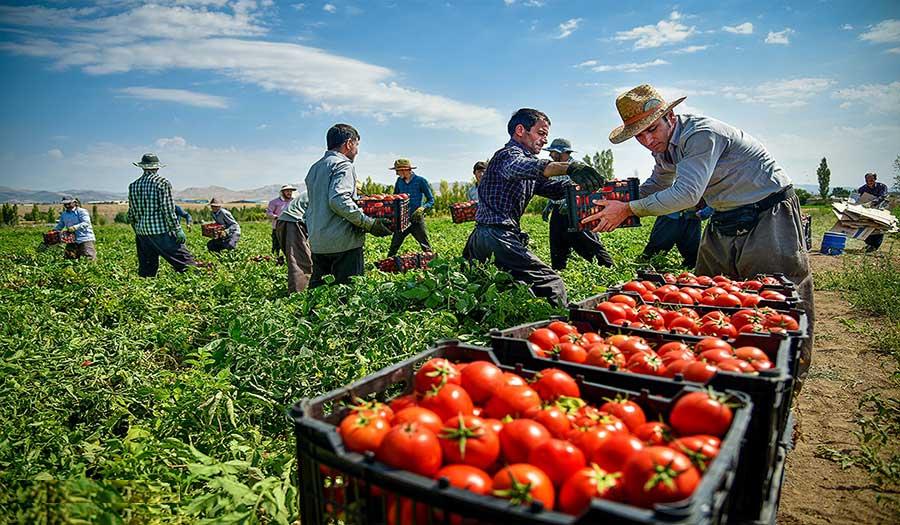
Iran’s agricultural officials used World Food Day to deliver a blunt message: research papers alone will not feed the country. At a Tehran conference hosted by the Agricultural Research, Education and Extension Organization and the Ministry of Agriculture, Deputy Minister Gholamreza Golmohammadi said the sector’s priority is moving knowledge from laboratories to farms. Research, he argued, must solve farmers’ problems, raise resource productivity and stabilize food supply as climate change, water scarcity and rising costs intensify pressure.
Golmohammadi cited FAO estimates that about 645 million people faced difficulty accessing enough food in 2026, despite scientific advances and higher production capacity. Innovation, he said, must be practical—drought-resistant seeds, better irrigation, scientific plant nutrition, pest control and improved storage—not merely sophisticated technology. Success should be measured by water saved, yields raised, resources protected and safe food delivered, not by publication counts. He said the current Iranian year has been designated “Year of Education and Extension” to push AREEOC, university and research outputs toward farmers, with research, education and extension working as a single chain.
The organization is also betting on digital tools. A Center for Monitoring the Agricultural Production Pattern was set up in 1404, and a fifth cropping-pattern version for field crops has been issued, alongside initial patterns for fisheries, greenhouses and medicinal plants. Remote sensing, officials say, can estimate cultivated area and forecast output about two months before harvest—useful for planning and managing supplies.
FAO Representative Farrukh Toirov cautioned that production growth alone is not food security. Global cereal output reached about 3.1 billion tons in 2024, up 27 percent from 2010, yet households still need sustainable access to healthy, nutritious and affordable food. Food security, he said, rests on availability, access, utilization and stability. He urged innovation adapted to local climates and called traditional knowledge a resource, not an obstacle. FAO–Iran work includes piloting subsurface irrigation with smart technologies in the Lake Urmia basin, date-palm pest management, native livestock conservation and climate-adapted crops.
Deputy Foreign Minister Kazem Gharibabadi framed food security as national security and agricultural diplomacy as a bridge. Iran, he said, is ready to expand scientific, trade and investment ties in greenhouses, seeds, processing, irrigation, livestock and aquaculture with neighbors, West Asia, Central Asia, the Caucasus and Africa. Water scarcity, drought and dust storms require regional cooperation, knowledge exchange and early warning systems.
Gharibabadi also said war and unilateral sanctions damage production, trade and access to essential inputs, even when food and medicine are formally exempt. Food, water and medicine must not become political weapons, he said, adding that Iran will pursue legal accountability for war damage. The conference’s takeaway was clear: Iran wants innovation to travel from lab to field—and diplomacy to keep food flowing.