Iran and Pakistan are turning to their shared frontier in an effort to revive trade flows and ease long-standing transit bottlenecks, with senior economic officials meeting in Istanbul to chart a more practical path forward.
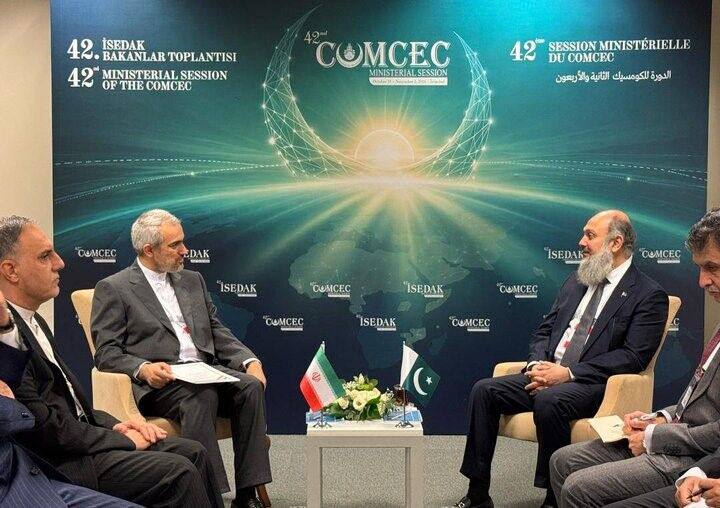
On the sidelines of the 42nd session of the OIC Standing Committee for Economic and Commercial Cooperation, Iran’s Minister of Economic Affairs and Finance, Seyyed Ali Madanizadeh, met Pakistan’s Minister of Commerce, Jam Kamal Khan. The talks focused less on broad declarations than on the day-to-day obstacles that have slowed trucks, cargo and commercial exchanges between the two neighbors.
Both sides reviewed existing trade capacity and agreed to pursue workable solutions to transport and transit problems. Specific attention went to truck traffic at the Rimdan border and to making better use of the Mirjaveh crossing, as officials sought to enable smoother movement of goods. They also stressed stronger border infrastructure and greater use of free zones and border areas to support trade and economic activity.
Customs coordination emerged as a central theme. The ministers said continuous, coordinated operation of border customs offices and improved executive mechanisms at entry and exit points could cut clearance and transfer times and costs, helping trade flow more smoothly. They also underlined the need to expand exchanges, particularly in agricultural products, foodstuffs and other goods needed by both countries.
Beyond trade figures, the officials framed border cooperation as a driver of jobs, economic activity, security and sustainable development in border cities. The discussions reflected a shared recognition that political goodwill must be matched by operational fixes at busy crossings. They agreed to keep consulting and follow up on the issues raised, aiming to turn agreements into concrete measures and strengthen economic, trade and transit ties.