
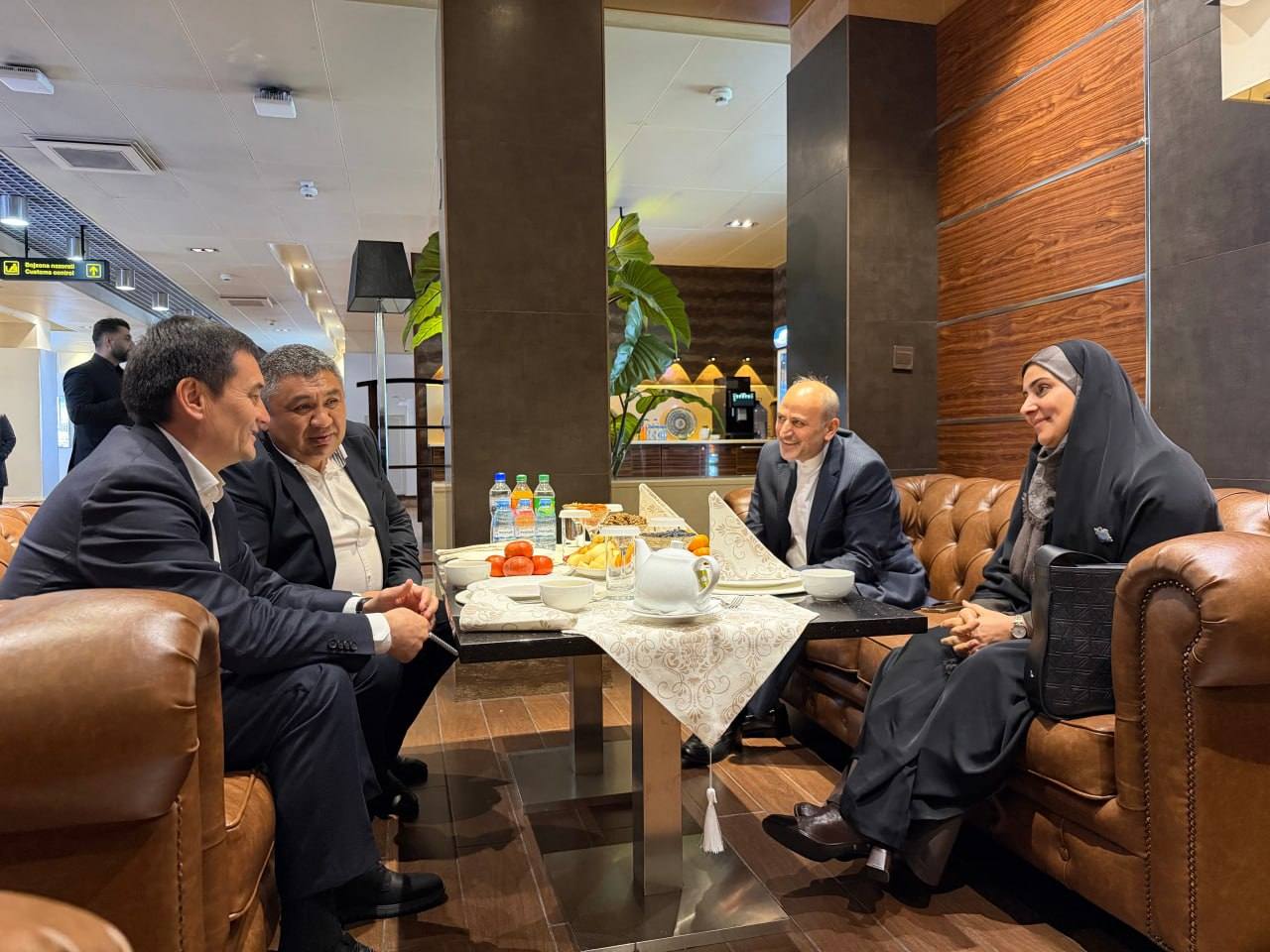
In a diplomatic push to strengthen regional connectivity, Iran’s Minister of Transport and Urban Development, Farzaneh Sadegh, met with Uzbekistan’s Minister of Transport, Ilhom Mahkamov, during an official visit to Tashkent. The talks underscored both nations’ commitment to expanding rail, road, and transit cooperation, with an emphasis on removing barriers to trade and streamlining logistics across regional corridors.
The meeting, aimed at exploring practical solutions to boost transport and transit collaboration, saw both sides highlight the extensive potential for bilateral cooperation. Minister Sadegh described her Tashkent visit as a reflection of the strategic importance of political, economic, and transit relations between the two countries. She recalled previous negotiations with Minister Mahkamov on the sidelines of the 14th ECO Transport Ministers’ Meeting in Astana, Kazakhstan, stressing the need to operationalize the agreements reached there.
The Iranian minister, noting positive progress in road, air, and rail cooperation, proposed a trilateral rail meeting involving Iran, Uzbekistan, and Turkmenistan. Such a gathering, she argued, would enhance coordination and accelerate rail development among the three nations—a move that aligns with Iran’s broader ambition to serve as a key transit hub linking Central Asia to global markets.
Port Capacities as a Regional Gateway
Highlighting the two countries’ logistical and transit capacities, Sadegh pointed to Iran’s northern and southern ports as valuable assets for expanding regional interactions. She announced that Chabahar Port is set to be connected to the national rail network in the near future—a development she said would enhance transit capacity, broaden logistics cooperation, and ease regional access to open waters.
Chabahar’s strategic location on the Gulf of Oman makes it a crucial gateway for landlocked Central Asian nations seeking reliable sea access. Sadegh welcomed the expansion of corridor relations and multilateral cooperation, urging both countries to leverage their complementary strengths to bolster their positions in the regional transport network.
Minister Mahkamov echoed these sentiments, reaffirming Uzbekistan’s readiness to deepen transport cooperation with Iran and implement joint initiatives. He stressed the importance of continued consultations, follow-up on agreements, and creating the necessary conditions for further bilateral collaboration in road and rail transport.
Provincial Diplomacy: Mazandaran’s Economic Push
The Iran-Uzbekistan partnership is also playing out at the provincial level. According to a Khabar Online report, Uzbekistan’s Ambassador to Iran, Fariddin Nasriyev, met with Mehdi Younesi Rostami, Governor of Mazandaran, on October 22. The ambassador praised the province’s economic and trade potential and highlighted the enthusiasm of Iranian traders to cooperate with Uzbekistan.
Nasriyev noted that a recent meeting at the Mazandaran Chamber of Commerce, attended by economic actors from both sides, demonstrated strong mutual interest in expanding trade. He also welcomed the appointment of a Mazandarani representative as co-president of the Iran-Uzbekistan Chamber of Commerce, calling it a step toward strengthening private-sector ties.
The ambassador referenced last year’s visit of a Mazandaran delegation to Uzbekistan as positive and constructive, noting that trade cooperation is steadily expanding. He announced plans for official exchanges in the next two to three months, including an invitation for the Mazandaran governor to visit Uzbekistan. He also pointed to interactions between Mazandaran and Uzbekistan’s Fergana Province, emphasizing the exchange of trade delegations as a means to identify investment opportunities and boost trade.
Trade Growth and Untapped Potential
The broader economic relationship between Iran and Uzbekistan shows significant promise.
In late September, Mehr News Agency reported that Uzbekistan’s $1.4 billion food market is open to Iranian exporters, with bilateral trade reaching $305 million in the first half of 2026 and three cooperation documents recently signed.
Uzbekistan’s food imports surged by nearly 46% in the first quarter of 2026 to $1.4 billion, yet Iran’s share remains limited. Economic actors say expanding Iran’s food exports to Tashkent requires resolving financial and transportation hurdles and gaining a deeper understanding of market dynamics. Uzbekistan’s total imports reached $12.2 billion in the first quarter of 2026, with food products and live animals accounting for about $1.4 billion—a 45.9% increase year-on-year. With a population exceeding 37 million and its role as a Central Asian trade hub, Uzbekistan offers growing opportunities for regional food exporters.
Iran’s commercial attaché in Uzbekistan, Rahmatollah Khormali, cited agricultural exports, technological cooperation, and joint investment as key pillars for expanding trade. He noted that a 120-member delegation, led by the Agriculture Minister and including experts in agriculture, aquaculture, machinery, and processing industries, recently visited Uzbekistan. Uzbekistan ranks second among Iran’s export destinations in the CIS, with agriculture a priority sector.
Khormali also highlighted food security as a promising area of cooperation, noting Uzbekistan’s establishment of a Food Security Agency focused on livestock, poultry, quarantine, and food products. He pointed to approximately 30 projects worth $770 million being implemented by Iranian companies in Uzbekistan across various sectors, including agriculture—a clear sign of the private sector’s capacity to enter the Uzbek market.
A Comprehensive Partnership
From high-level talks in Tashkent on transport corridors and port connectivity to provincial economic diplomacy in Mazandaran, Iran and Uzbekistan are actively pursuing deeper cooperation. The growing trade figures and planned delegations signal a positive trajectory, though challenges remain in fully realizing the relationship’s potential. With continued government commitment and private-sector engagement, both nations appear well-positioned to strengthen their economic partnership and contribute to regional integration in Central Asia.