
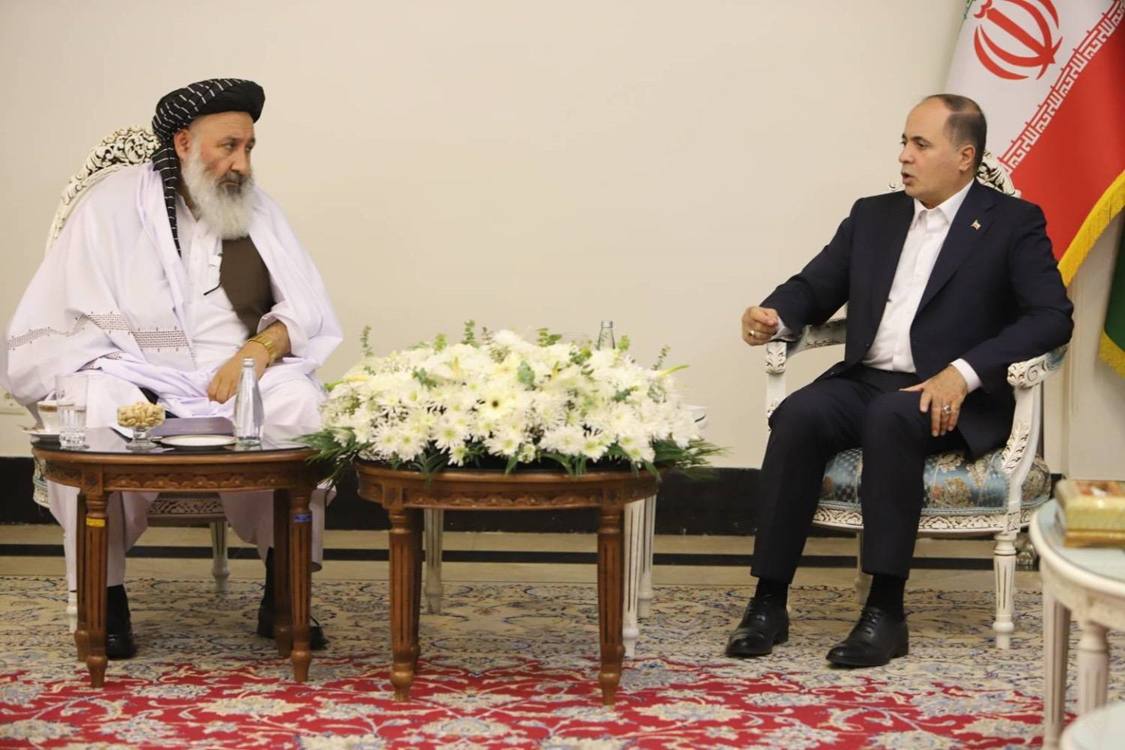
Iran and Afghanistan have moved to deepen agricultural and livestock cooperation, with Tehran offering expertise in mechanization, animal husbandry, plant breeding, and livestock breeding during a high-level meeting in Tehran. The talks, held on November 14 between Iranian Agriculture Minister Gholamreza Nouri and Afghan Finance Minister Mawlawi Mohammad Hassan Akhund, who heads the Afghan side of the two countries’ Joint Economic Cooperation Committee, also focused on expanding transit routes, easing border trade, and supporting alternative crops to poppy cultivation.
Speaking after the meeting, Nouri highlighted Iran’s potential role as a gateway for landlocked Afghanistan, saying the country’s transit capacities could give Afghan traders access to the Persian Gulf and open waters. He pointed to the Chabahar region as a promising destination for Afghan investment in terminals and port facilities, which could boost Afghanistan’s imports and exports with the wider world. Bilateral trade between the two neighbors currently stands at about $2.7 billion a year, roughly a quarter of which is agricultural, Nouri said, predicting that frequent official exchanges would soon accelerate the volume of commerce.
The Iranian minister also outlined practical steps to facilitate trade, including round-the-clock customs operations, simplified border formalities, increased transit traffic, and joint efforts to combat smuggling. He announced Iran’s readiness to reopen the Yazdan border crossing and to help activate border markets. A deputy minister and representatives of executive bodies have already visited the shared borders to follow up on obstacles, he added.
In the agricultural sector, Nouri said Iran would prioritize purchases of Afghan products needed by the Iranian market and would supply Afghanistan’s needs from Iranian production capacities. Technical cooperation would cover plant and livestock breeding, veterinary medicines and vaccines, and day-old chicks. Iranian research centers, he noted, are ready to train Afghan experts, following recent 10- to 15-day courses attended by Afghan specialists. Iran also offered assistance in developing alternative crops to poppy cultivation, which is banned in Afghanistan.
Afghan Finance Minister Akhund, for his part, stressed that joint efforts against smuggling would strengthen legal trade. He said the two countries have considerable scope for cooperation and investment in agriculture, mining, transportation, banking, energy, and economic infrastructure. The meeting was intended to prepare for the seventh session of the Joint Economic Cooperation Committee, which both sides hope will be held in Kabul soon. On the domestic front, Nouri also noted that Iran had for the first time liberalized wheat imports for guild and industrial producers, allowing them to source grain directly from any origin.