Iran-Pakistan trade has long been bigger than the official numbers suggest, and Tehran now sees a clearer path to turning that hidden potential into a formal, institutionalized economic partnership.
Speaking at a conference in Bushehr on the trade capacities of Iran and Pakistan, Seyyed Mehrdad Siyadat-Nasab, deputy director of the East Asia and Subcontinent Office at the Iran Trade Promotion Organization, put current formal and informal bilateral trade at about $6 billion. With the right follow-up, he argued, that figure could exceed $10 billion—though both sides still fall short of an estimated $16 billion capacity. Part of the gap is statistical: before the war, some Iranian imports from Pakistan moved through the UAE and Jebel Ali port and were never recorded in bilateral trade data.
The more consequential shift may be the proposed free-trade agreement. Negotiations have concluded, lists of covered goods have been exchanged, and the deal is in its final stages, with officials hoping to implement its first phase before the end of the year. Under the arrangement, customs tariffs on a major share of Iranian exports to Pakistan would fall to zero, while Iran would offer tariff concessions for some Pakistani goods.
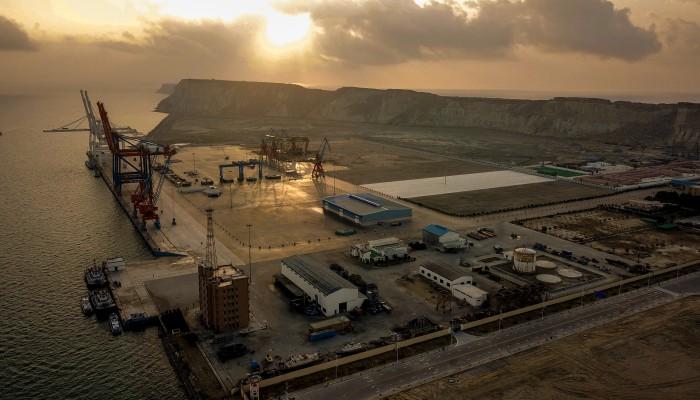
Officials also see Pakistan’s ports as a partial alternative to Jebel Ali’s logistical role—a platform for re-exporting Iranian goods and supplying Iranian imports from third countries. That transition will not happen overnight, Siyadat-Nasab acknowledged, but Pakistan could become an alternative route for Iran’s trade with the world. Strategically, Islamabad is viewed as a potential food-security partner and a bridge to East Asia: Gwadar port lies about 70 kilometers from the Iranian border, and the China-Pakistan Economic Corridor could open a land connection to China.
The market logic is substantial. Pakistan has about 260 million people, annual imports of nearly $65 billion and exports of roughly $35 billion. Iran’s energy advantage supports exports such as liquefied gas, petrochemicals, tiles, ceramics and steel, while Pakistan can supply agricultural products and basic goods. Tourism offers another opening: millions of Pakistanis visit Mashhad and Qom each year, with scope to extend stays to Isfahan, Shiraz and northern Iran.
Supporting infrastructure already includes a joint chamber of commerce in Zahedan with a Tehran office, a trade and investment council, and two licensed trade centers in Pakistan. But officials stress that exporters must first assess quality and price competitiveness—and use trade information systems such as Trade Map—before entering the market. The $6 billion base and a near-final FTA could mark a turning point, but whether the $10 billion target is reached will depend on infrastructure, follow-through and the private sector’s ability to compete.