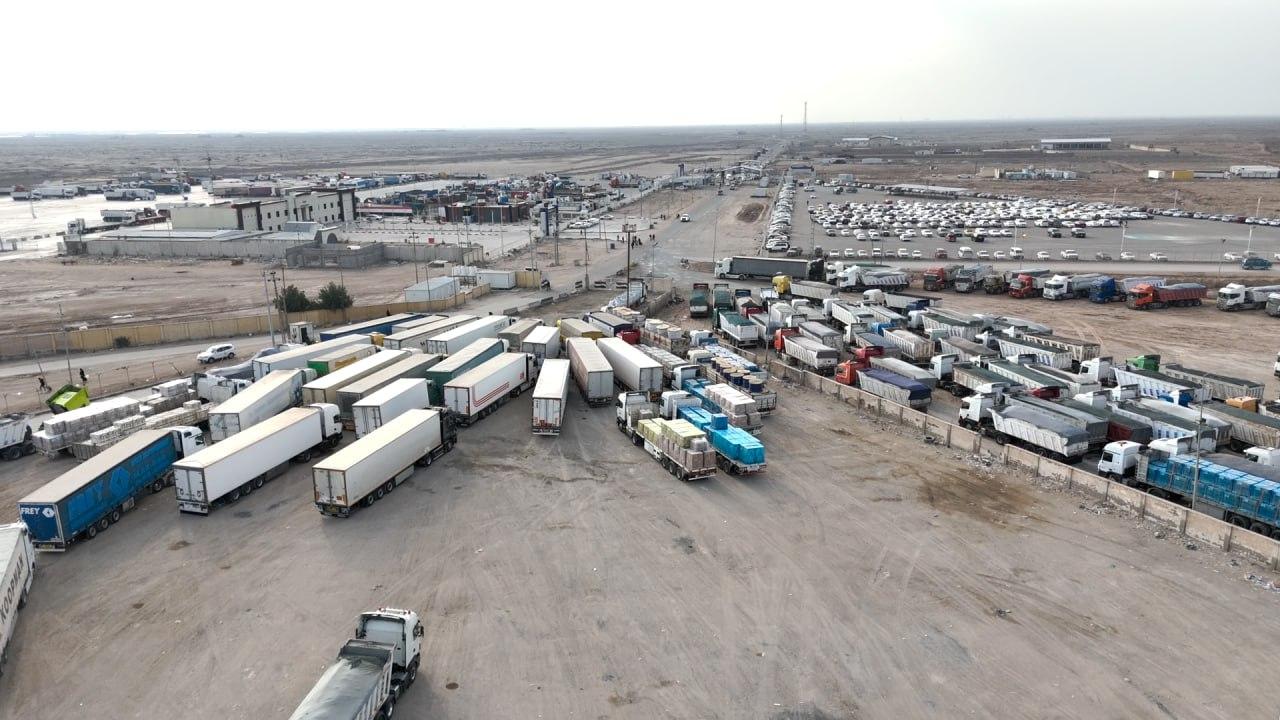
Iran has prepared a 20-article package aimed at developing financial exchanges with Iraq, with the draft resolution submitted to the Iranian Cabinet and awaiting the Central Bank of Iran’s written opinion, said Jahanbakhsh Sanjabi, secretary-general of the Iran-Iraq Joint Chamber of Commerce.
Speaking at a joint meeting of two committees of the Tehran Chamber of Commerce, Industries, Mines and Agriculture, Sanjabi said the Iran-Iraq Joint Chamber, together with the Headquarters for the Development of Iran-Iraq Economic Relations, had prepared and submitted a proposed package of five executive programs to the First Vice President. The package is intended to maintain and stabilize economic relations, and one of its axes is using Iraq’s capacity to facilitate financial exchanges.
He added that the generalities of the package were approved by the Iranian government’s economic subcommittee, and its details are to be examined with the participation of the Central Bank, the Iran-Iraq Joint Chamber, the Economic Relations Development Headquarters, the Ministry of Economic Affairs and Finance, and the Trade Promotion Organization.
Sanjabi said the draft Cabinet resolution had been prepared in 20 articles and submitted, and finalization depends on receiving the Central Bank’s written opinion.
Asked whether Iraq could replace the UAE in Iran’s financial exchanges, he said the answer is both positive and negative: Iraq has significant capacity for Iran due to trade volume and its neighboring position, but its banking and financial infrastructure is not comparable to the UAE’s.
He noted that some financial transfers through Iraq’s exchange-office network face legal restrictions from the Central Bank of Iraq’s perspective, and that the gap between the official and free-market exchange rates is another challenge.
On exports, Sanjabi said Iran’s five-year exports to Iraq exceeded $51 billion, but forex commitments were settled for less than $34 billion, leaving about $17 billion unresolved. He said returning export proceeds through Iraqi exchange offices may take four to 12 months, calling for a mechanism to return trade resources to Iran’s economic cycle while managing intermediation costs and benefits.